Need a Technical Advice?

Industrial 20-Ton Hydraulic Upender for Large-Diameter Pressure Pipes in Duisburg, Germany

Project Overview

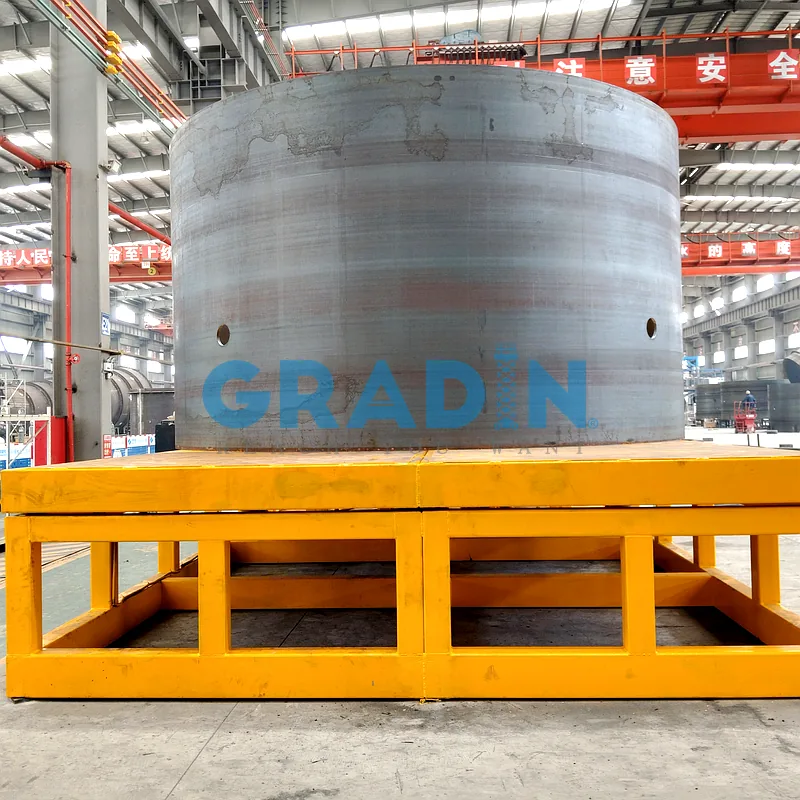
This engineering project involved the design, manufacturing, and commissioning of a heavy-duty 20-ton hydraulic upender (tilter) for a Tier-1 energy infrastructure fabrication facility in Duisburg, Germany. The facility specializes in the production of high-pressure conduits and large-scale steel penstocks for hydroelectric power plants and hydrogen storage projects across the European Union.

The primary technical objective was to provide a safe, controlled 90-degree flipping mechanism for massive circular pipes with diameters ranging from 2,500 mm to 7,000 mm. Previously, the facility relied on synchronized overhead cranes for material rotation a high-risk operation that prone to load oscillation and surface damage. This [Internal Link: heavy-duty hydraulic upender] was engineered to transition these 20,000 kg components from a vertical to a horizontal orientation, facilitating high-precision longitudinal welding and ultrasonic testing. The equipment was designed to meet DIN EN ISO 12100 safety standards and carries full CE certification for the German industrial market.

Challenge & Solution

Challenge

The manipulation of large-diameter pressure pipes presents extreme mechanical challenges, particularly regarding center-of-gravity (CoG) shifts and structural stability during the 90-degree tilting arc.

  • Rotational Stability of Circular Profiles: Standard flat-platform upenders are unsuitable for circular loads. A 7-meter diameter pipe has a high CoG, which risks rolling or sliding during the tilting process, leading to catastrophic structural failure or personnel injury.

  • Extreme Structural Loading: A 20-ton static load becomes a dynamic force during rotation. The frame required high torsional rigidity to prevent twisting of the platforms under eccentric loading.

  • Surface Integrity Requirements: Pressure pipes for energy infrastructure require pristine surface conditions. Any localized pressure or metal-on-metal friction during tilting could introduce stress concentrators or micro-cracks in the steel.

  • Dimensional Versatility: The equipment had to accommodate a vast range of diameters (2.5m to 7m) while maintaining a consistent loading height for automated welding lines.

  • Precise Motion Control: The flip time needed to be regulated within 10 minutes to ensure hydraulic pressure stability and prevent the “over-center” effect where the load accelerates due to gravity.

Solution

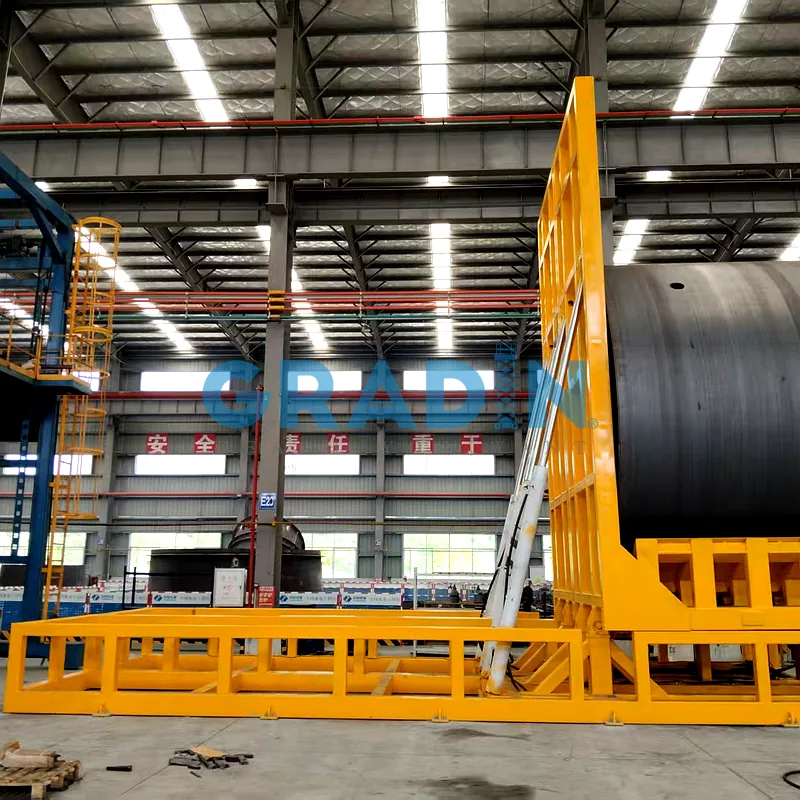
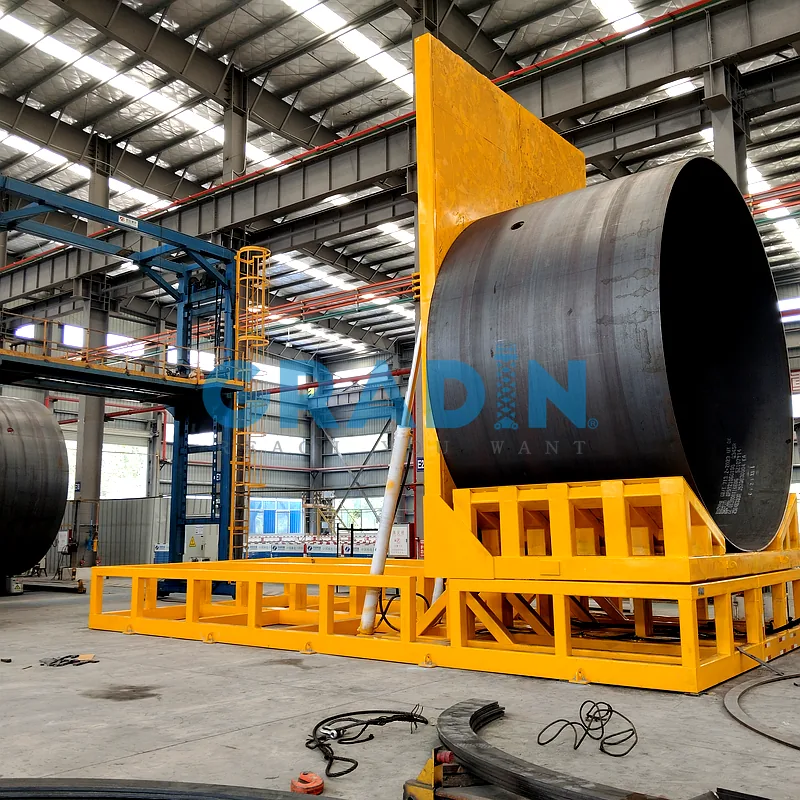
To address these technical requirements, a customized L-shaped hydraulic tilter was engineered with a reinforced structural skeleton and synchronized high-pressure hydraulics.

1. Structural Frame and Platform Engineering
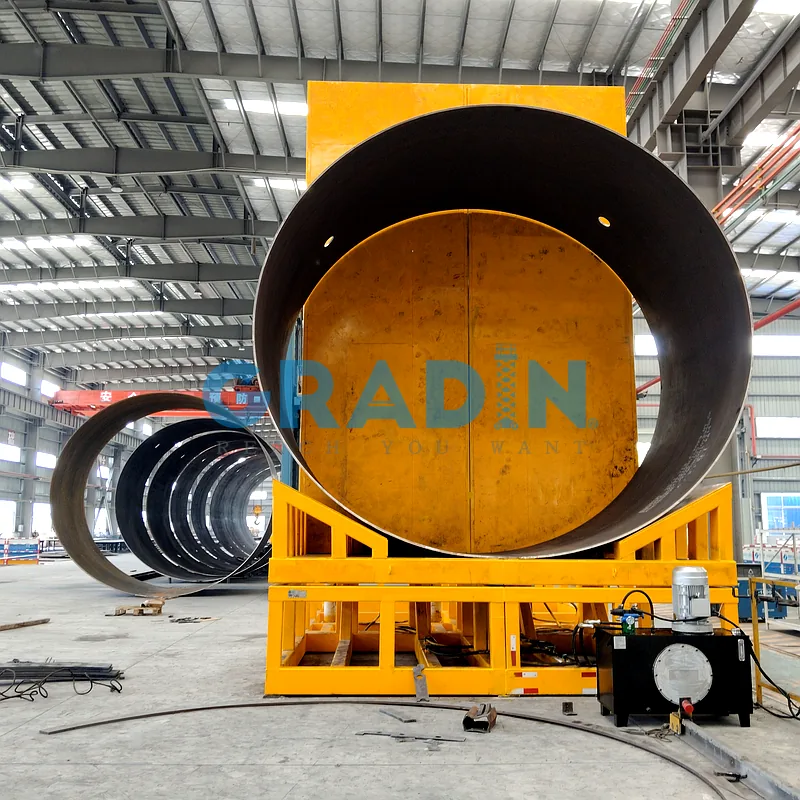
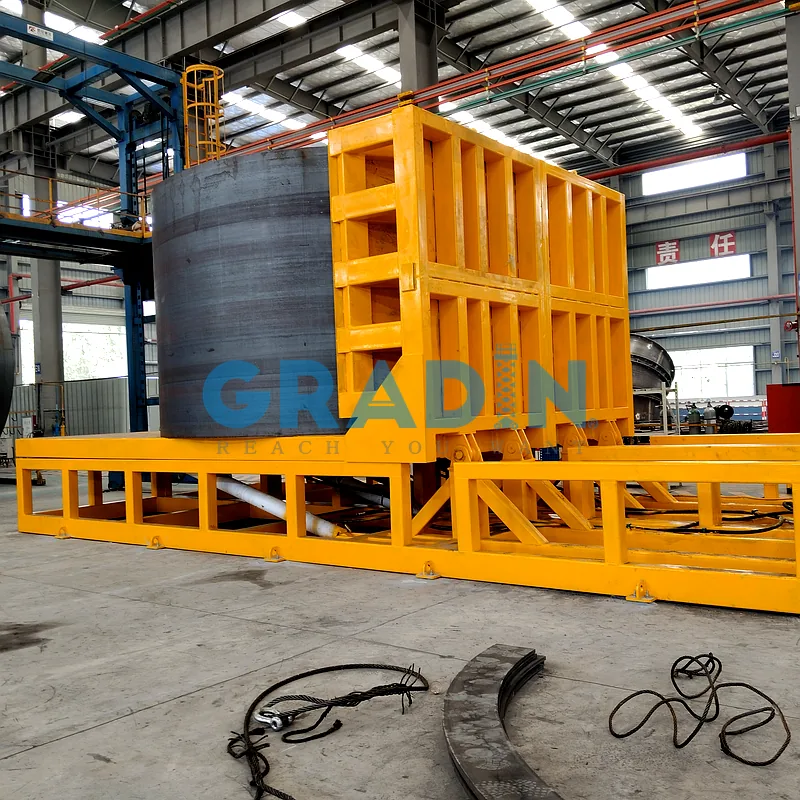
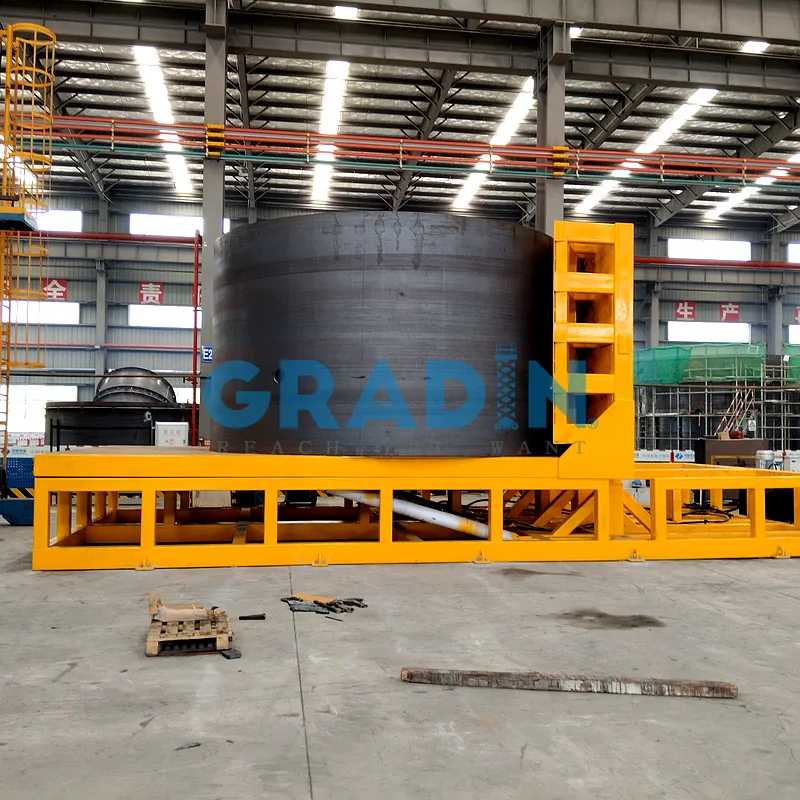
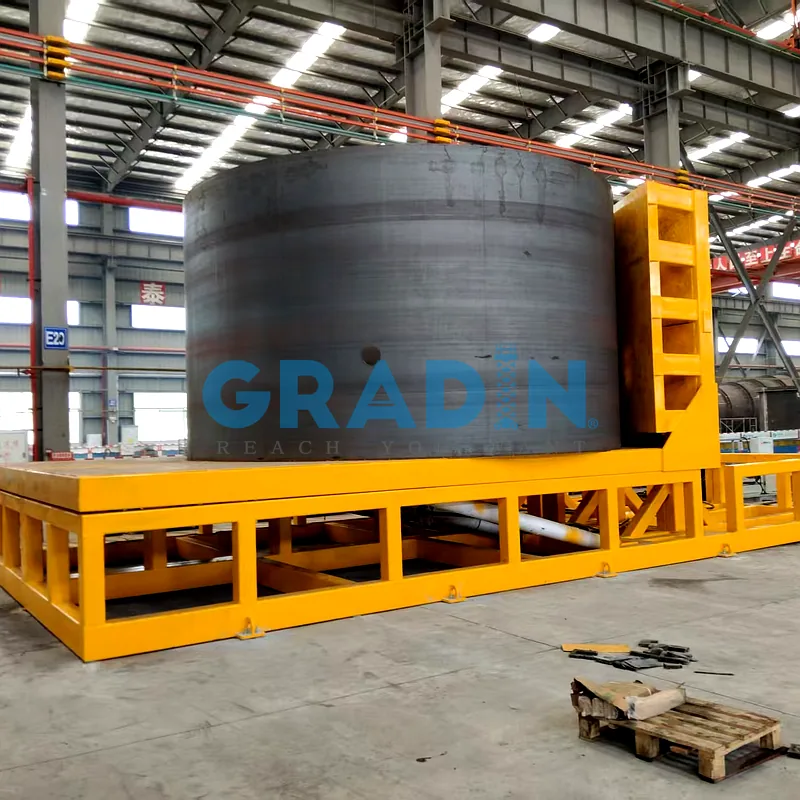
The main chassis is constructed from high-tensile J30020010 rectangular tubing, providing a rigid foundation for the dual-platform system. The primary loading platform (3m x 4.8m) and the secondary receiving platform (4.8m x 7m) were designed to handle the 20,000 kg payload with a safety factor of 2.5:1. To prevent the pipe from rolling, a V-shaped stabilization groove  was integrated into the 3-meter longitudinal section of the platform. This cradle centers the pipe regardless of its diameter (2.5m to 7m), locking the circular profile into the tilt-axis.

2. Synchronized Heavy-Duty Hydraulics
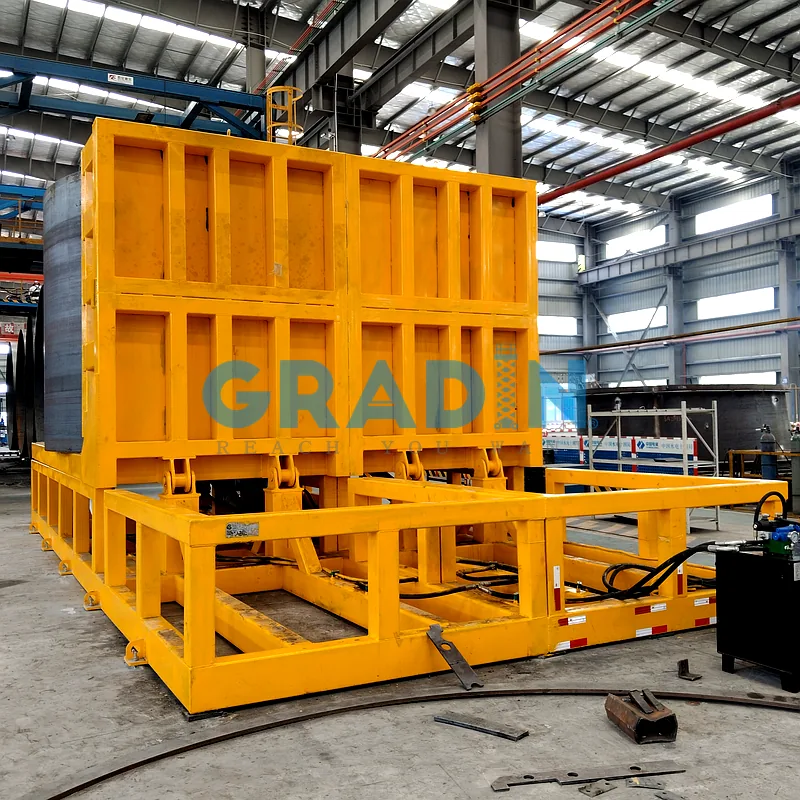
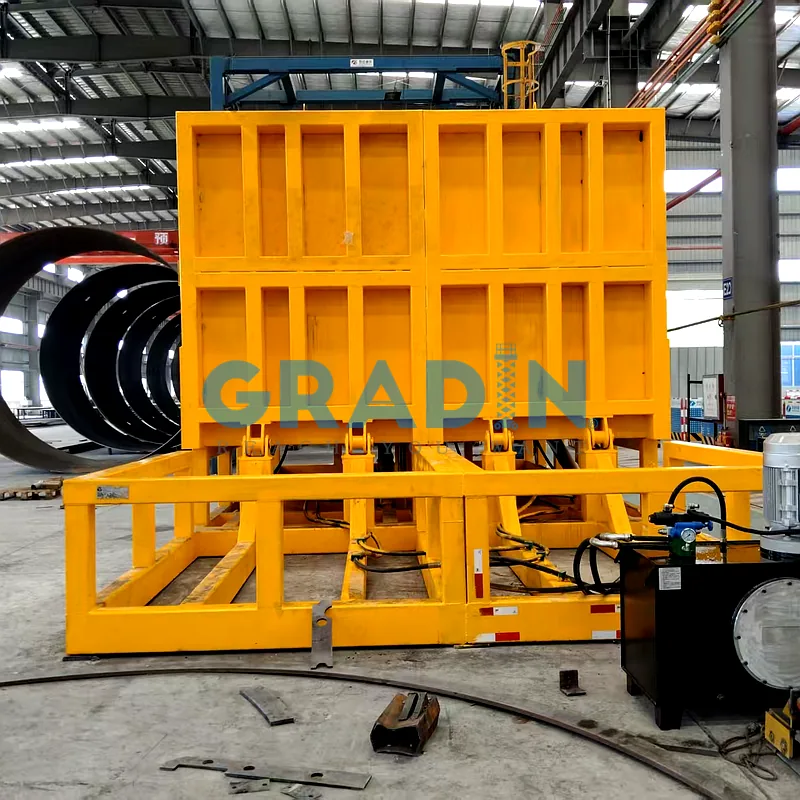
The tilting motion is driven by dual Φ150-105 high-pressure cylinders. These cylinders are managed by an 11KW hydraulic power unit (HPU) configured for the local 400V/50Hz grid. The system employs a proportional flow control valve to ensure that both cylinders move in perfect synchronization, preventing any tilt-axis skewing. To manage safety, the HPU includes hydraulic counterbalance valves that lock the cylinders in position in the event of a hose burst or power failure, preventing an uncontrolled descent.

3. Motion Profiling and Safety Systems
The upender completes a 90-degree flip in under 10 minutes, with the speed fully adjustable via the control interface. To meet [External Link: EU Machinery Directive 2006/42/EC], the system includes:

  • Overload Protection: Electronic pressure sensors that halt operation if the 20-ton threshold is exceeded.

  • Dual-Command Logic: A “dead-man” control switch ensures the tilt only proceeds while the operator is actively engaging the button from a safe distance.

  • Emergency Stop Redundancy: Integrated into both the main PLC cabinet and the remote handheld controller.

4. Surface Protection and Finish
The contact surfaces of the V-groove were lined with high-density polyurethane (HDPE) buffers to prevent metal-on-metal contact with the pressure pipes. The entire frame underwent a multi-layer coating process, utilizing a yellow industrial-grade polyurethane topcoat for high visibility and corrosion resistance in the workshop environment.

Technical Specifications

The following table summarizes the core engineering parameters of the 20-ton hydraulic upender deployed in Duisburg.

Parameter Specification
Rated Load Capacity 20,000 kg (20 Tons)
Flipping Angle 0 – 90 Degrees
Flipping Time < 10 Minutes (Adjustable)
Platform Dimensions (A) 3,000 mm x 4,800 mm
Platform Dimensions (B) 4,800 mm x 7,000 mm
Applicable Pipe Diameter 2,500 mm – 7,000 mm
Structural Frame J300 * 200 * 10 Rectangular Tube
Hydraulic Cylinder Φ150 – 105 (Dual Cylinder System)
Main Motor Power 11 KW
Voltage Supply 400V / 50Hz / 3P (Germany Grid)
Stabilization Hardware Integrated V-Groove for Circular Profiles
Safety Certification CE Certified / DIN EN ISO 12100

Project Gallery