

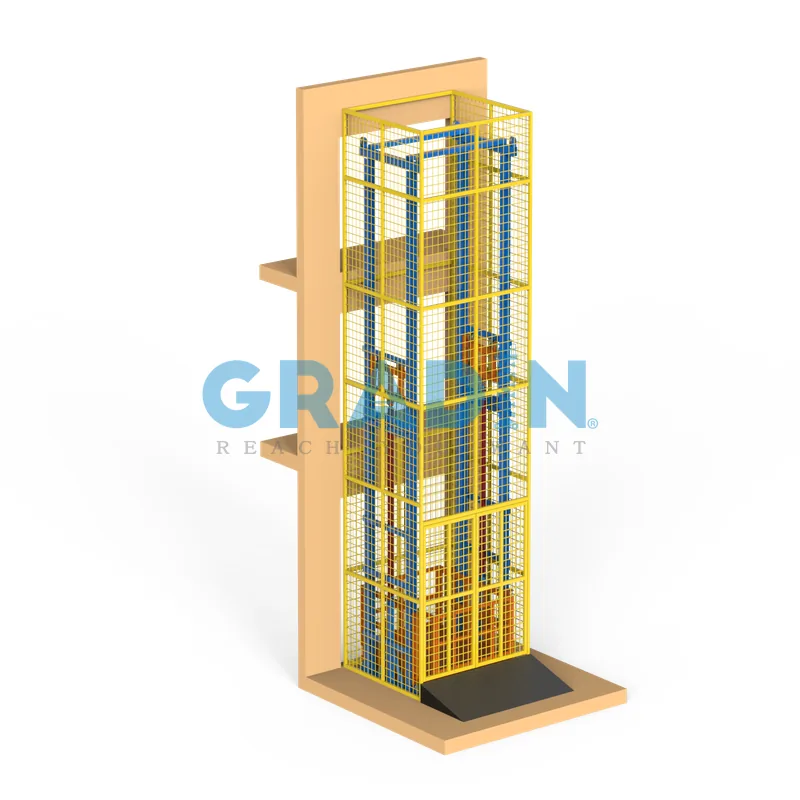
As multi-story production buildings, mezzanine storage zones and basement receiving areas become standard for industrial sites, relying on forklift ramps, manual trolleys or stair carry to move cargo between floors has become a major cause of throughput bottlenecks and worksite accidents. Goods lifts are dedicated vertical transport systems designed exclusively for cargo movement, built to withstand rugged industrial use with simpler structure, lower upfront cost and faster installation than commercial passenger elevators. They have become a staple logistics upgrade for manufacturing plants, warehouses and multi-level commercial spaces worldwide.
What Is a Goods Lift?
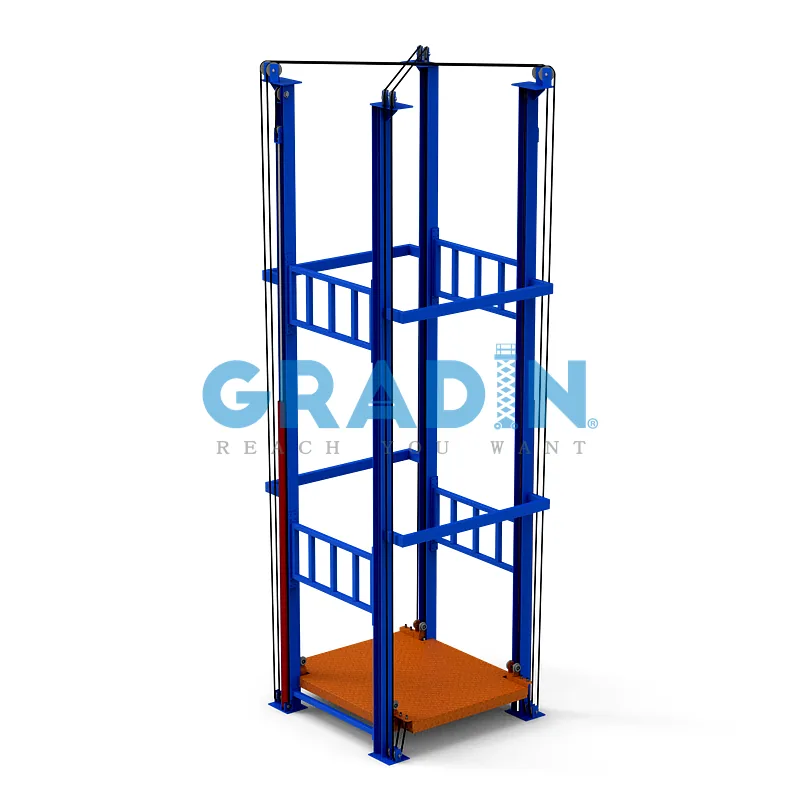
A goods lift consists of a guided vertical platform or enclosed carriage, driven by either hydraulic cylinders or steel chain traction, that travels along fixed guide rails between floor stops. It is engineered purely for material transport: raw materials, pallets, heavy workpieces, packaged goods and equipment, with heavy-duty load-bearing frames and no passenger-focused finishing. To avoid procurement confusion, key differences from similar vertical equipment are listed below:
表格
| Equipment Type | Core Purpose | Typical Load Range | Installation Requirement | Personnel Allowed? |
|---|---|---|---|---|
| Goods Lift | Cargo transport across 2–6 floors | 200kg – 10,000kg | Minimal civil work, self-supporting steel frame available | Strictly prohibited |
| Passenger Elevator | Public people transport | 450kg – 2,000kg | Reinforced concrete shaft, strict elevator code compliance | Designed for personnel |
| VRC Vertical Conveyor | Automated line-integrated cargo transfer | 500kg – 30,000kg | Pit/frame installation for AGV/conveyor docking | Prohibited |
| Commercial Freight Elevator | Cargo + limited attendant movement | 2,000kg – 5,000kg | Full structural shaft, mandatory third-party inspection | Allowed for attendants |
Common Types of Goods Lifts
- Guide-Rail Hydraulic Goods Lift The most widely used model for small-to-medium workshops. Hydraulic cylinder drive delivers smooth, low-noise movement, easy maintenance and low failure rate. Ideal for 2–4 floor installations with moderate load requirements.
- Chain-Driven Goods Lift Steel chain traction design supports longer lifting heights (up to 20m+) with higher positioning accuracy. Best for tall multi-story warehouses and production buildings where hydraulic pressure limits maximum travel height.
- Wall-Mounted Light-Duty Goods Lift Compact wall-mounted design for sites with limited floor space. Load range 100–500kg, commonly used for restaurants, retail stockrooms and small workshops moving boxes, parts or kitchen supplies between floors.
- Special-Application Goods Lift Stainless steel washdown models for food/pharmaceutical workshops meeting hygiene requirements; explosion-proof models for chemical plants, paint shops and grain processing facilities handling flammable dust or gas.
Core Technical Parameters
All specifications are fully customizable to match site load, travel height and entry/exit workflow:
表格
| Parameter | Standard Range | Custom Option |
|---|---|---|
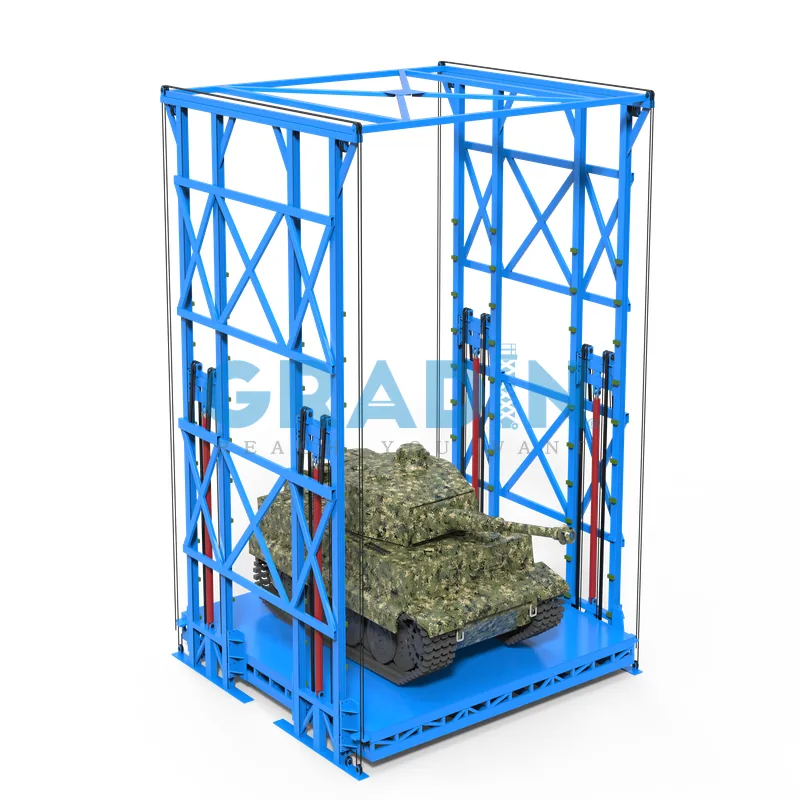
| Rated Load Capacity | 200kg, 500kg, 1000kg, 2000kg, 3000kg, 5000kg | Up to 10,000kg for heavy industrial loads |
| Lifting Height | 2m – 20m | Taller custom designs for 6+ story installations |
| Platform / Carriage Size | 1m × 1m up to 3m × 4m | Matched to pallet, forklift or AGV footprint |
| Lifting Speed | 0.1 – 0.3 m/s | Variable frequency adjustable for high-throughput sites |
| Drive System | Electro-hydraulic / steel chain traction | Dual-drive for ultra-heavy loads |
| Control Method | Floor call buttons + platform push control | PLC integration for remote monitoring and WMS connection |
| Power Supply | 380V 3-phase 50Hz | Custom voltage for international sites (480V, 220V etc.) |
| Entry/Exit Layout | Single-side / opposite-side (Z-type) / same-side (C-type) | Matched to floor space and workflow direction |
Mandatory Safety Configuration
Compliant goods lifts meet ISO 14122 machinery safety standards and CE certification requirements, with non-negotiable safety features:
- Anti-fall safety catch: Mechanically locks the platform instantly if a chain breaks or hydraulic line fails, preventing free fall.
- Door interlock system: The lift will not move unless all landing doors and platform gates are fully closed and locked.
- Overload protection: Automatically stops lifting when payload exceeds rated capacity, with audible/visual alarm.
- Top/bottom limit switches: Prevents over-travel collisions at floor stops.
- Dual emergency stop buttons: Installed on the platform and at each floor station.
- Hydraulic pressure relief valve: Protects the system from overpressure damage.
- Maintenance safety lock: Supports crew to lock the platform at low height for routine inspection and repair.
Typical Application Scenarios
- Manufacturing plants: Move raw materials, work-in-progress and finished goods between ground-floor receiving and upper-floor production lines/mezzanine storage.
- Multi-story warehouses and e-commerce fulfillment centers: Transfer pallets between ground shipping zones and upper racking levels, cutting long forklift travel times.
- Food & beverage processing: Stainless steel washdown lifts move packaged goods and ingredients across floors without contamination risk.
- Chemical & hazardous material facilities: Explosion-proof lifts safely transport flammable materials, eliminating manual handling risks.
- Commercial sites: Wall-mounted lifts move stock, kitchen supplies and laundry between floors for hotels, restaurants and retail stores.
Common Selection Mistakes to Avoid
❌ Mistake: Choosing the lowest-priced unit without verified anti-fall protection.
✅ Best practice: Anti-fall safety catches are a required, non-skippable feature — cheap units without this hardware carry fatal fall risk.
❌ Mistake: Measuring platform size only for cargo, not accounting for forklift width.
✅ Best practice: Leave 10–15cm of clearance on each side of the platform to match your forklift or pallet jack entry width.
❌ Mistake: Ignoring floor bearing capacity.
✅ Best practice: Confirm your floor slab can support the combined weight of the lift frame, maximum load and operating equipment before installation.
Frequently Asked Questions
Q1: Can people ride on a goods lift? A: No. Goods lifts are designed and certified for cargo-only transport. Riding on the platform violates safety regulations and creates severe fall risk. Personnel should always use designated stairwells or passenger elevators.
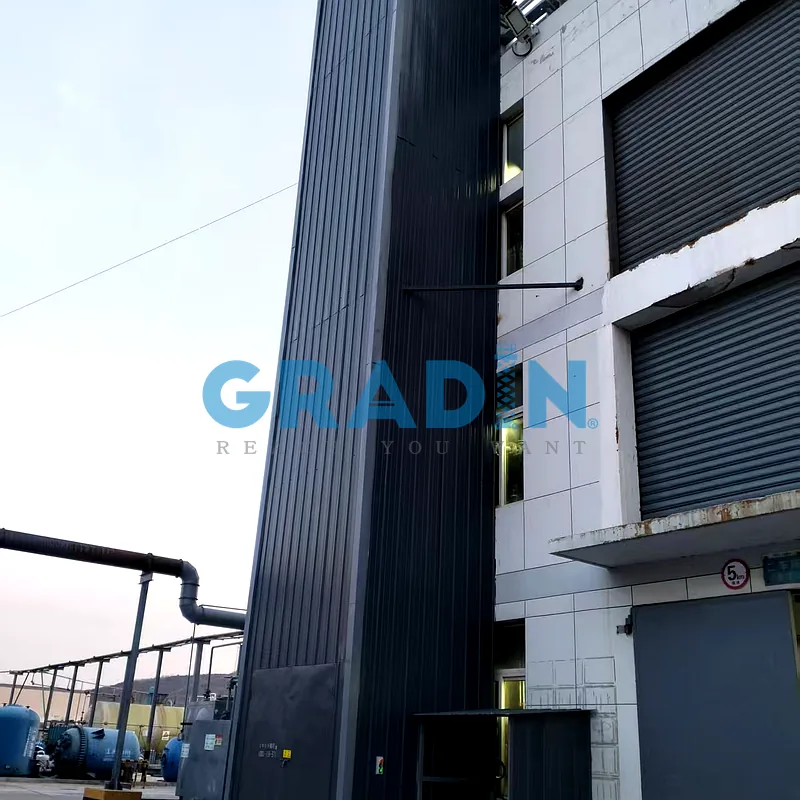
Q2: Does a goods lift need a reinforced concrete shaft? A: No. Unlike passenger elevators, most goods lifts can be installed in open, self-supporting steel frames, against existing walls, or even on the exterior of a building — no expensive concrete shaft construction is required.
Q3: How long does installation take? A: Standard 2–3 floor, 2-ton units take 3–5 working days to install and commission. Custom heavy-duty or multi-floor units may take 1–2 weeks.
Q4: How much regular maintenance is required? A: For standard workshop use, quarterly inspections of hydraulic oil level, chain tension, safety interlock function and guide rail lubrication are sufficient. Hydraulic oil replacement is recommended every 2–3 years for high-cycle operation.
Q5: Can a goods lift connect with AGVs or conveyor lines? A: Yes. PLC-controlled units support standard industrial communication protocols to integrate with automated conveyor lines and AGV fleet systems, enabling fully unmanned vertical cargo transfer.
Q6: What is the typical lead time for a custom unit? A: Standard off-the-shelf models ship in 1–2 weeks. Custom-sized, special-environment (stainless/explosion-proof) units have a 4–6 week lead time.
Final Takeaway
Goods lifts deliver a lower-cost, faster-to-deploy vertical logistics solution compared to full commercial freight elevators. When selecting a unit, prioritize verified safety features, accurate load and dimension matching, and long-term maintenance support rather than only upfront price. A properly specified goods lift will reduce manual transport labor, cut forklift traffic between floors and deliver a clear ROI within 2–3 years for most multi-level industrial sites.

 English
 Spanish
 Portuguese
 Russian
 Arabic
 Turkish
 Thai
 Vietnamese
 Indonesian
 French
 German
 Polish
 Dutch