



Hydraulic Tilters: A Complete Guide for Industrial Material Handling
As manufacturing throughput rises and factories prioritize operator safety, traditional manual flipping and repositioning of heavy loads become a major bottleneck. Hydraulic tilters, also widely known as hydraulic upenders, are purpose-built industrial material handling machines that tilt, rotate and reorient bulky, heavy workpieces between horizontal and vertical positions. They replace risky forklift-assisted flipping and manual handling, bringing stable, controlled tilting to production lines, warehouses and mold workshops.
What Is a Hydraulic Tilter & How Does It Work?
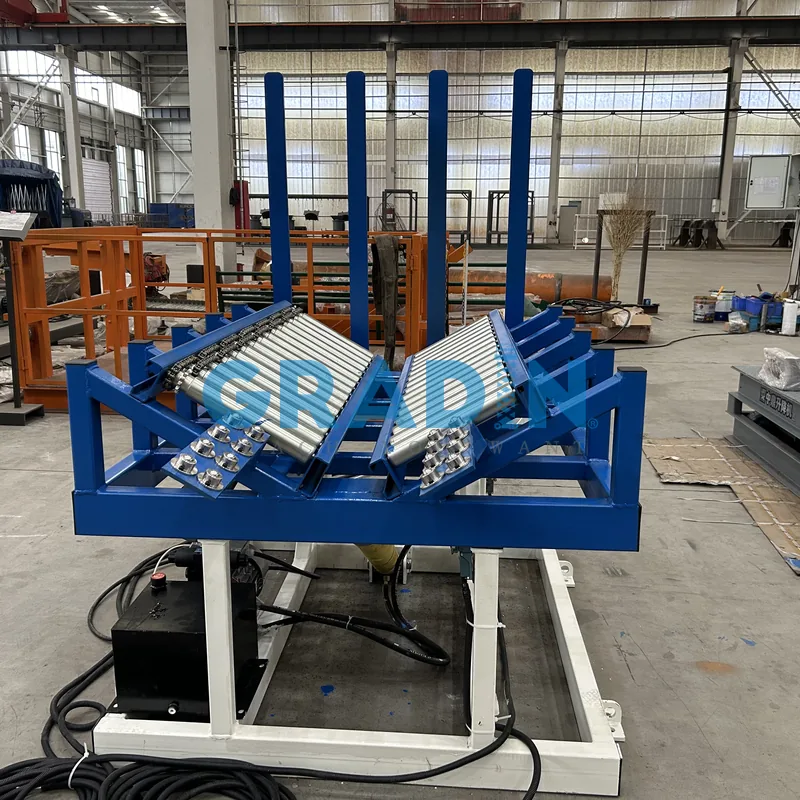
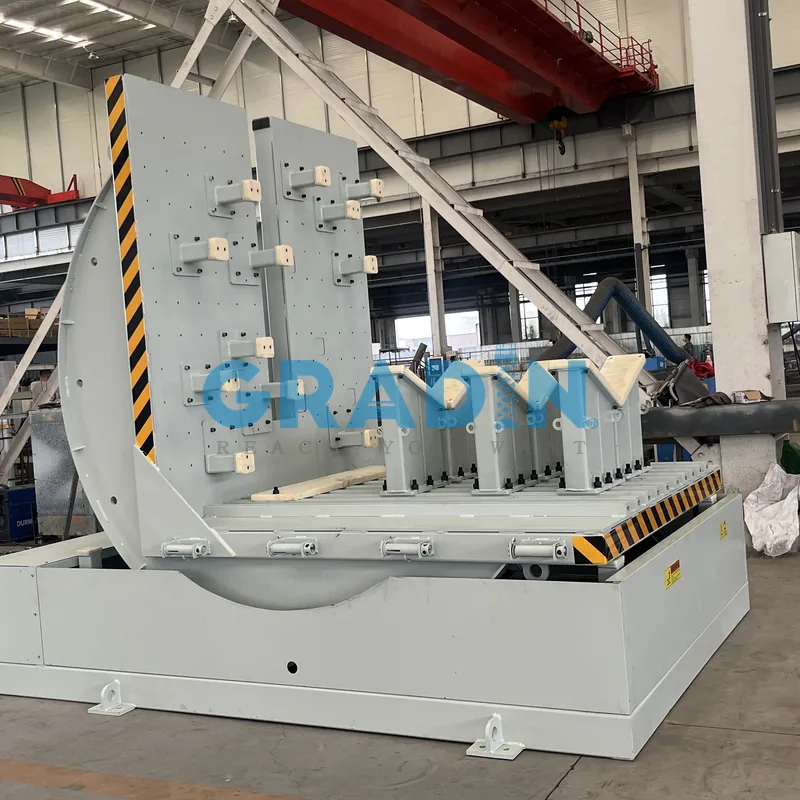
A hydraulic tilter is a heavy-duty machine powered by hydraulic cylinder assemblies. Its core working logic relies on pressurized hydraulic oil to drive one or multiple double-acting cylinders, pushing the load platform along a preset arc path. Most standard models support 0–90° tilting, while custom versions can achieve 180° flipping for special workpieces.
Unlike electric mechanical tilters that run on chains or gears, hydraulic tilters deliver high torque at low speed. This slow, cushioned movement prevents sudden jerks, protecting fragile or high-value loads such as steel coils, aluminum rolls and precision molds. Built-in non-return hydraulic valves lock the platform securely at any tilt angle, so the load will not slip or fall even if power is temporarily cut off.
Common structural types:
- L-type hydraulic tilter: The mainstream design for coils, reels and cylindrical workpieces
- Flat platform tilter: For pallets, castings, mold bases and rectangular components
- Pit-mounted tilter: Flush with floor level, easy AGV or forklift loading
- Sided clamping tilter: With mechanical clamping arms for unstable round materials
Key Technical Parameters to Evaluate
When sourcing a hydraulic tilter, these core specs directly determine whether it fits your workflow:
- Rated load capacity: Ranges from 1 ton light-duty to 50+ ton heavy-duty for large molds and steel coils
- Tilt angle: Standard 90°, optional 120° or 180°
- Platform dimension: Fully customizable to match workpiece outer size
- Hydraulic working pressure: Typically 16–25 MPa
- Power supply: 380V three-phase industrial power (custom voltage for overseas sites)
- Control mode: Push-button station, remote wireless control, optional PLC automatic linkage
- Safety configuration: Emergency stop, pressure relief valve, hydraulic lock, safety guardrails, anti-slip platform surface
Main Industries & Typical Use Cases
- Steel & metal processing: Flip steel coils, aluminum coils and copper coils between horizontal and vertical orientation (eye-to-wall / eye-to-sky conversion)
- Mold & die manufacturing: Rotate heavy injection molds and stamping dies for inspection, polishing and assembly
- Paper & packaging: Handle large paper rolls, film reels and fiber rolls
- Foundry & heavy machining: Turn large castings, welded assemblies and gear housings for multi-side machining
- Logistics & warehouse: Reposition palletized heavy goods to simplify loading and unpacking
- New energy production: Flip battery modules, composite shells and large energy storage components
Core Advantages of Hydraulic Tilters
✅ Superior load stability: Hydraulic buffering eliminates impact during tilting, reducing scrap and product damage ✅ High torque for heavy loads: Outperforms many electric tilters when handling ultra-heavy workpieces ✅ Simple operation: One-button control, low requirement for operator skills ✅ Flexible layout: Floor-mounted or pit-installed to integrate with AGVs, conveyors and production lines ✅ Lower injury risk: Remove workers from under suspended heavy loads, cutting crush and falling accidents
FAQ
Q1: What is the difference between a hydraulic tilter and an electric tilter?
Hydraulic tilters offer bigger torque, smoother cushioned movement and better overload resistance, ideal for heavy loads over 5 tons. Electric tilters run faster with lower maintenance oil pollution, more suitable for light, frequent, high-cycle tilting jobs.
Q2: Can hydraulic tilters work with AGVs?
Yes. Pit-mounted hydraulic tilters with flush floor design support direct AGV docking, realizing fully automatic unmanned material turnover without forklift intervention.
Q3: Is custom size and tilt angle available?
Most industrial suppliers support full customization, including platform size, tilt range, clamping fixtures, low-temperature hydraulic kits and explosion-proof versions for special workshops.
Q4: What regular maintenance does a hydraulic tilter need?
Check hydraulic oil level and cleanliness, inspect cylinder seals for leakage, test emergency stop and hydraulic locking function monthly, and tighten connecting bolts periodically. Replace hydraulic oil according to operating hours.
Q5: Can a hydraulic tilter flip fragile products?
It depends on fixture design. Add anti-slip rubber pads, soft clamping blocks and adjustable speed control for coils or fragile rolled materials to avoid surface scratching.
Final Tips for Selection
Always calculate the actual workpiece weight plus fixture weight instead of only nominal weight. Reserve a safety margin of 15–20% on the rated capacity. Confirm your loading method (forklift, crane or AGV) first to decide between floor type or pit type. If you need continuous connection with upstream and downstream equipment, select a PLC-interlocked hydraulic tilter to fit your automated material handling system.

 English
 Spanish
 Portuguese
 Russian
 Arabic
 Turkish
 Thai
 Vietnamese
 Indonesian
 French
 German
 Polish
 Dutch