

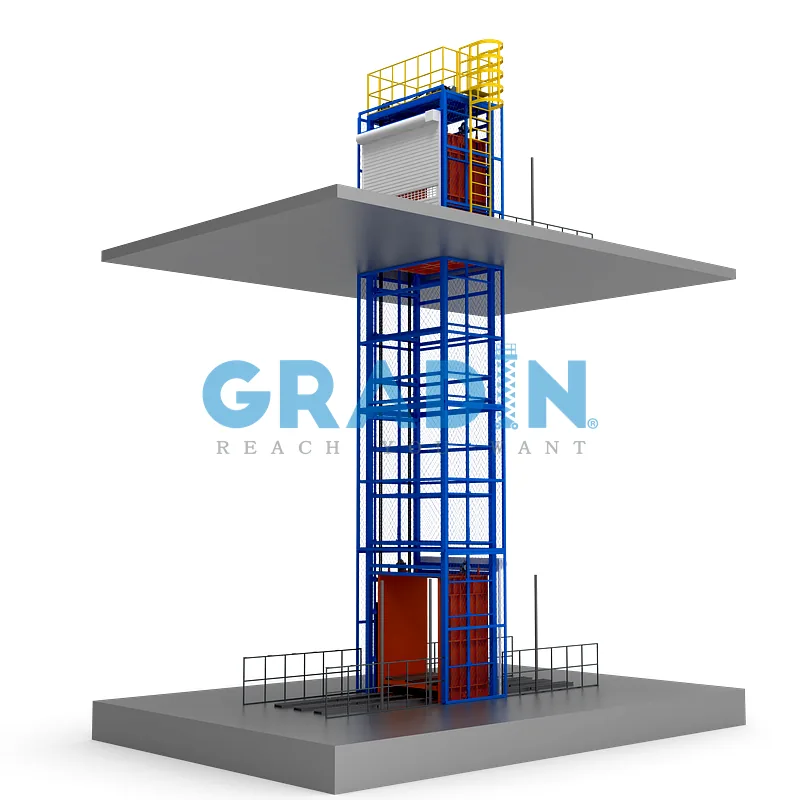
What Is a Vertical Reciprocating Conveyor (VRC)?
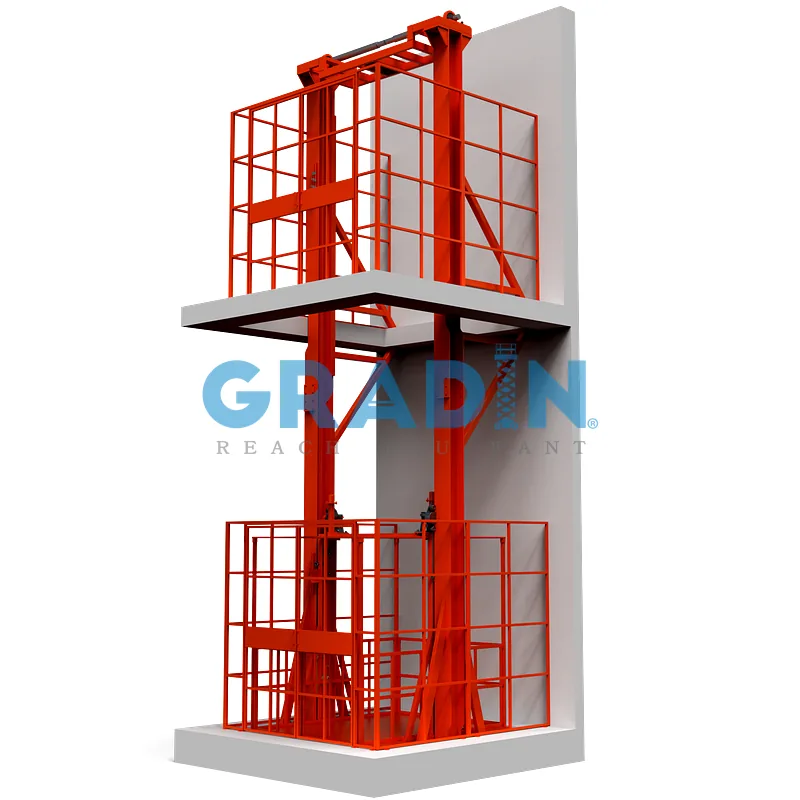
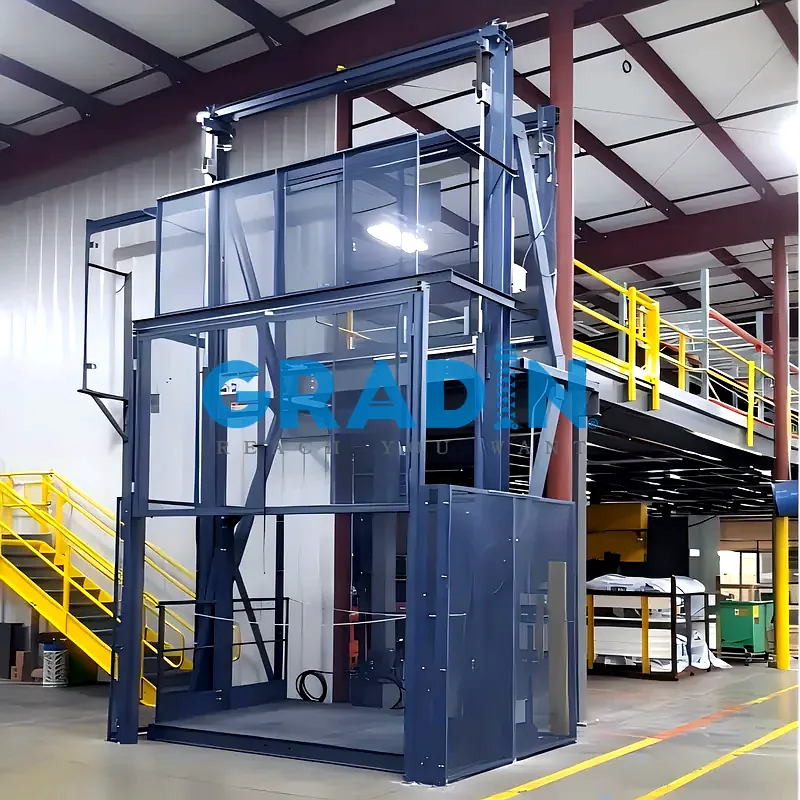
A Vertical Reciprocating Conveyor, commonly called a VRC lift, is an industrial vertical material-handling platform designed to shuttle cargo between two or more fixed floor levels, mezzanines, and racking zones. Powered by electro-mechanical chain drives or hydraulic cylinders, the guided carriage moves up and down reciprocally, docking with horizontal conveyors, roller lines or forklift loading stations for automated inbound and outbound transfer.
Critical distinction: VRCs are material-only lifts. They are NOT freight elevators and must never transport personnel. VRCs follow ASME B20.1 conveyor safety standards, while freight elevators fall under elevator codes ASME A17.1, with stricter inspection and structural requirements. Compared with freight elevators, VRCs carry lower upfront investment, shorter installation cycles and flexible customization for factory and warehouse layouts.
VRCs support palletized goods, totes, cartons, steel bundles, machinery parts and packaged bulk goods. They are widely integrated into automated production lines and intralogistics systems to eliminate manual carrying between floors and stabilize throughput.
Core Technical Parameters
All specifications can be customized based on site layout and load demands.
表格
| Parameter | Standard Range | Notes |
|---|---|---|
| Rated Load | 500 kg – 10,000 kg | Heavy-duty versions up to 20–30 tons available for steel, mold and heavy machinery |
| Lifting Height | 1m – 30m | Supports 2 to 10 stop levels |
| Drive Type | Electro-mechanical chain / Hydraulic | Mechanical: stable for high-frequency continuous operation; Hydraulic: lower cost for low-cycle, heavy loads |
| Platform Size | Custom | Match pallet size (EU pallet, US pallet, custom fixture) |
| Lifting Speed | 4–12 m/min | Variable frequency adjustable |
| Control System | PLC + HMI | Auto / manual mode, interlock safety, level positioning, fault alarm |
| Frame Material | Carbon steel / Stainless steel | Stainless for food, pharmaceutical, corrosive workshop |
| Safety Config | Safety gate interlock, overload protection, emergency stop, anti-fall safety catch, limit switch, light curtain | Mandatory for ASME B20.1 compliance |
| Throughput | 60–300 cycles per hour | Depends on travel height and loading/unloading speed |
Main Applicable Industries
- Warehousing & E-commerce Distribution Centers Move cartons, totes and pallets between ground floor, mezzanine picking zones and upper storage tiers; pair with roller conveyors for sortation lines.
- General Manufacturing & Assembly Plants Transfer raw stock, work-in-progress (WIP), finished assemblies between production floors, machining workshops and packaging areas.
- Metalworking, Steel & Heavy Machinery Transport steel coils, structural steel, molds, castings and heavy machine components; heavy-duty VRCs are a popular alternative to costly freight elevators.
- Food & Beverage Processing Stainless steel washdown VRCs for packaged food, grain sacks and beverage cases, meeting hygiene requirements.
- Pharmaceutical & Medical Supply Clean-rated VRCs for cartoned drugs and sterile packaging, with dust-proof and easy-clean structures.
- Automotive Component Factories Handle auto parts, subassemblies and packaging containers across multi-layer production lines.
- Logistics & Cold Storage Insulated structure options for cold chain warehouses moving refrigerated cargo between levels.
- Building Materials & Packaging Industry Convey bags, boards, carton stacks and finished packaging products.
Frequently Asked Questions (FAQ)
Q1: Can people ride a VRC lift?
A: No. VRCs are engineered exclusively for materials. Carrying operators or visitors violates safety standards and creates fatal fall risks. If personnel must travel between floors, use certified passenger or freight elevators.
Q2: VRC vs continuous vertical conveyor (CVC), which one to pick?
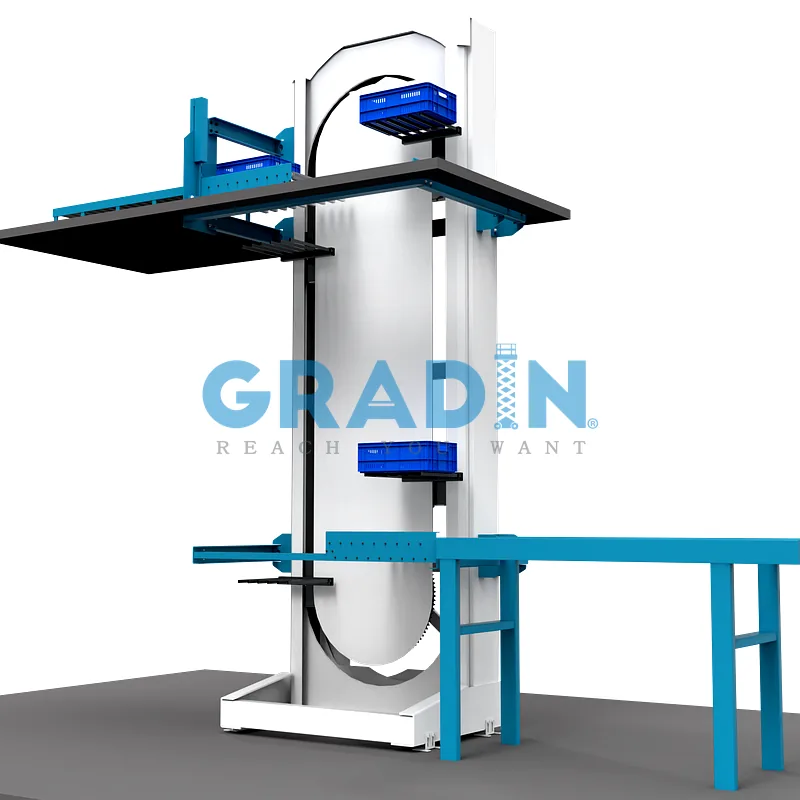
A: Choose VRC for heavy pallets, oversized cargo, multi-stop layouts (3+ levels) and long lifting heights. Choose continuous vertical conveyors (CVC) for high-volume, light-to-medium uniform cartons with two-level, high-cycle flow.
Q3: What safety certifications do VRCs require?
A: Standard industrial VRCs follow ASME B20.1 safety standard for conveyors and material lifts, plus local OSHA/worksite safety regulations. They do not follow elevator codes, which is the core reason for cost advantages.
Q4: Does a VRC need a pit?
A: Not always. Low-profile models can be floor-mounted with a small ramp. Deep pits are only required for some hydraulic designs or flush conveyor docking.
Q5: How much maintenance does a VRC need?
A: Mechanical chain VRCs require regular chain tension check, lubrication and safety catch inspection. Hydraulic units need oil quality checks and seal replacement. Preventive maintenance cycles are typically quarterly for heavy-use sites.
Q6: Can a VRC connect automatically with upstream and downstream conveyors?
A: Yes. PLC interlock allows roller, belt or chain conveyors to feed and discharge pallets automatically without manual forklift transfer.
Q7: What is the lead time for a custom VRC?
A: Standard small-to-medium VRC: 3–6 weeks. Heavy-duty, large-platform or special environment (stainless, explosion-proof) custom builds: 6–12 weeks.
Closing
Vertical reciprocating conveyors deliver a balanced solution between cost, flexibility and throughput for multi-level factories and warehouses. When your workflow involves heavy palletized cargo, irregular loads or multi-stop vertical transfer and you do not need personnel access, a properly specified VRC often outperforms freight elevators and simple hoists.

 English
 Spanish
 Portuguese
 Russian
 Arabic
 Turkish
 Thai
 Vietnamese
 Indonesian
 French
 German
 Polish
 Dutch