Need a Technical Advice?

Automated 10-Ton 4-Post High-Precision Assembly Platform for Aerospace Components in Saudi Arabia

Project Overview

This engineering project involved the design, structural analysis, and commissioning of a customized 10-ton four-post hydraulic assembly platform for a Tier-1 aerospace manufacturing facility in Riyadh, Saudi Arabia. The facility is a central hub for the assembly and maintenance of large-scale airframe sections and structural aerospace components requiring millimetric vertical positioning.

The primary objective was to implement a high-bay lifting solution that could serve as a stable, synchronized assembly workstation. Unlike standard freight elevators, this [Internal Link: four-post assembly platform] was engineered for “live” assembly operations, where technicians perform high-torque fastening and precision alignment while the platform is at elevated heights. The system was integrated into a facility with a 15-meter ceiling clearance, operating under the rigorous environmental and industrial standards of the Middle Eastern aerospace sector, including compliance with AS9100 quality management and local SASO (Saudi Standards, Metrology and Quality Organization) safety regulations.

Challenge & Solution

Challenge

The assembly of aerospace structural components presents unique engineering challenges, primarily regarding the synchronization of vertical travel and the elimination of structural oscillation. The client’s existing assembly protocols faced several critical bottlenecks:

  • Synchronization Errors in Multi-Post Systems: Using traditional lifting methods, even a 5mm deviation between the four support posts could lead to torsional stress on the aerospace components, potentially causing micro-fractures in high-value alloy parts.

  • Dynamic Stability at Height: When technicians perform drilling or fastening on the platform at a 6-meter elevation, the structure must resist lateral forces. Standard lifts exhibited “sway” that compromised alignment precision.

  • Safety Redundancy for Personnel: As a manned assembly platform, the system required a safety factor far exceeding that of standard goods lifts. The challenge was to integrate a “Fail-Safe” mechanical locking system that could hold 10,000 kg indefinitely without hydraulic pressure.

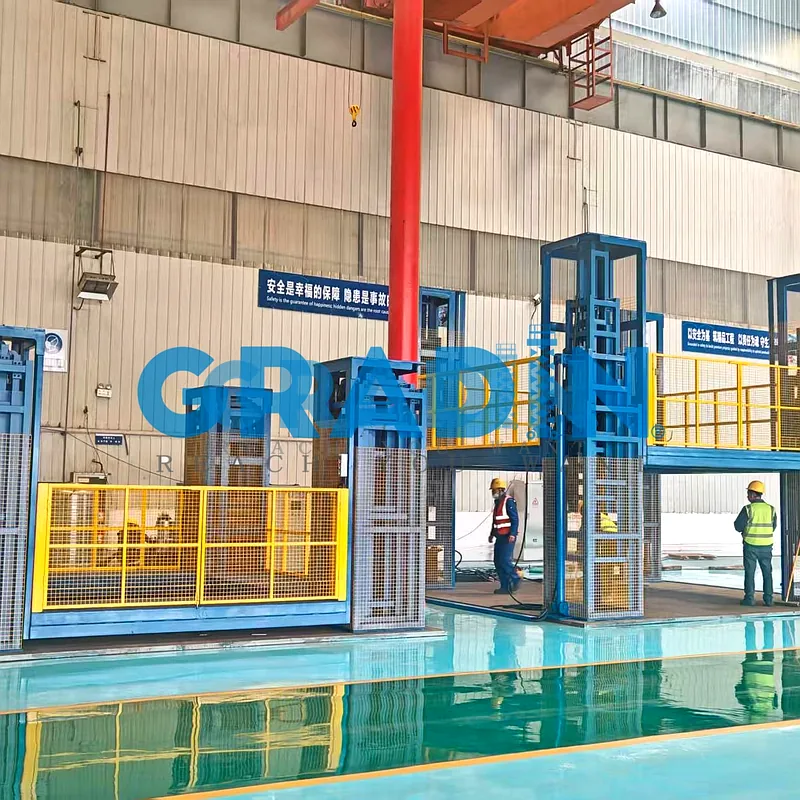
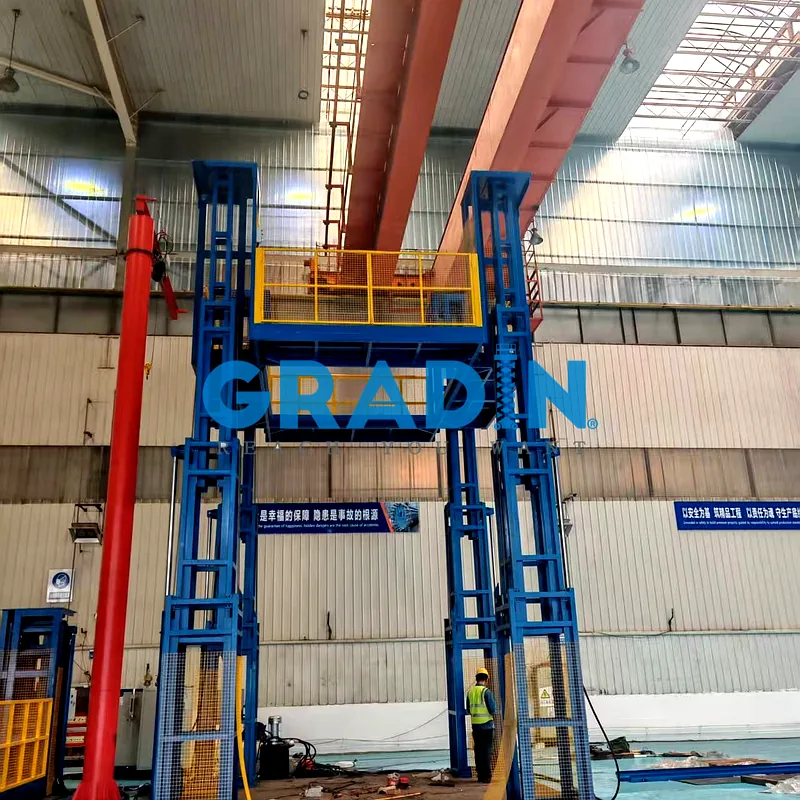
  • Integration with Overhead Infrastructure: The platform had to operate in a high-traffic zone with overhead bridge cranes. The structural design needed to avoid interference with the crane’s travel path while maintaining a large 4000mm x 3000mm working deck.

  • Extreme Heat and Dust Resistance: The Riyadh facility, while climate-controlled, is subject to the fine particulate dust and high ambient heat typical of the region. This demanded specialized filtration for the hydraulic units and IP65-rated electrical enclosures.

Solution

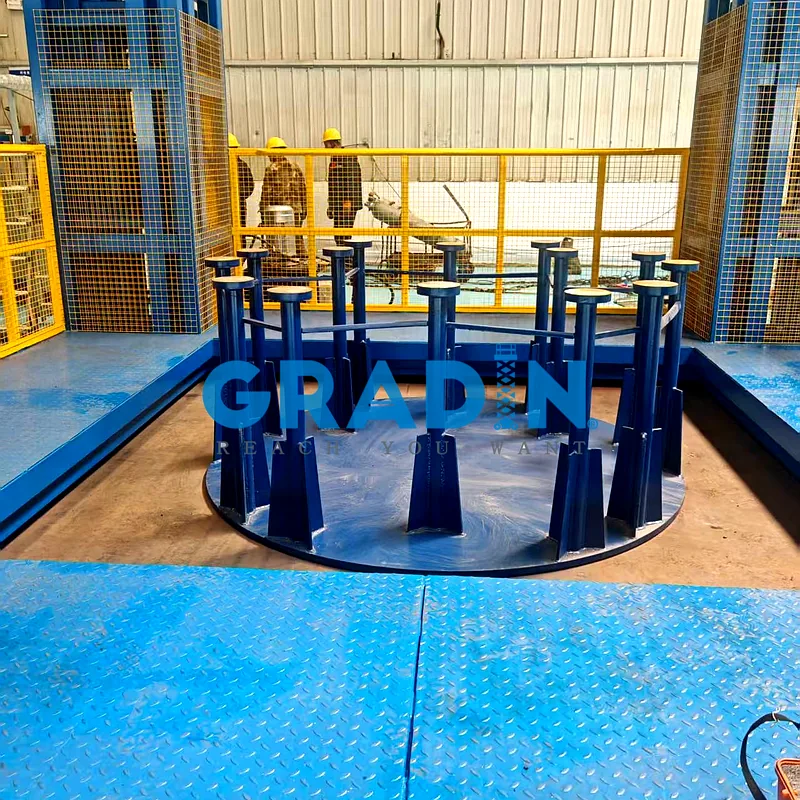
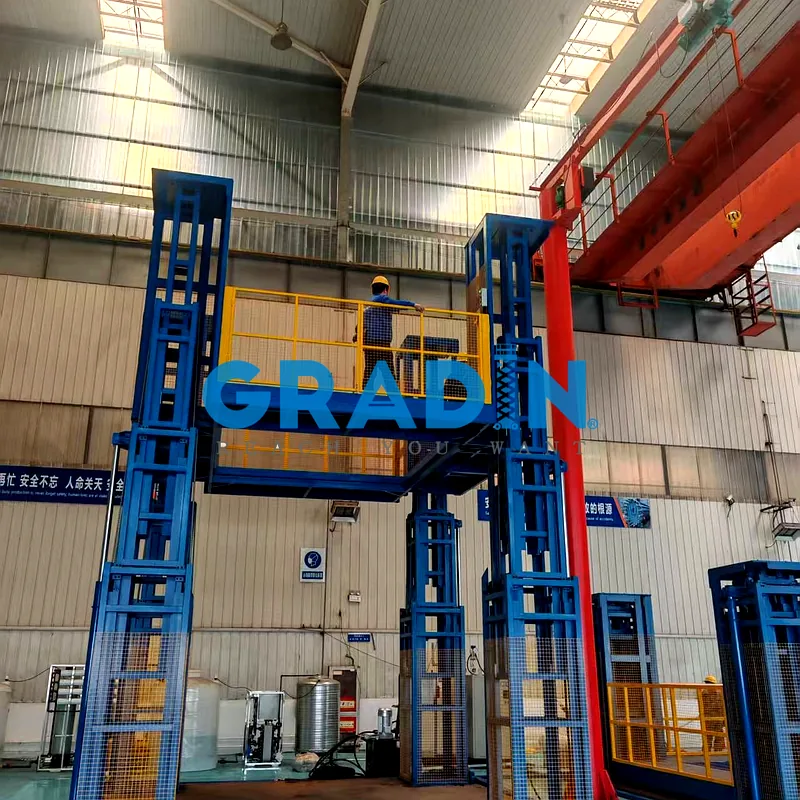
To address these technical requirements, a heavy-duty 4-Post Synchronized Hydraulic Assembly Platform was engineered, utilizing a high-rigidity H-beam skeleton and a PLC-managed hydraulic circuit.

1. Structural Kinematics and 4-Post Architecture
The main support structure utilizes four 300mm x 300mm heavy-gauge H-section steel columns. This 4-post configuration provides a stable vertical guide path, significantly reducing the bending moments experienced by the hydraulic cylinders. The platform frame is constructed from reinforced cross-beams, ensuring that even under eccentric loading (where the weight is not centered), the deck remains level within ±1mm.

2. Synchronized Hydraulic Control System
The lifting force is generated by four independent, high-precision hydraulic cylinders. To ensure perfect synchronization, the system employs a Siemens S7-1200 PLC integrated with proportional flow control valves and absolute encoders on each post. This “digital leveling” system monitors the height of each post in real-time, automatically adjusting hydraulic flow to maintain a perfectly horizontal plane throughout the 6000mm stroke. This [Internal Link: synchronized lifting system] eliminates the risk of structural warping for the aerospace components during elevation.

3. Multi-Tiered Safety and Mechanical Locking
Given that the platform serves as a manned workstation, it is equipped with automated mechanical safety ratchets. Every 100mm of travel, a spring-loaded steel pawl engages with a notched safety rack on each post. In the event of a total hydraulic pressure loss, these mechanical locks instantly support the full 10-ton load. Additionally, the platform is enclosed with 1200mm high safety railings and an integrated light curtain system at the ground level to prevent unauthorized entry into the lifting zone.

4. Environmental and Electrical Integration
The hydraulic power unit (HPU) is equipped with an air-cooled oil heat exchanger and a multi-stage filtration system to maintain fluid viscosity in high-temperature environments. The control architecture utilizes Schneider Electric low-voltage components, housed in a dust-proof IP65 cabinet. The system interfaces with the factory’s central management system via ProfiNet, allowing for remote diagnostics and cycle monitoring, meeting the high [External Link: Industry 4.0 automation standards].


Technical Specifications

The following table outlines the core engineering parameters of the automated assembly platform deployed in Riyadh.

Parameter Specification
Model Number AP-10T-4P-KSA
Rated Load Capacity 10,000 kg (10 Metric Tons)
Platform Dimensions 4,000 mm x 3,000 mm
Lifting Stroke (Height) 6,000 mm
Post Structure 300mm * 300mm H-Section Steel
Lifting Speed 3.0 – 4.5 m/min (Adjustable)
Leveling Accuracy ± 1 mm (Synchronized PLC Control)
Power Supply 380V / 60Hz / 3P (Saudi Grid Standard)
Safety Factor 5:1 (Structural) / 3:1 (Hydraulic)
Safety Locking Multi-point Mechanical Ratchet System
Control System Siemens PLC / Schneider Electricals
Protection Rating IP65 (Electrical) / Dust-Proof Hydraulic Seals

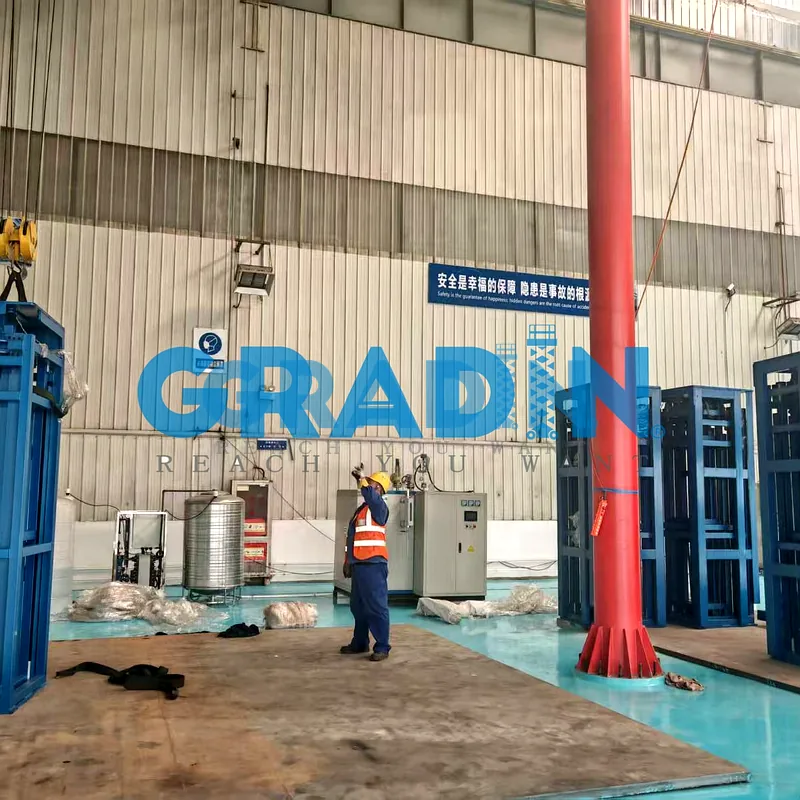
Project Gallery