Need a Technical Advice?

Custom 2-Ton Machinery-Integrated Scissor Lift Platform for Automotive Assembly in Wolfsburg, Germany

Project Overview

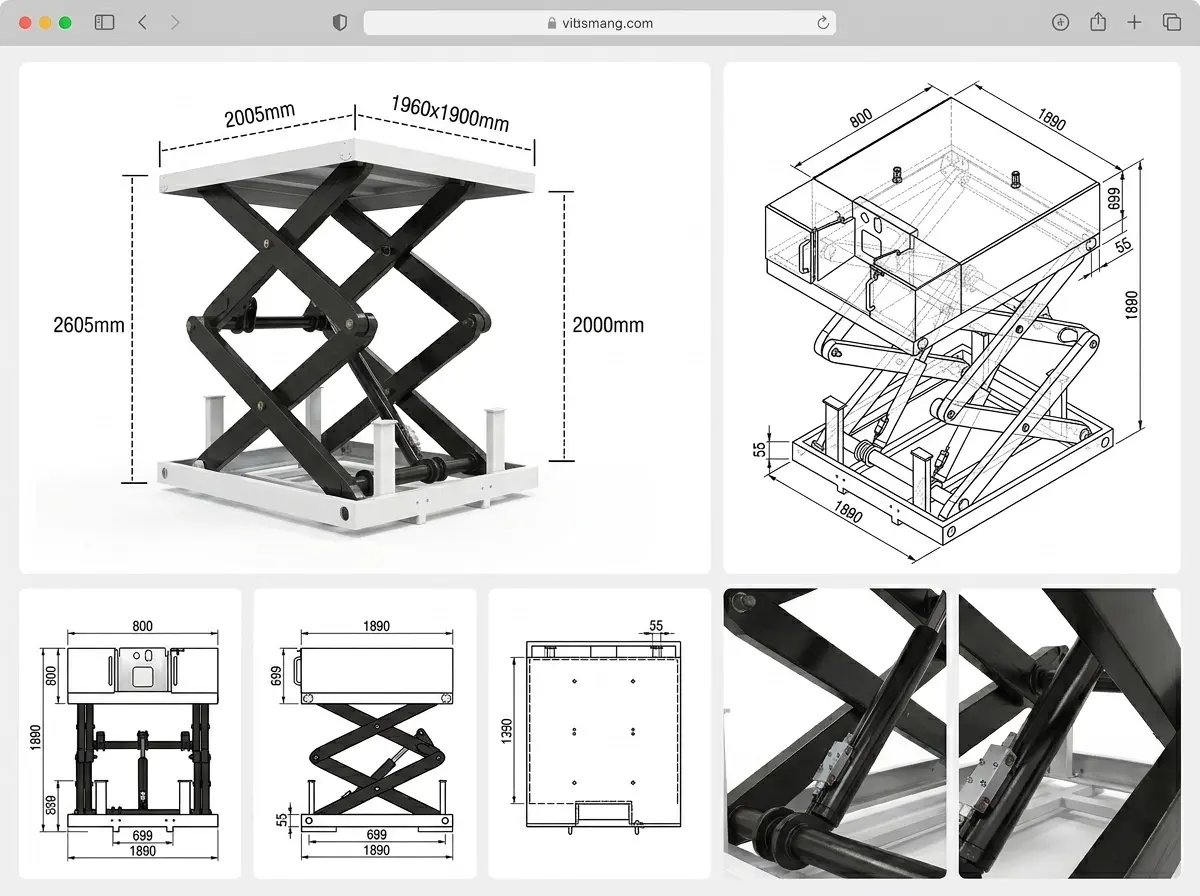
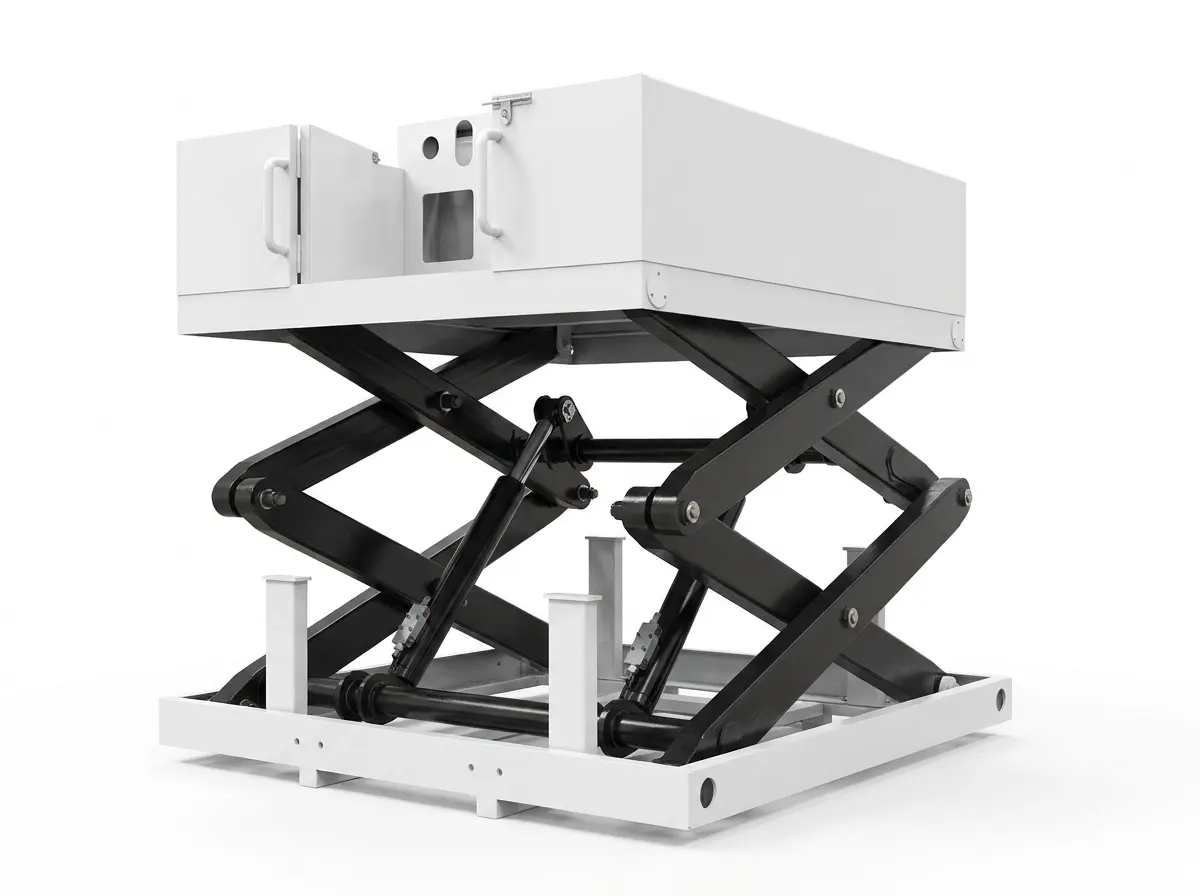
This technical case study details the engineering and deployment of a custom 2-ton integrated scissor lift platform designed for high-frequency industrial applications in Wolfsburg, Germany. The project was commissioned by a Tier-1 automotive manufacturing supplier requiring a “slave” lifting unit to be permanently integrated into an automated engine assembly line.

Unlike self-contained hydraulic lifts, this unit was engineered without an internal motor or pump station, as it is designed to be powered by the facility’s centralized hydraulic power unit (HPU) or the host machine’s existing hydraulic circuit. This [Internal Link: custom hydraulic lift] was developed to meet the rigorous precision and safety requirements of the German automotive industry, focusing on structural rigidity and seamless integration into a high-duty-cycle production environment. The platform adheres to the DIN EN 1570-1 safety standards for lifting tables, ensuring compliance with European Union machinery directives.

Challenge & Solution

Challenge

The primary engineering challenge revolved around the strict dimensional and functional constraints of the existing assembly line infrastructure. The client required a lift that could handle significant payloads within a compact footprint while maintaining millimetric alignment accuracy.

  • External Power Integration: The lift lacked an onboard power source, requiring a specialized M18*1.5 hydraulic input interface to connect with the host machine’s high-pressure lines.

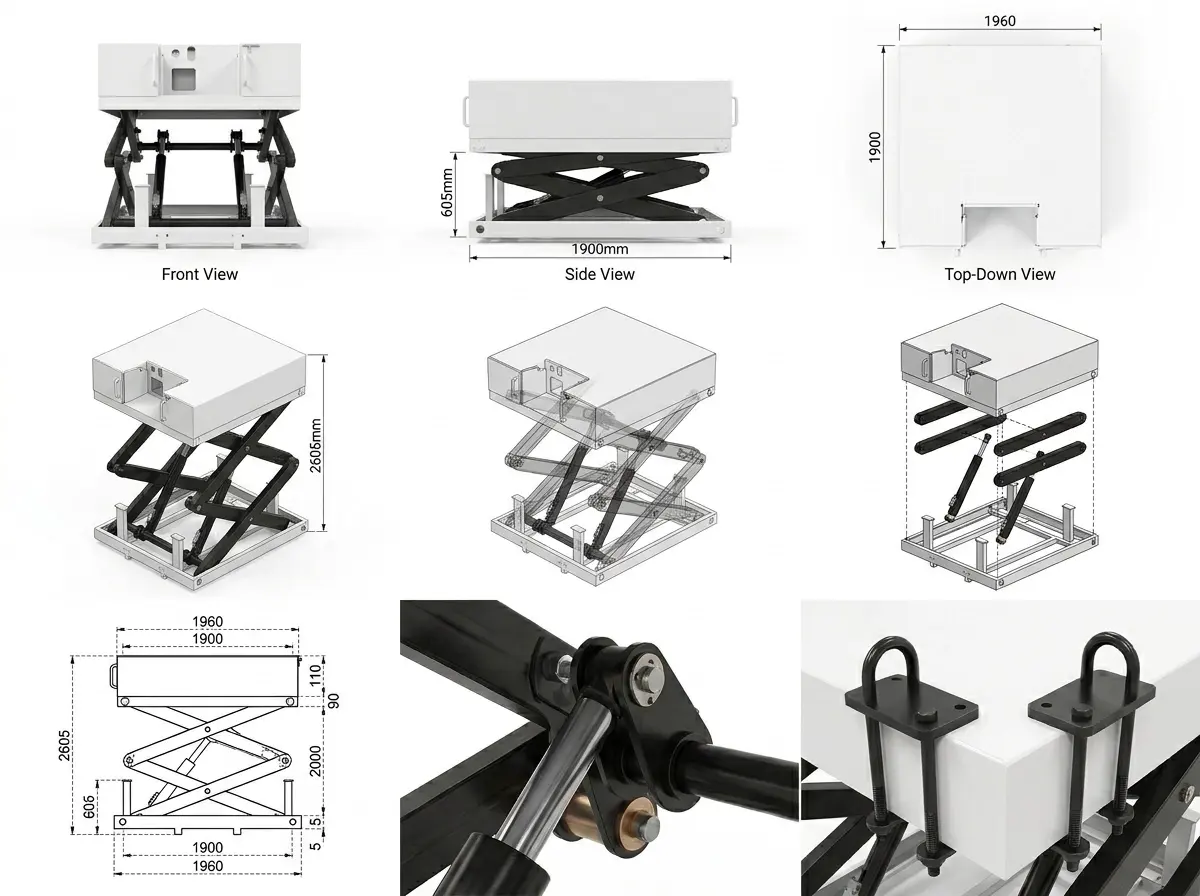
  • Space and Clearance Constraints: The stowed height (closed height) was strictly limited to 605 mm, while the internal lifting points (lifting eyes) could not protrude beyond the device’s exterior envelope to avoid interference with other robotic components.

  • High-Frequency Durability: The application requires a high cycle rate, demanding superior wear resistance in the pivot points and structural components to prevent fatigue-induced deflection.

  • Safety and Maintenance Redundancy: Because the lift is integrated into a larger machine, standard maintenance access is limited. The design required specialized support beams to lock the platform safely in the fully lowered position for long-term structural relief.

  • Surface Treatment Requirements: The German facility mandated the use of water-based industrial paint to comply with VOC (Volatile Organic Compound) emission regulations, alongside a specific dual-tone color scheme (black for the scissor arms, white for the base and platform) to assist with visual safety inspections.

Solution

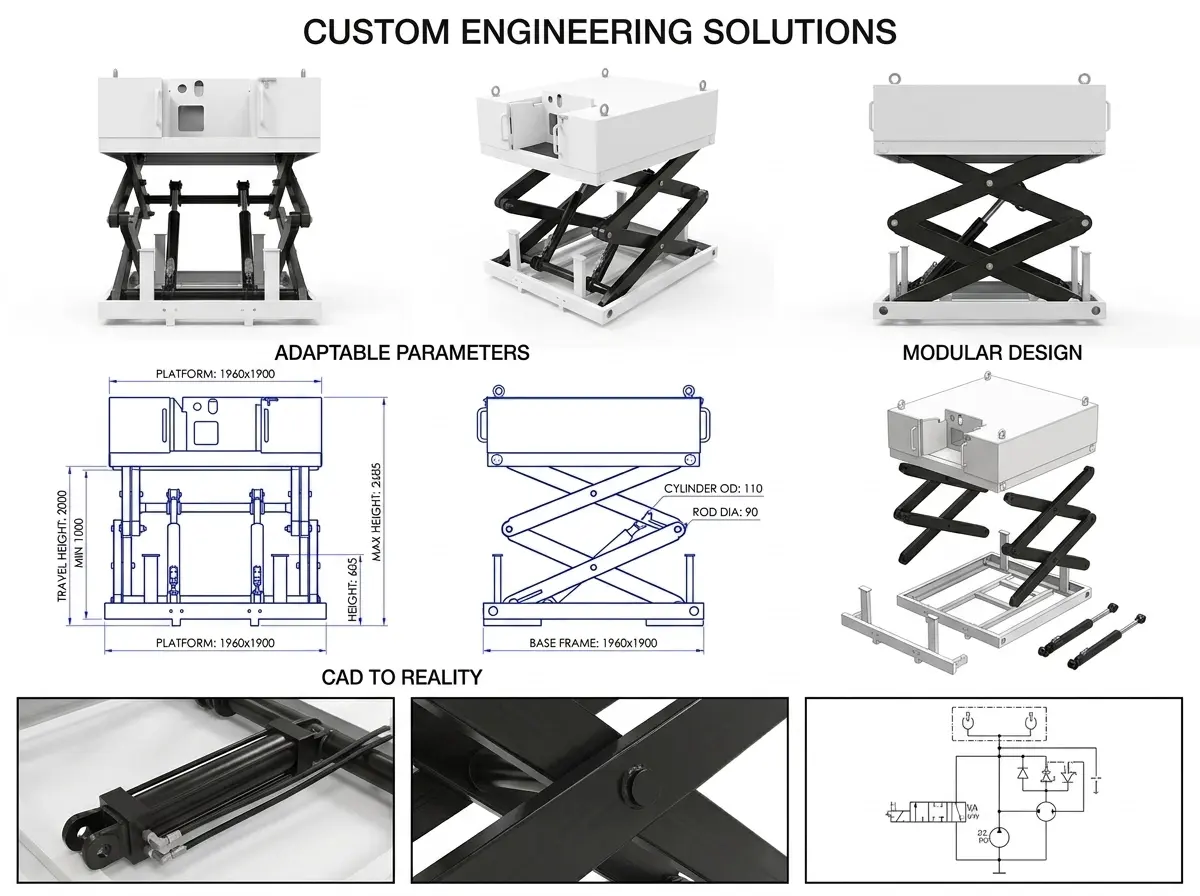
To address these technical requirements, our engineering team developed a specialized scissor lift model that prioritizes structural metallurgy and hydraulic precision over standalone functionality.

1. Heavy-Duty Structural Engineering
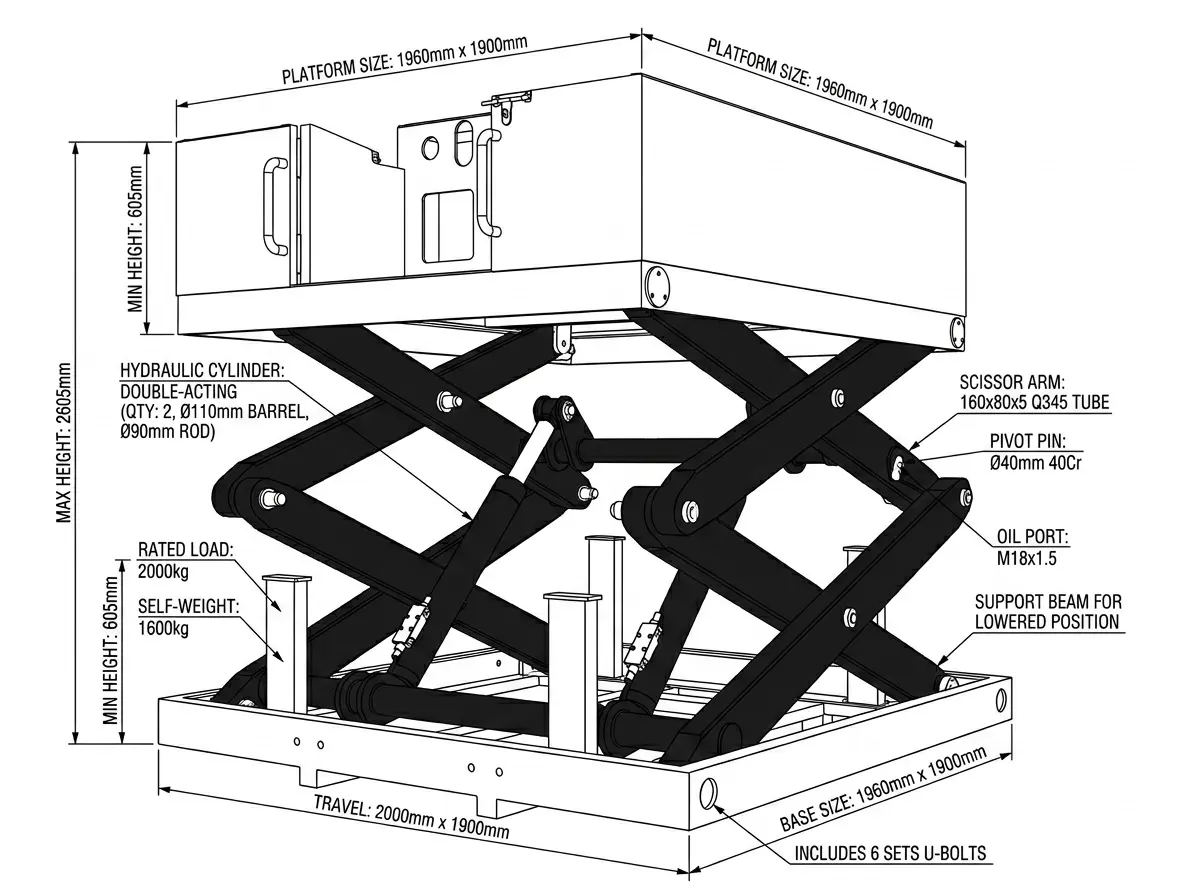
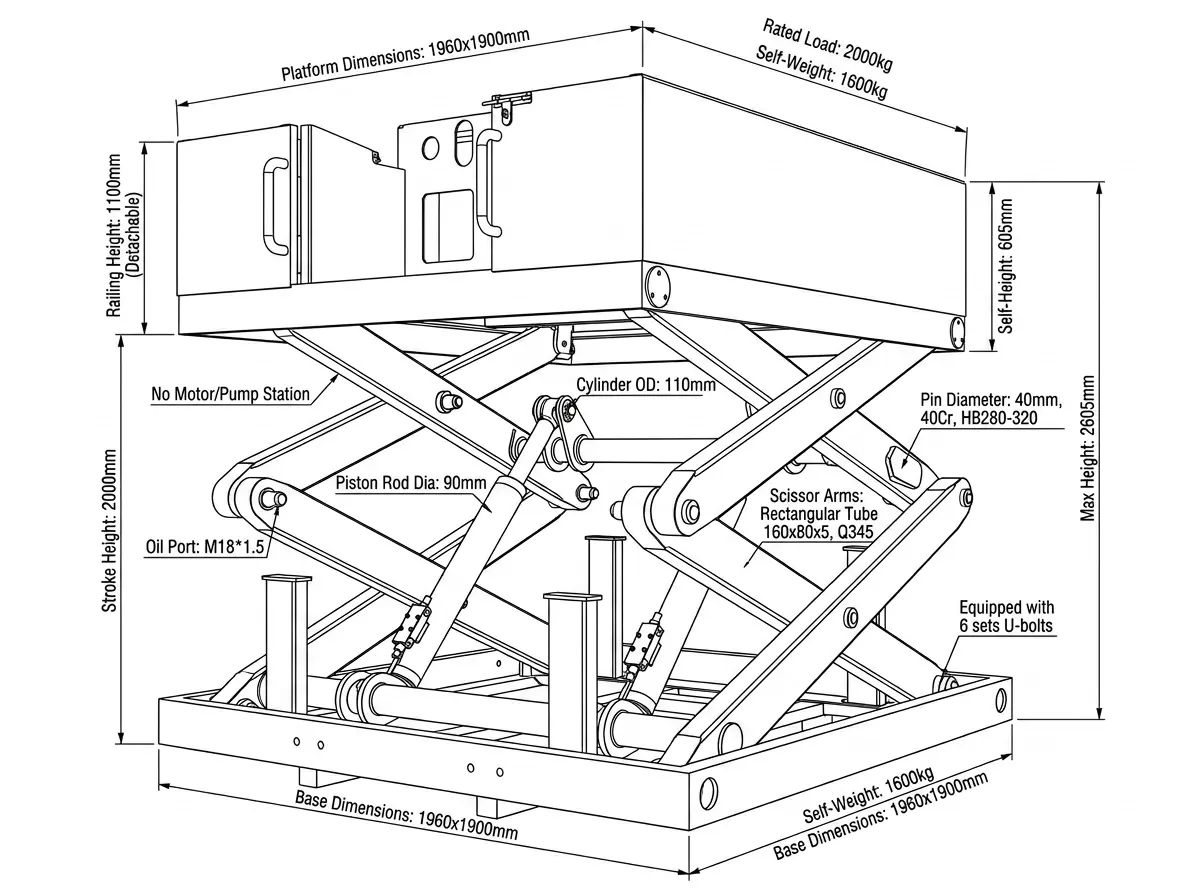
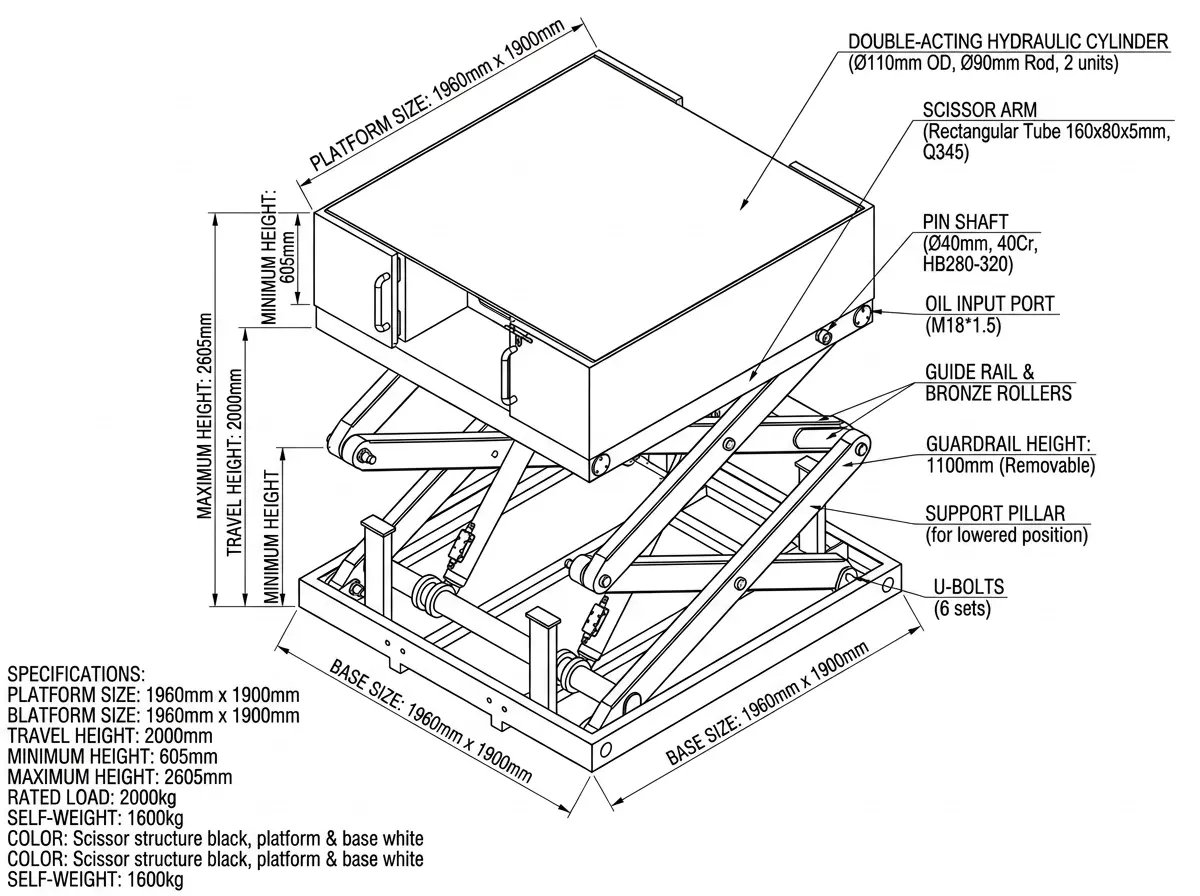
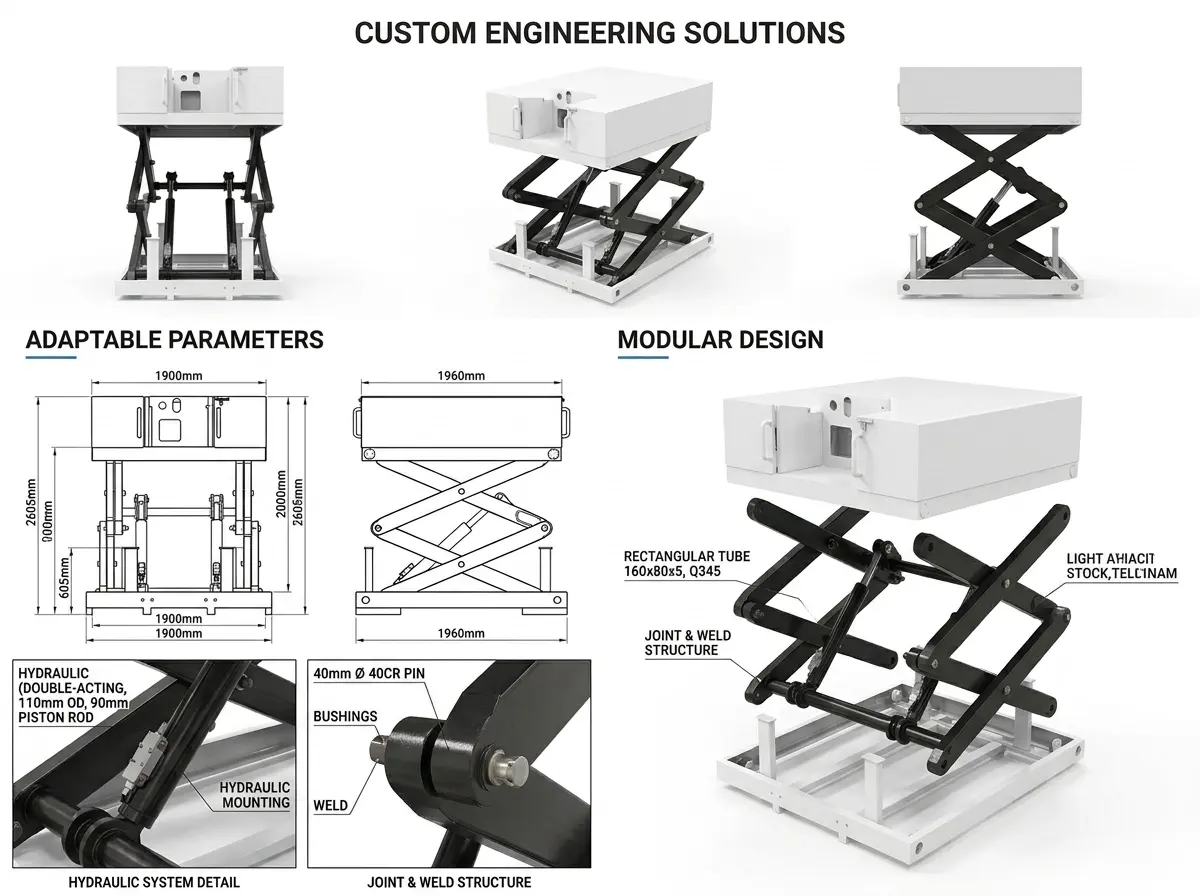
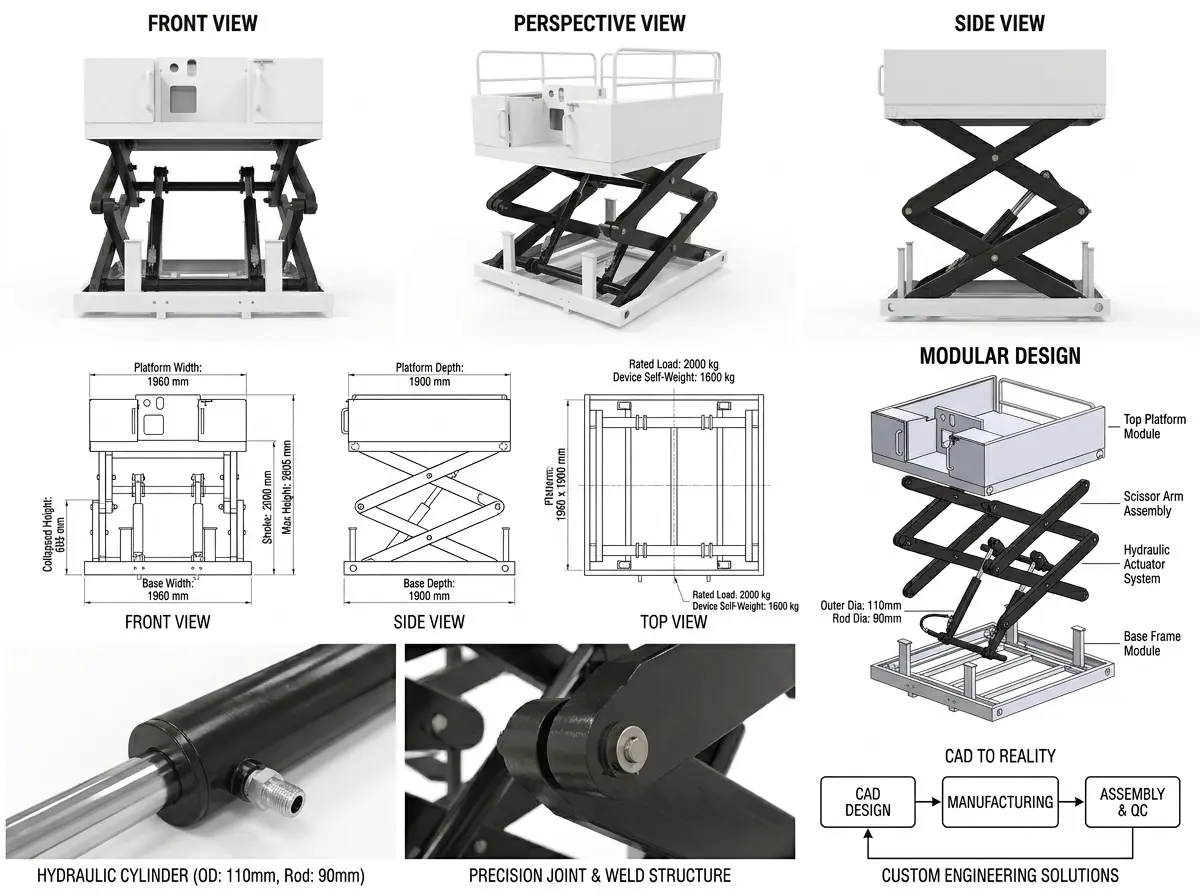
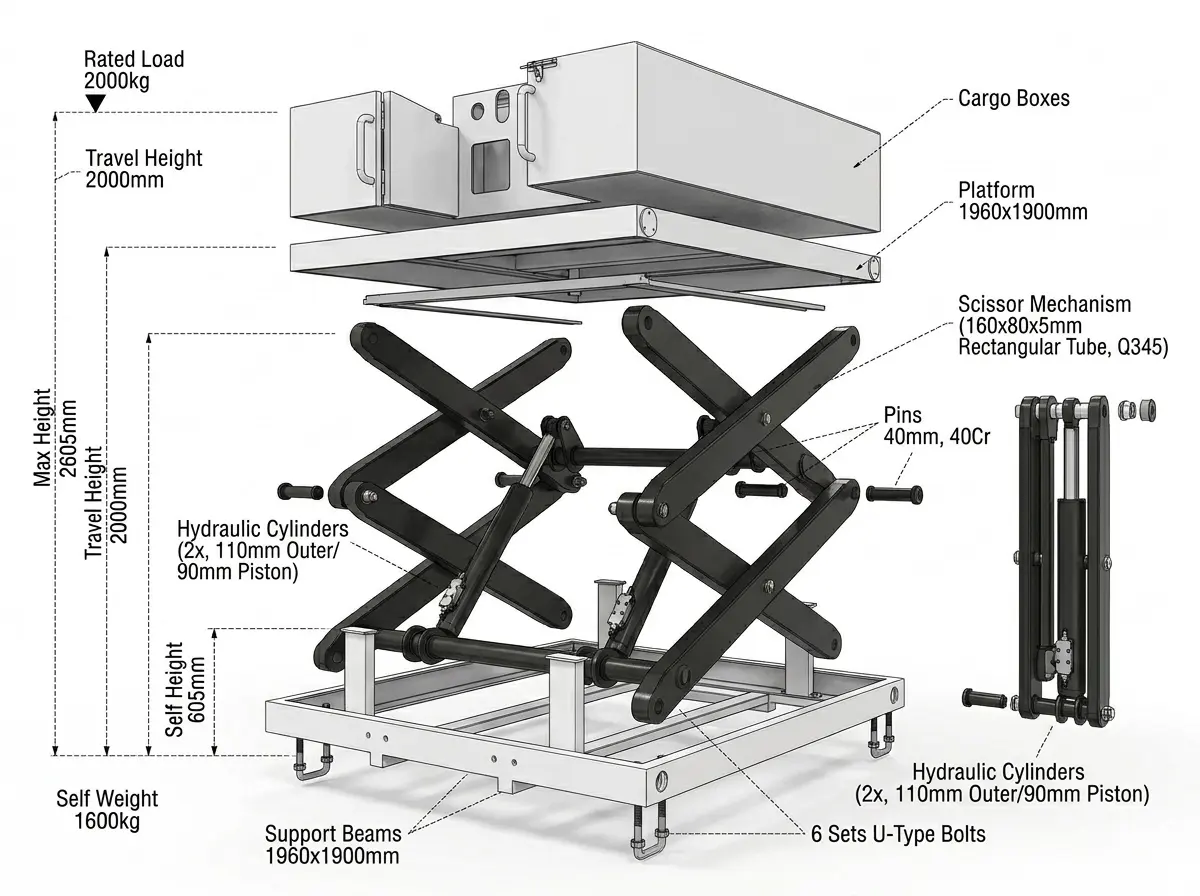
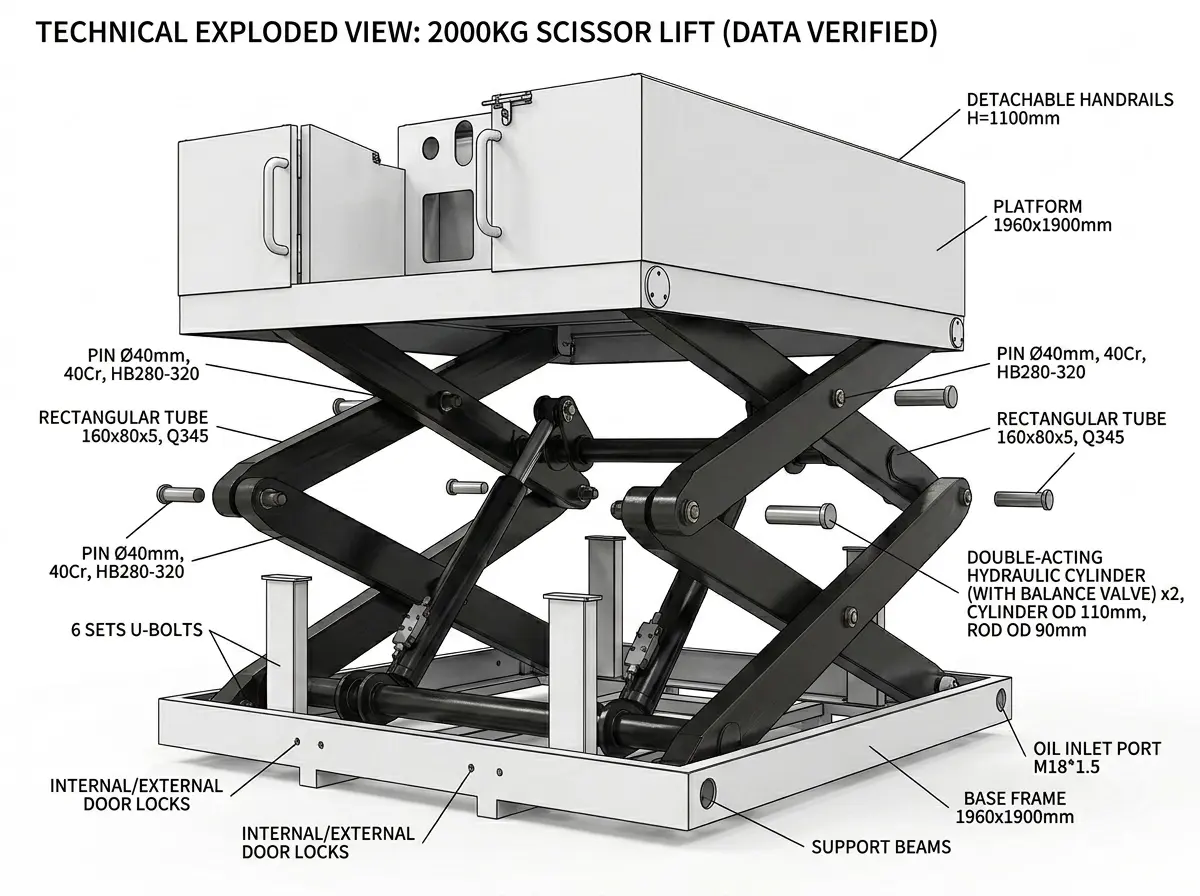
The scissor arms are fabricated from Q345 rectangular tubing (160mm x 80mm x 5mm). Q345 is an high-strength low-alloy (HSLA) steel that offers an optimal balance between weldability and tensile strength. [External Link: Q345 steel mechanical properties] were crucial in calculating the safety factor under dynamic loading. The pivot pins are constructed from 40Cr alloy steel, which underwent specialized tempering to reach a hardness of HB280-320, ensuring that the high-frequency movement does not lead to pin-bore elongation or seizure.

2. Specialized Hydraulic Slave System
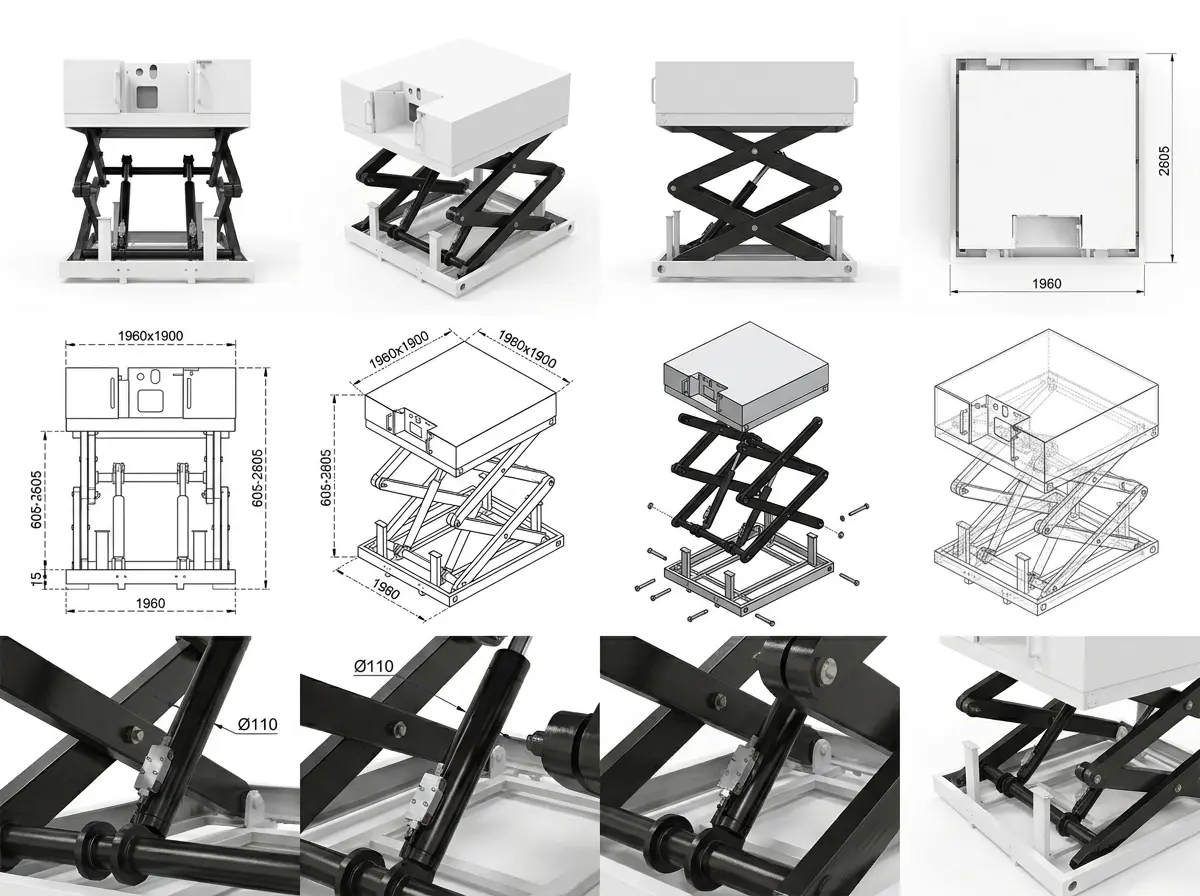
Since the unit operates without an independent motor, the hydraulic architecture focuses on fluid management and safety redundancy. The platform utilizes dual double-acting cylinders with a 110mm outer diameter and 90mm piston rod. Crucially, each cylinder is equipped with an integrated hydraulic balance valve. This valve prevents the platform from descending in the event of a hose burst in the host machine’s circuit and ensures synchronized movement between the two cylinders.

3. Precision Integration and Mounting
To secure the lift to the host machinery, the base frame is equipped with six sets of U-bolts, providing a rigid mechanical connection that can withstand the lateral forces generated by the assembly line robots. The platform features detachable 1100mm safety railings, allowing the client to reconfigure the workspace depending on the size of the engine block being processed. This [Internal Link: scissor lift platform] also features a unique internal lifting point design, where the hoisting eyes are recessed within the frame to maintain a clean exterior profile.

4. Safety and Compliance
In accordance with German industrial safety standards, the lift includes support beams for the fully lowered position to prevent hydraulic creep over time. All joints are equipped with steel rollers and high-precision guide rails to ensure lateral stability at the maximum 2000mm travel height. The use of water-based paint not only meets environmental standards but provides a durable, corrosion-resistant finish capable of withstanding the cooling lubricants used in automotive machining.


Technical Specifications

The following table summarizes the core engineering parameters for the unit deployed in Wolfsburg, Germany.

Parameter Specification
Rated Load Capacity 2,000 kg (2 Tons)
Travel Height (Stroke) 2,000 mm
Stowed Height (Closed) 605 mm
Max Platform Height 2,605 mm
Platform / Base Size 1,960 mm x 1,900 mm
Main Arm Material Q345 Rectangular Tube (160805mm)
Pivot Pin Material 40Cr (Tempered to HB280-320)
Cylinder Configuration Dual Double-Acting (110mm OD / 90mm Rod)
Hydraulic Interface M18 * 1.5 Input Port
Drive Type Slave Unit (External Hydraulic Power Required)
Safety Features Integrated Balance Valves, Detachable Railings, Support Beams
Surface Treatment Water-based Paint (White Base/Platform, Black Arms)
Equipment Self-Weight 1,600 kg

Project Gallery