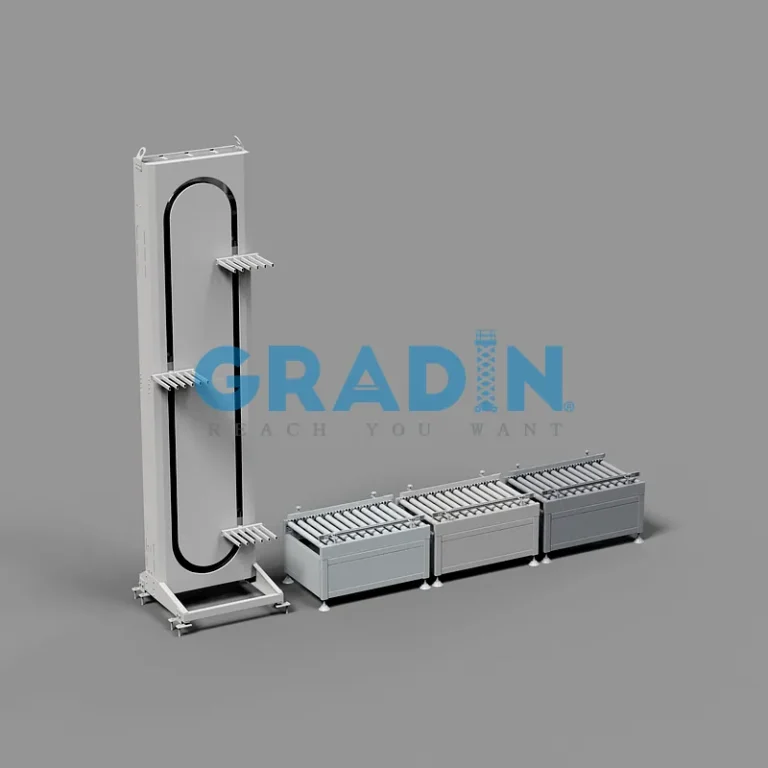
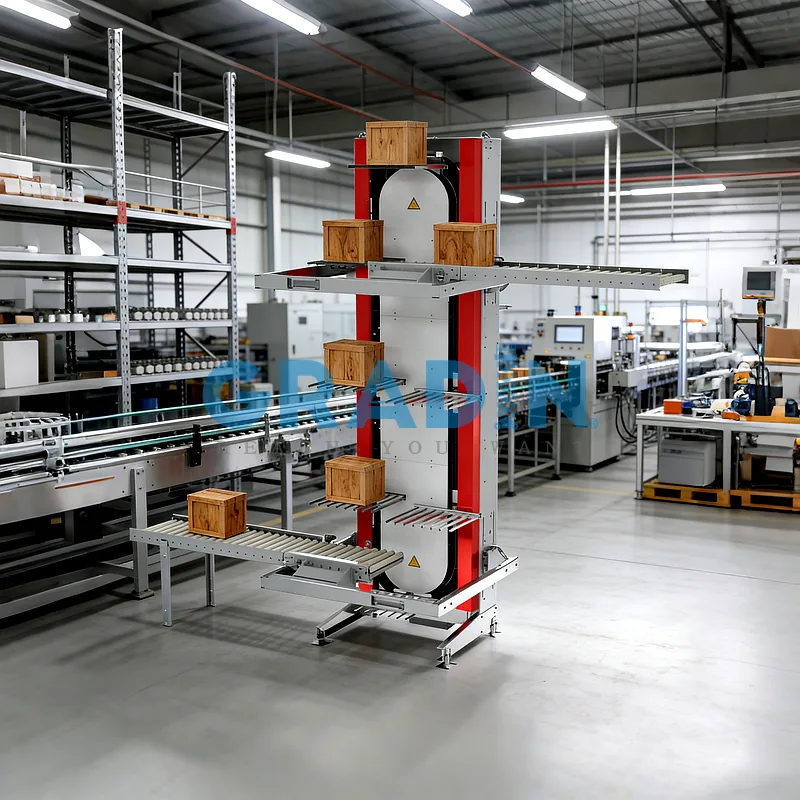
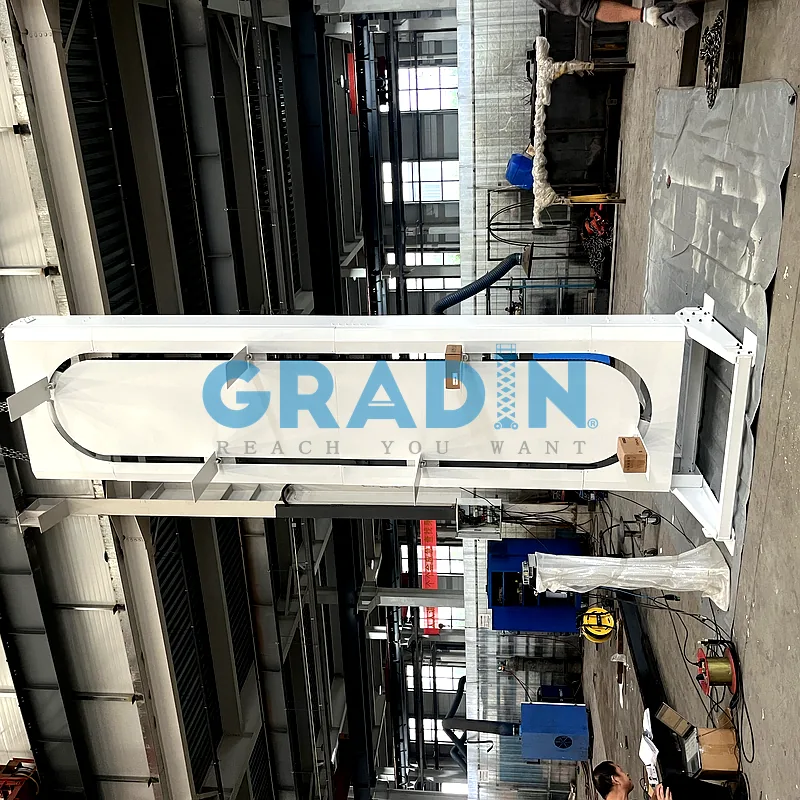
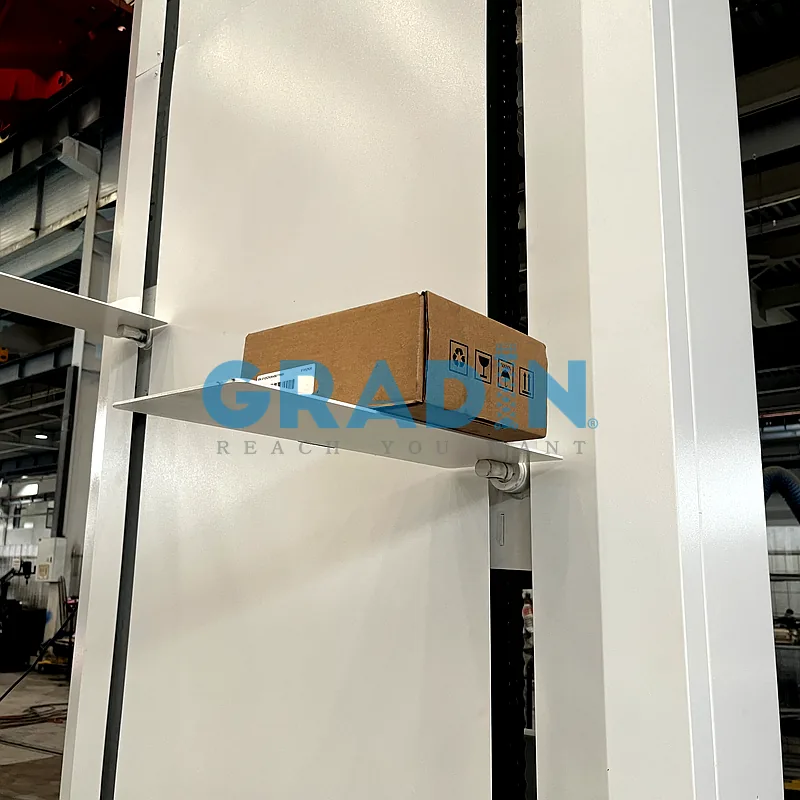
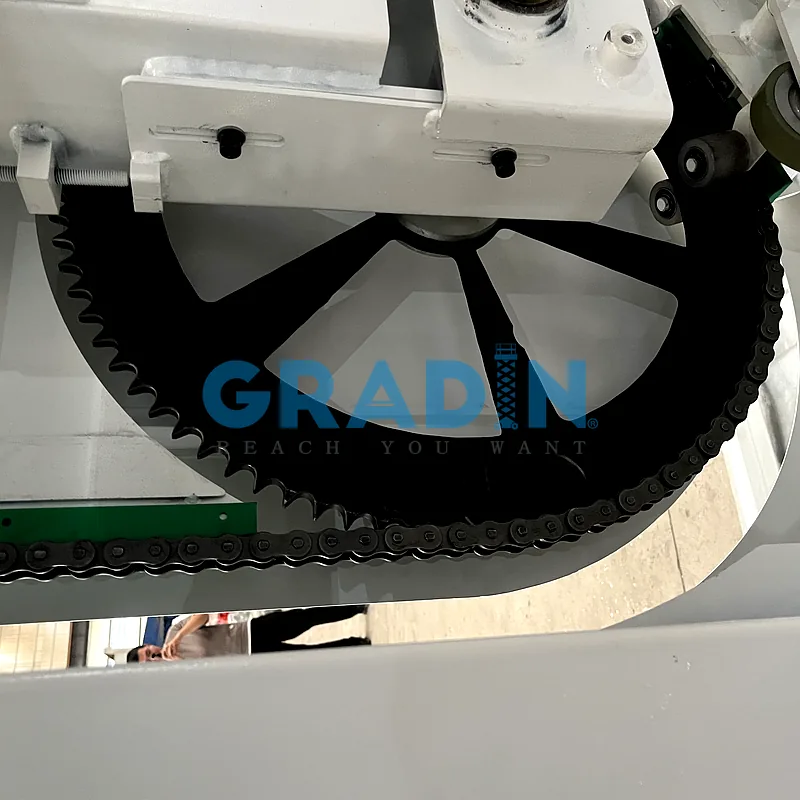
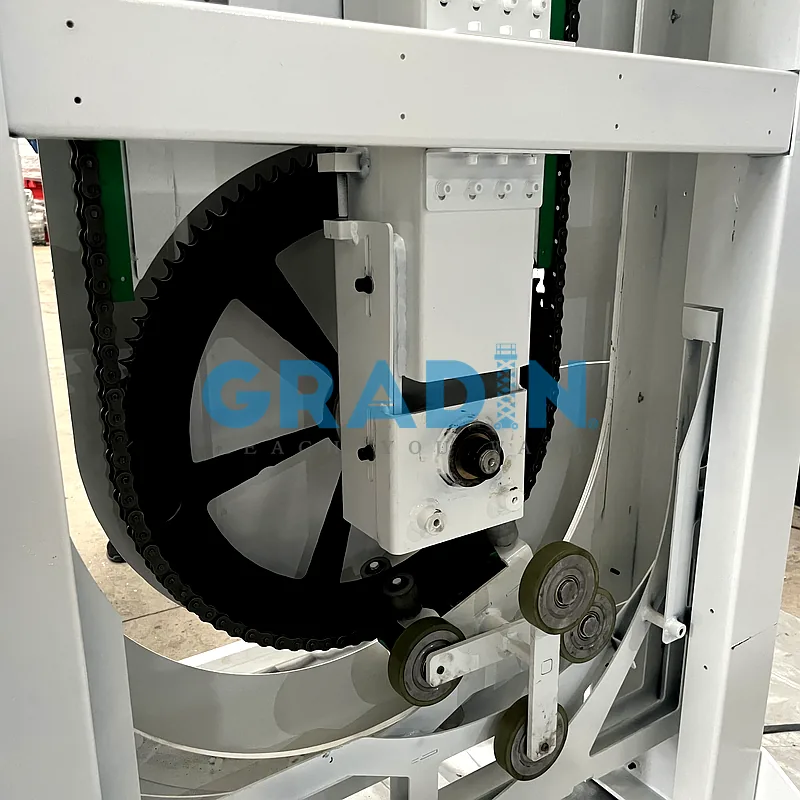
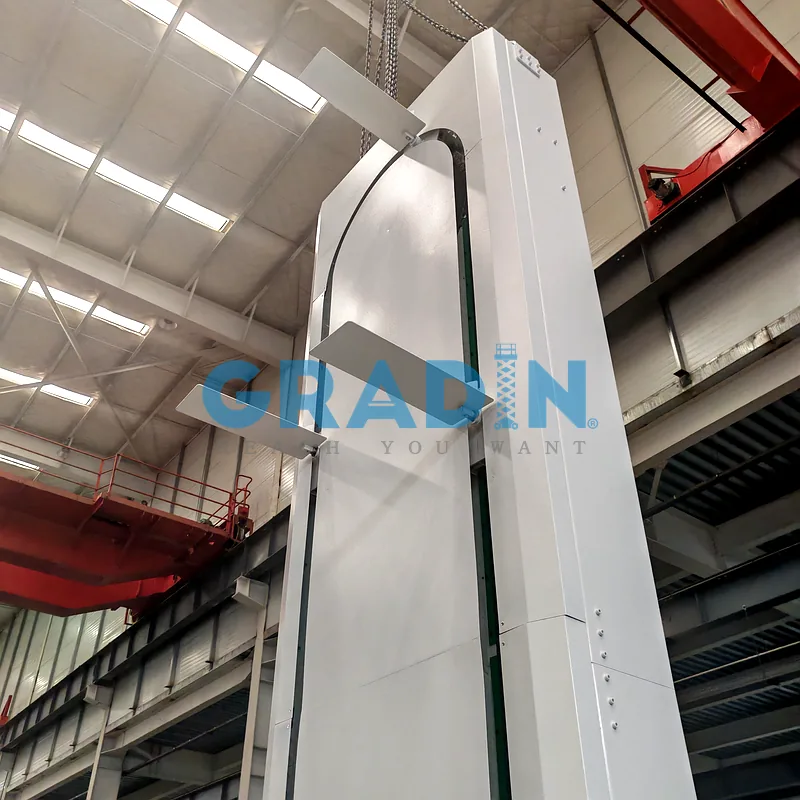
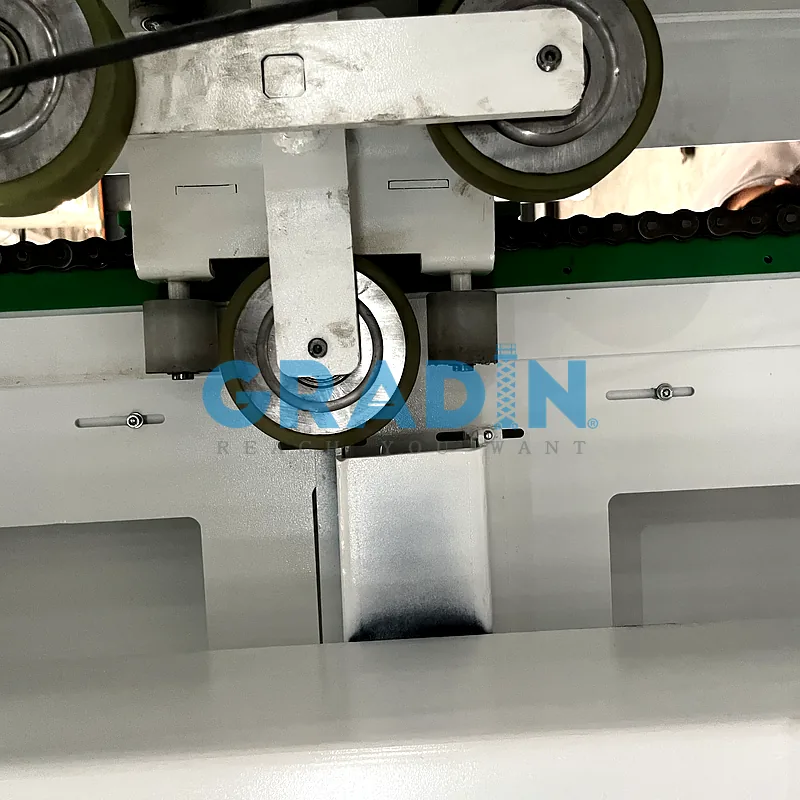
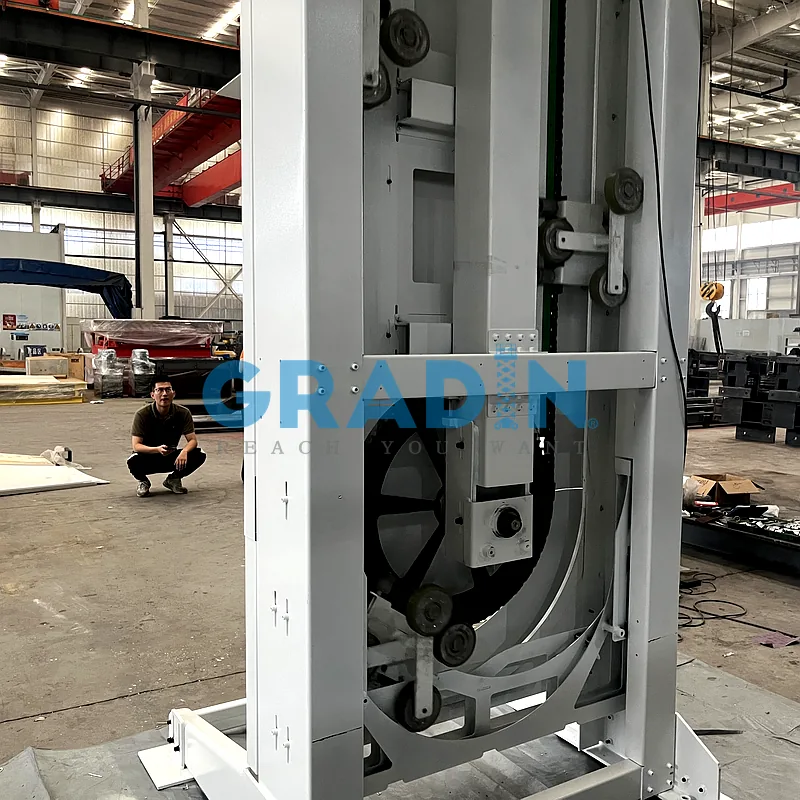
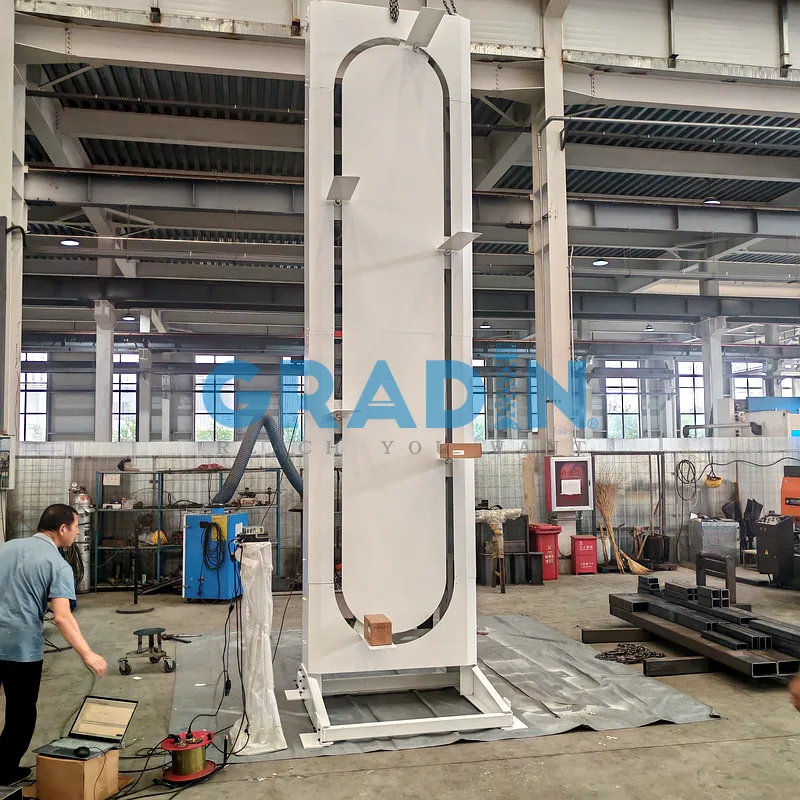
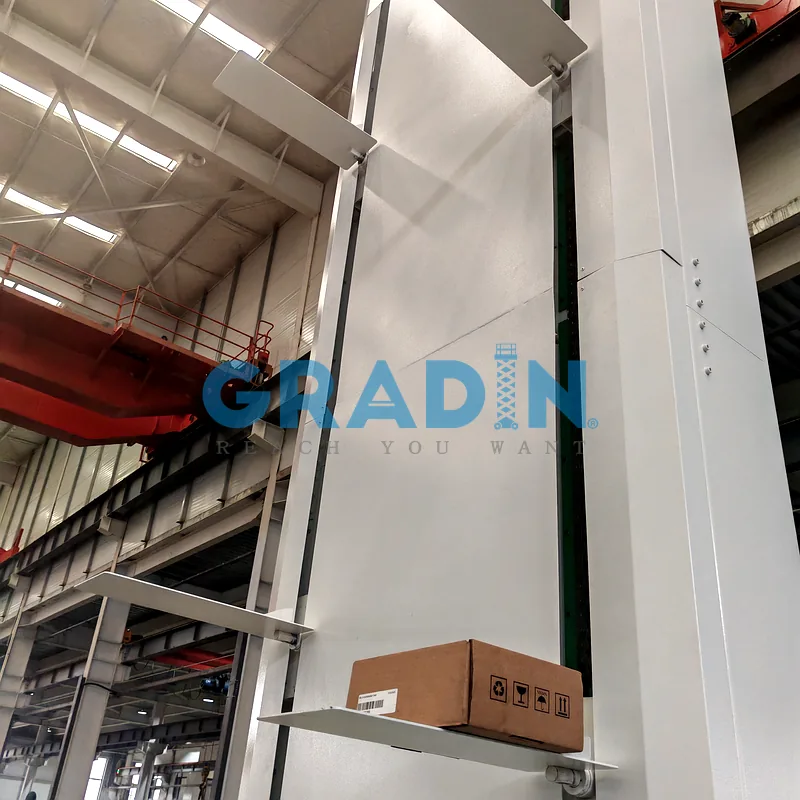
A mid-to-high velocity continuous vertical conveyor (CVC) engineered for rigid sorting logic. 100% custom-built, it utilizes heavy-duty mechanical fork-arms to bridge horizontal conveyors, guaranteeing a sustained 2000 pieces per hour throughput without gravity-induced dropping or collision.
Payload Geometry: Custom fork spacing and comb profiles strictly calculated to secure your specific carton or tote dimensions.
Velocity Sync: Servo-driven VFD logic aligns horizontal-to-vertical transfer speeds, preventing bottlenecks during peak operations.
Kinetic Integrity: FEA-validated steel forks resist mechanical fatigue and torsional deflection under continuous high-cycle loading.
| Technical Category | Engineering Keys | Standard Reference | Gradin Bespoke (ETO) |
| I. Performance | Throughput Flux | 300 – 600 P/H | 2,000+ P/H (Continuous Flow) |
| Line Velocity | 0.20 m/s | Synchronized (1.0 – 1.5 m/s+) | |
| Positioning | ± 25 mm | Sub-Millimeter (± 1 mm) | |
| II. Structural | Actuation Medium | Standard Roller Chain | High-Tension Belt / Lubrication-Free |
| Mast Engineering | Rolled C-Channel | FEA-Optimized High-Yield Alloy Spine | |
| Surface Protection | Industrial Paint | C5-M Marine / Anti-Static / Stainless | |
| III. Intelligence | Architektura sterowania | Siemens S7-1500 | Industry 4.0 / 5G Ready |
| Handshake Protocol | I/O Signals | Profinet / EtherCAT / TCP-IP | |
| Feedback System | Proximity Sensors | Absolute Encoders / Laser Range | |
| IV. Compliance | Risk Mitigation | Basic E-Stop | Active SIL 3 / Jam Detection |
| Global Standards | CE / Local Codes | OSHA / ASME B20.1 / ISO 13849 |
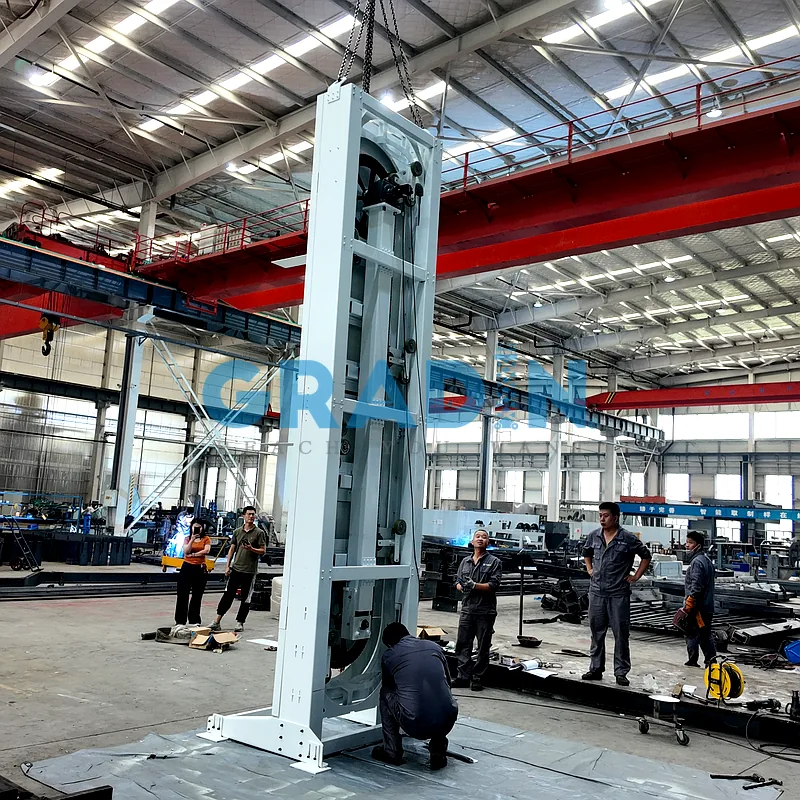
Operating a Gradin 2000P/H Fork-Arm CVC at extreme throughput velocities introduces immense harmonic stress and resonant frequencies across the mast structure. Unlike generic vertical conveyors that suffer from structural sway at high frequencies, our systems utilize advanced Finite Element Analysis (FEA) to optimize the structural “spine” for ultra-high-frequency vibration dampening. We utilize high-yield box-section alloy steel for the primary guide masts, ensuring absolute verticality even during rapid carrier indexing. Every fork-arm is individually modeled to neutralize torsional stress, ensuring that cargo remains perfectly horizontal during 1.5 m/s+ vertical transitions. This structural stiffness is critical for preserving the fatigue life of the system over decades of 24/7 operation, transforming the CVC from a standard lift into a durable, high-velocity vertical artery.
Managing 2,000 units per hour requires a sophisticated digital pulse that eliminates mechanical shock during transition. The Gradin 2000P/H Fork-Arm CVC bypasses the latency of traditional lifts via a Closed-Loop Servo Architecture integrated natively into our drive logic. Utilizing the Siemens S7-1500 PLC suite, the system achieves sub-millimeter fork alignment (±1mm) at every floor transition. This precision is essential for high-speed automated sortation hubs where robotic handshakes demand zero-bump thresholds. Furthermore, our Active Buffer Logic allows the carrier loop to dynamically adjust velocity. If a downstream bottleneck is detected by the WMS, the CVC shifts into an intelligent buffering mode, storing units vertically to prevent an upstream line stoppage, thereby maximizing the “items-per-minute” (IPM) throughput of the entire facility.
The Gradin 2000P/H Fork-Arm CVC functions as more than a vertical conveyor; it is a transparent data node within your facility’s digital nervous system. It is designed for seamless native integration with modern Warehouse Management Systems (WMS) and Automated Storage and Retrieval Systems (AS/RS). Through Profinet, EtherCAT, or 5G connectivity, the system facilitates a real-time data handshake, reporting carrier occupancy, torque profiles, and unit coordinates directly to your MES. To ensure maximum uptime in 24/7 industrial hubs, integrated vibration sensors and motor torque profilers track the “health signature” of every carrier. This Predictive Maintenance Monitoring identifies component wear before it results in unplanned downtime, transforming maintenance from a reactive task to a scheduled, data-driven strategy.
In fast-paced fulfillment centers, moving 2,000+ totes per hour vertically between pick-levels and packing mezzanines is a primary operational hurdle. The Gradin 2000P/H Fork-Arm CVC eliminates this bottleneck with lubrication-free drive belts and sub-second handshakes with sortation networks. By removing the need for traditional chains, we eliminate chain-stretch and the resulting maintenance downtime, ensuring a continuous vertical flow that standard reciprocating lifts cannot match, maintaining peak items-per-minute (IPM) metrics across multi-shift operations.
Frozen goods distribution requires non-stop vertical movement in environments where standard lubricants freeze and metal becomes brittle. The bespoke Gradin 2000P/H Fork-Arm CVC is engineered with thermal-rated mechanical alloys and IP65-rated control enclosures. Our oil-free drive maintains 24/7 continuous flow without the leakage or freezing risks inherent in hydraulic systems, preserving the thermal integrity of the facility while moving hundreds of units per hour in extreme temperature conditions.
Vertical transit between cleanroom floors requires a system that generates zero particulate matter and zero harmonic resonance. The custom Gradin 2000P/H Fork-Arm CVC utilizes high-tension polyurethane belts and stainless-steel cladding to maintain ISO Class environmental sterility. The vibration-dampened architecture ensures silent operation (< 62 dB), making it ideal for ergonomic workplaces and high-precision assembly links where mechanical noise must be minimized to protect operator health and system calibration.
Active Safety Architecture as the Absolute Engineering Priority
Safety in high-flux, multi-carrier vertical logistics—especially where AMRs and human operators interface with automated open shafts—is the core of our engineering mandate. The Gradin 2000P/H Fork-Arm CVC exceeds international regulatory standards through a multi-layered redundancy loop:
Active SIL 3 Risk Mitigation: We integrate ultra-fast jam-detection laser sensors and secondary mechanical lockouts to prevent carrier collisions and structural impact in the event of an obstruction.
Perimeter Safety Interlocks: Every station is designed with full-height shaft enclosures and high-speed power doors, electronically interlocked with the ASME B20.1 safety PLC logic to ensure zero operator access during transit.
Fail-Safe Mechanical Braking: Redundant electromagnetic braking systems provide a 200% holding torque safety margin. These engage instantly during an E-stop or power loss, securing the entire multi-carrier loop and protecting your facility’s high-value cargo from vertical drift or catastrophic failure.
W przypadku tej wytrzymałej serii możemy zaprojektować nośność do [300] ton, z wymiarami platformy i wysokościami podnoszenia dostosowanymi do zakresu operacyjnego klienta. Wymagania wykraczające poza naszą standardową matrycę inżynieryjną zostaną poddane analizie metodą elementów skończonych (MES) przez nasz zespół inżynierów w celu zapewnienia wykonalności strukturalnej przed zaproponowaniem rozwiązania.
Aby zainicjować propozycję inżynieryjną, należy podać następujące dane podstawowe:
Udźwig znamionowy
Maksymalna wysokość podnoszenia i wysokość zamknięcia
Wymiary platformy (dł. x szer.)
Cykl pracy (np. cykle operacyjne na godzinę/dzień)
Warunki środowiskowe (np. wewnątrz/na zewnątrz, mycie, odporność na eksplozje)
Ograniczenia dotyczące głębokości wykopu lub prześwitu
Tak. Systemy sterowania mogą być wyposażone w standardowe protokoły komunikacyjne (np. Profinet, Modbus, Ethernet/IP) wykorzystujące [Siemens / Allen-Bradley / Omron] Sterowniki PLC. Zapewnia to płynną synchronizację sygnałów we / wy z przenośnikami przed / za przenośnikami, jednostkami AGV / AMR i centralnym pokojem sterowania.
Każda niestandardowa jednostka przechodzi obowiązkowy test akceptacji fabrycznej (FAT) przed wysyłką. Obejmuje to ciągłe testy operacyjne przy obciążeniu znamionowym 100%, statyczne testy przeciążeniowe przy [120% / 125%] oraz fizyczne wyzwalanie wszystkich mechanicznych blokad zabezpieczających przed upadkiem i hydraulicznych blokad bezpieczeństwa. Dokumentacja FAT i dowód wideo są zawarte w pakiecie inżynieryjnym.
Po ostatecznym zatwierdzeniu rysunków układu ogólnego (GA), czas realizacji produkcji wynosi zazwyczaj 4 do 8 tygodni. Ponadgabarytowe elementy konstrukcyjne zostały zaprojektowane modułowo, aby zmieścić się w standardowych kontenerach transportowych (20FT/40HQ). Montaż na miejscu wykorzystuje wstępnie zaprojektowane śrubowe połączenia kołnierzowe i wytrzymałe zaślepki lotnicze, całkowicie eliminując potrzebę spawania w terenie.
Zapewniamy standard [12/24]-Miesięczna gwarancja obejmuje ramę konstrukcyjną i główne podzespoły hydrauliczne/elektryczne. Aby zminimalizować przestoje w pracy, wraz z urządzeniem dostarczany jest kompleksowy zestaw standardowych materiałów eksploatacyjnych (np. zestawy uszczelnień cylindrów, przełączniki jazdy, przekaźniki). W okresie gwarancyjnym części zamienne w przypadku awarii niewywołanych przez człowieka są wysyłane priorytetową przesyłką lotniczą (DHL/FedEx) w ciągu 48 godzin.
Poza gwarancją gwarantujemy Dożywotnie wsparcie inżynieryjne. Rysunki CAD urządzeń niestandardowych, schematy elektryczne i BOM (Bill of Materials) są trwale archiwizowane w naszym systemie. Zapewnia to nieprzerwane zdalne rozwiązywanie problemów, wskazówki dotyczące konserwacji i dokładne dopasowanie części zamiennych przez cały cykl życia sprzętu.
Bezpieczeństwo i poufność: Twoja propozycja techniczna i projekt 3D będą gotowe w ciągu 2 godzin.
Gradin Machinery jest wiodącym producentem specjalizującym się w podnośnikach koszowych i hydraulicznych. Dzięki certyfikatom ISO i CE zapewniamy bezpieczny, niezawodny i dostosowany do potrzeb sprzęt dla globalnych potrzeb przemysłowych
Copyright ©2026 GRADIN Maszyny. Wszelkie prawa zastrzeżone