Rura RGV dla logistyki kolejowej

Product Name:Composite Pipe RGV

Product Model: Gradin CPR-RGV Series

Nośność: 5000 – 50000kg (Customization Available)

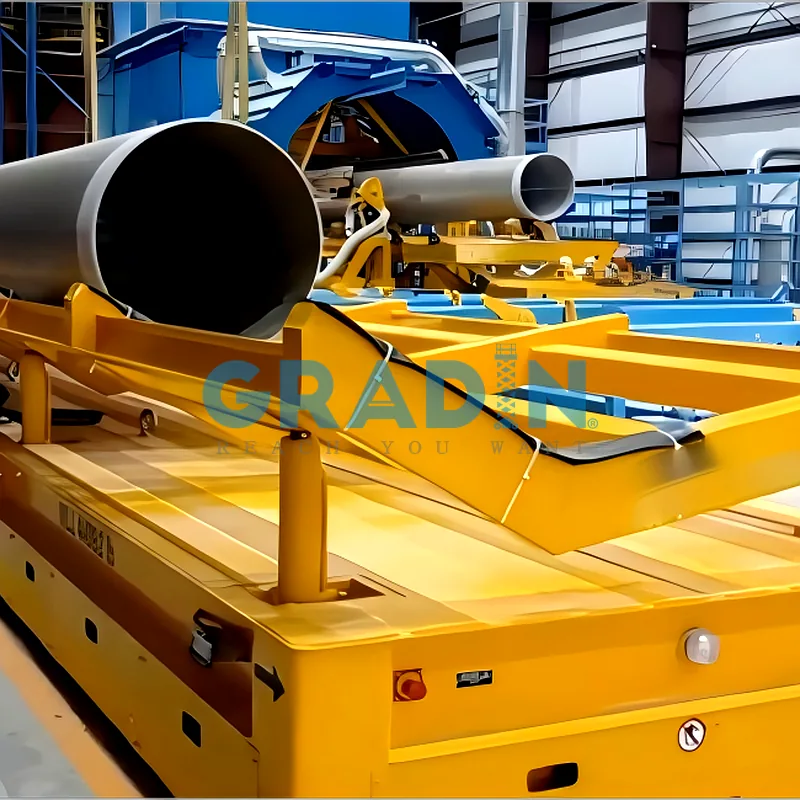
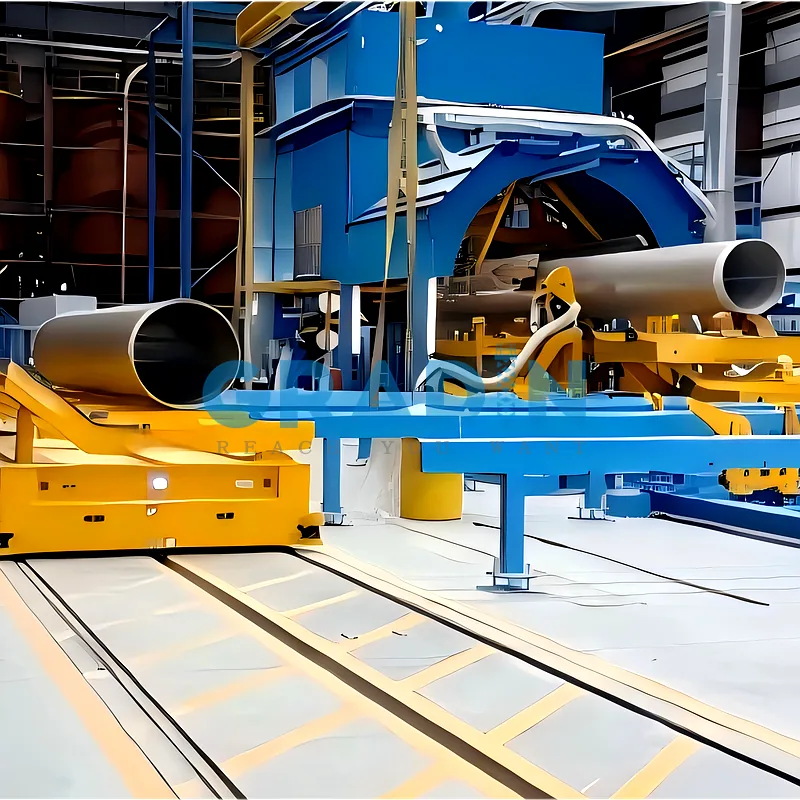
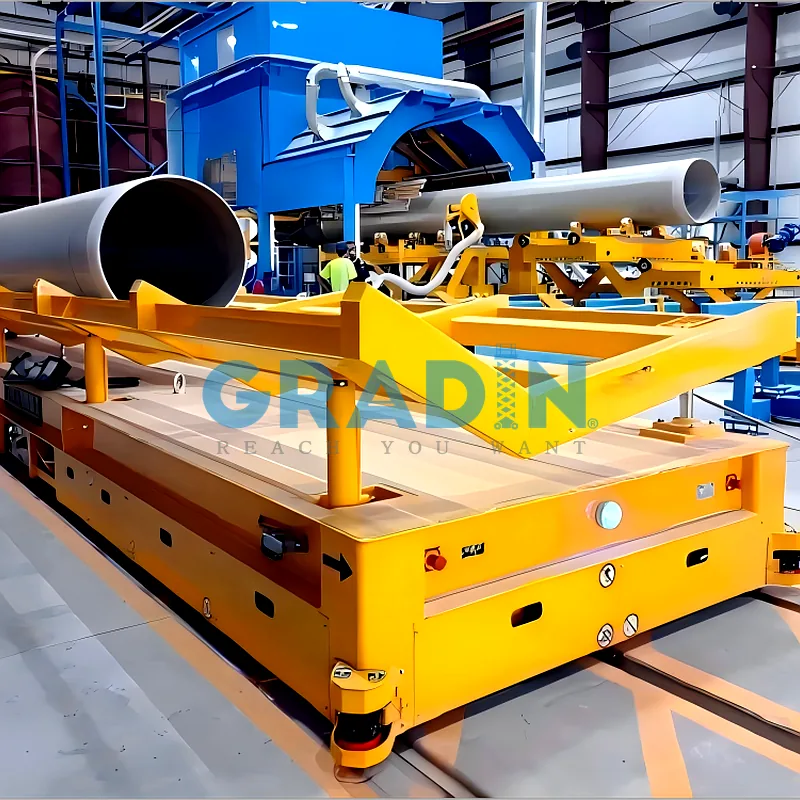
This Composite Pipe RGV acts as a precision rail-guided transit system for the specialized movement of composite piping and other sensitive long-load materials. Built by Gradin as a custom engineered-to-order (ETO) solution, the vehicle is integrated with non-marring contact surfaces and specialized cradles to protect the structural integrity of high-value composite components. Designed for seamless integration into fixed rail infrastructures, this Composite Pipe RGV ensures stable, vibration-free transport and absolute positioning accuracy, providing a superior alternative to traditional manual handling in advanced manufacturing environments.

  • Szybka reakcja: Specjalistyczne konsultacje inżynieryjne od pierwszego dnia.
  • Sprawdzony proces: Precyzja od początkowej koncepcji do ostateczne zatwierdzenie przez klienta.
  • Certyfikowana jakość: Zgodność z branżowymi normami bezpieczeństwa ISO/CE.
  • Wartość bezpośrednia: Przejrzyste, bezpośrednie ceny fabryczne dla indywidualnych rozwiązań.
  • Dożywotnia pomoc techniczna: Pomoc techniczna dotycząca produktu cały okres eksploatacji.
Gradin-Composite-Pipe-RGV-Bespoke-Rail-Guided-Vehicle-System

Specyfikacja techniczna i kluczowe funkcje

Specyfikacja i konfiguracja

Parametr inżynieryjny Standard Reference Gradin Bespoke Capabilities
Udźwig znamionowy 10,000 kg (10 Tons) Scalable from 2,000kg to 30,000kg (30T)
Navigation Mode Rail-Guided (RGV) Encoder + Laser Station Positioning
Travel Speed 30 m/min (Reference) High-Speed Configurations up to 80 m/min
Dokładność pozycjonowania ± 5 mm Millimeter-Level Calibration (± 2 mm)
Cradle Protection Basic Steel V-Saddle Bespoke Nylon/UHMWPE/Rubber Cladding
Control Logic Handheld Remote Gradin PLC-Integrated / MES / WMS Connectivity

Szczegóły

Cechy produktu

Engineering Excellence of the Gradin Composite Pipe RGV

Gradin Composite Pipe RGV Structural Integrity and Deflection Control
Composite pipes, particularly those used in offshore or chemical industries, are susceptible to structural damage if subjected to excessive bending during transit. Every Gradin Composite Pipe RGV is engineered using Finite Element Analysis (FEA) to simulate the specific support points required for your pipe lengths. Our bespoke chassis engineering ensures that the vehicle maintains a perfectly rigid platform, providing multi-point support that prevents material deflection. This engineering-first approach preserves the structural integrity of the composite layers, especially during high-acceleration rail transitions, ensuring that your high-value cargo arrives at the next production stage in pristine condition.

Gradin Composite Pipe RGV Surface-Safe Cradle and Clamping Technology
Unlike standard steel-on-steel handling, the Gradin Composite Pipe RGV features an application-specific cradle design tailored to protect delicate external coatings and resin layers. We utilize non-marking, soft-touch materials such as high-density polyurethane or UHMWPE for all contact surfaces. Our bespoke clamping systems are engineered with pressure-sensing technology to secure the pipes during high-speed travel without exceeding the material’s crush-resistance limits. This precision load security is essential for maintaining the safety of the cargo during rapid start-stop cycles in automated factory environments.

Gradin Composite Pipe RGV High-Precision Docking and Automation
In automated composite winding or curing lines, the docking accuracy of the RGV is critical for process continuity. The Gradin Composite Pipe RGV utilizes high-resolution encoder feedback and laser distance sensors to achieve millimeter-perfect positioning (±2mm) at every workstation. Through an open-architecture PLC control system, the RGV communicates directly with your MES (Manufacturing Execution System) via industrial Wi-Fi or 5G. This allows for fully autonomous operational logic, where the RGV can automatically request mandrel transfers, coordinate with robotic arms, and manage cooling-zone dwell times without human intervention, creating a truly synchronized material flow.

Scenariusze aplikacji i filmy wideo

Gradin Composite Pipe RGV Application Solutions

Offshore Marine Pipe and Subsea Flowline Manufacturing
The Gradin Composite Pipe RGV is the premier professional choice for manufacturing facilities producing heavy-duty subsea flowlines and flexible risers. By providing a synchronized rail-guided platform, we allow for the safe movement of exceptionally long pipe sections through the winding and testing phases. We customize the RGV with motorized rotation rollers bespoke to your inspection requirements, allowing the pipe to be rotated 360 degrees for NDT (Non-Destructive Testing) while remaining securely on the shuttle, significantly reducing the need for overhead crane lifts.

Chemical Processing and Corrosive Fluid Pipeline Logistics
In facilities producing glass-reinforced plastic (GRP) or specialized chemical pipes, maintaining a clean and controlled transport method is mandatory. We engineer the Gradin Composite Pipe RGV with corrosion-resistant coatings and sealed electronics, allowing it to operate reliably near chemical treatment baths or high-humidity curing rooms. The bespoke steering and docking logic ensuring that these sensitive components are delivered to the exact coordinates required for flange welding or secondary machining, turning a complex manual handling task into a safe, automated logistics operation.

Automated Curing, Winding, and Finishing Line Integration
For modern composite plants moving toward Industry 4.0, the Gradin Composite Pipe RGV acts as the high-speed link between disconnected production zones. We customize the power management system—offering either high-capacity Lithium-Ion battery modules or automated cable reels—to match your travel distances and cycle times. The RGV’s ability to communicate with Industry 4.0 WMS systems ensures that every pipe section is tracked in real-time, optimizing the flow between the winding station and the final curing oven, reducing logistical bottlenecks and improving overall production throughput.

Safety Standards of the Gradin Composite Pipe RGV

Redundant Safety Architecture and Multi-Layered Protection
Transporting massive composite structures requires sophisticated safety protocols that go beyond basic regulations. Every Gradin Composite Pipe RGV is integrated with a redundant safety architecture, including industrial-grade laser scanners that create a programmable 360-degree “safety zone” around the vehicle. In the event of an unexpected obstruction or a deviation in rail stability, the intelligent control system executes a controlled deceleration to protect the personnel and the high-value cargo. Furthermore, we integrate emergency stop-pull cords and acoustic-optic warning signals, ensuring that your automated rail system operates with the highest safety rating in the industry (ISO 3691-4/CE).

Zdjęcia produktów

Zgodność z globalnymi standardami

Niestandardowe rozwiązania Gradin

W przypadku tej wytrzymałej serii możemy zaprojektować nośność do [300] ton, z wymiarami platformy i wysokościami podnoszenia dostosowanymi do zakresu operacyjnego klienta. Wymagania wykraczające poza naszą standardową matrycę inżynieryjną zostaną poddane analizie metodą elementów skończonych (MES) przez nasz zespół inżynierów w celu zapewnienia wykonalności strukturalnej przed zaproponowaniem rozwiązania.

Aby zainicjować propozycję inżynieryjną, należy podać następujące dane podstawowe:

  • Udźwig znamionowy

  • Maksymalna wysokość podnoszenia i wysokość zamknięcia

  • Wymiary platformy (dł. x szer.)

  • Cykl pracy (np. cykle operacyjne na godzinę/dzień)

  • Warunki środowiskowe (np. wewnątrz/na zewnątrz, mycie, odporność na eksplozje)

  • Ograniczenia dotyczące głębokości wykopu lub prześwitu

Tak. Systemy sterowania mogą być wyposażone w standardowe protokoły komunikacyjne (np. Profinet, Modbus, Ethernet/IP) wykorzystujące [Siemens / Allen-Bradley / Omron] Sterowniki PLC. Zapewnia to płynną synchronizację sygnałów we / wy z przenośnikami przed / za przenośnikami, jednostkami AGV / AMR i centralnym pokojem sterowania.

Każda niestandardowa jednostka przechodzi obowiązkowy test akceptacji fabrycznej (FAT) przed wysyłką. Obejmuje to ciągłe testy operacyjne przy obciążeniu znamionowym 100%, statyczne testy przeciążeniowe przy [120% / 125%] oraz fizyczne wyzwalanie wszystkich mechanicznych blokad zabezpieczających przed upadkiem i hydraulicznych blokad bezpieczeństwa. Dokumentacja FAT i dowód wideo są zawarte w pakiecie inżynieryjnym.

Po ostatecznym zatwierdzeniu rysunków układu ogólnego (GA), czas realizacji produkcji wynosi zazwyczaj 4 do 8 tygodni. Ponadgabarytowe elementy konstrukcyjne zostały zaprojektowane modułowo, aby zmieścić się w standardowych kontenerach transportowych (20FT/40HQ). Montaż na miejscu wykorzystuje wstępnie zaprojektowane śrubowe połączenia kołnierzowe i wytrzymałe zaślepki lotnicze, całkowicie eliminując potrzebę spawania w terenie.

Zapewniamy standard [12/24]-Miesięczna gwarancja obejmuje ramę konstrukcyjną i główne podzespoły hydrauliczne/elektryczne. Aby zminimalizować przestoje w pracy, wraz z urządzeniem dostarczany jest kompleksowy zestaw standardowych materiałów eksploatacyjnych (np. zestawy uszczelnień cylindrów, przełączniki jazdy, przekaźniki). W okresie gwarancyjnym części zamienne w przypadku awarii niewywołanych przez człowieka są wysyłane priorytetową przesyłką lotniczą (DHL/FedEx) w ciągu 48 godzin.

Poza gwarancją gwarantujemy Dożywotnie wsparcie inżynieryjne. Rysunki CAD urządzeń niestandardowych, schematy elektryczne i BOM (Bill of Materials) są trwale archiwizowane w naszym systemie. Zapewnia to nieprzerwane zdalne rozwiązywanie problemów, wskazówki dotyczące konserwacji i dokładne dopasowanie części zamiennych przez cały cykl życia sprzętu.
Powiązane studia przypadków

Przenośnik pionowy recyprokalny Gradin na miarę do zastosowań zewnętrznych, z zamkniętą windą, odporny na warunki atmosferyczne

Podnośnik zewnętrzny Gradin 5T

Skalowanie przepustowości w pionie: Niestandardowa integracja podnośnika widłowego optymalizuje logistykę o dużej gęstości

Gradin - synchroniczny podnośnik nożycowy do dużych obciążeń - inżynieria ETO

80-tonowa zsynchronizowana platforma nożycowa eliminuje ugięcia strukturalne

Niestandardowy podnośnik rolkowy usprawnia przetwarzanie ciężkich materiałów w Australii