Potrzebujesz porady technicznej?

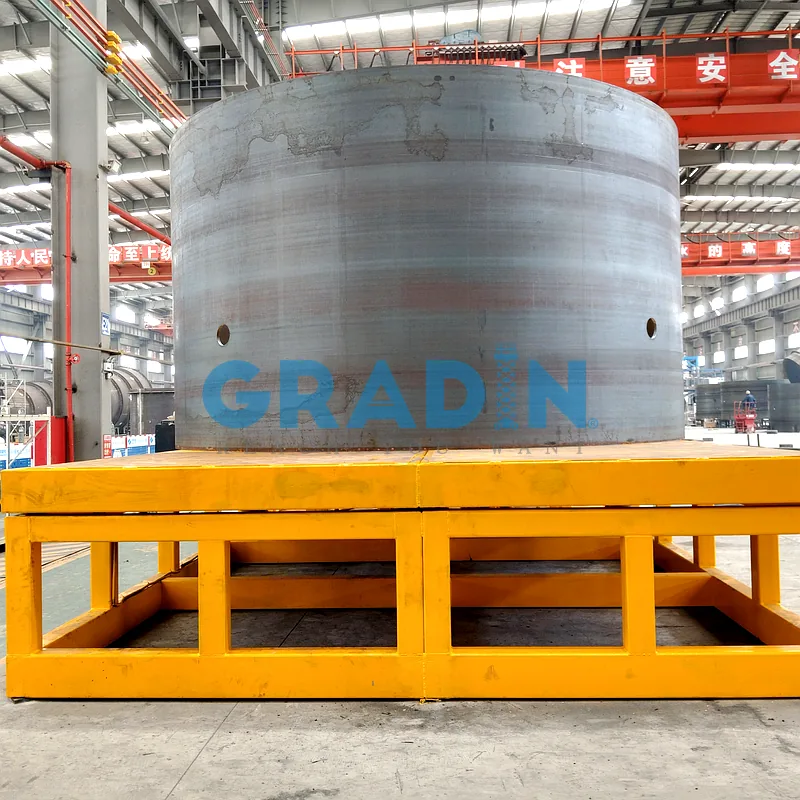
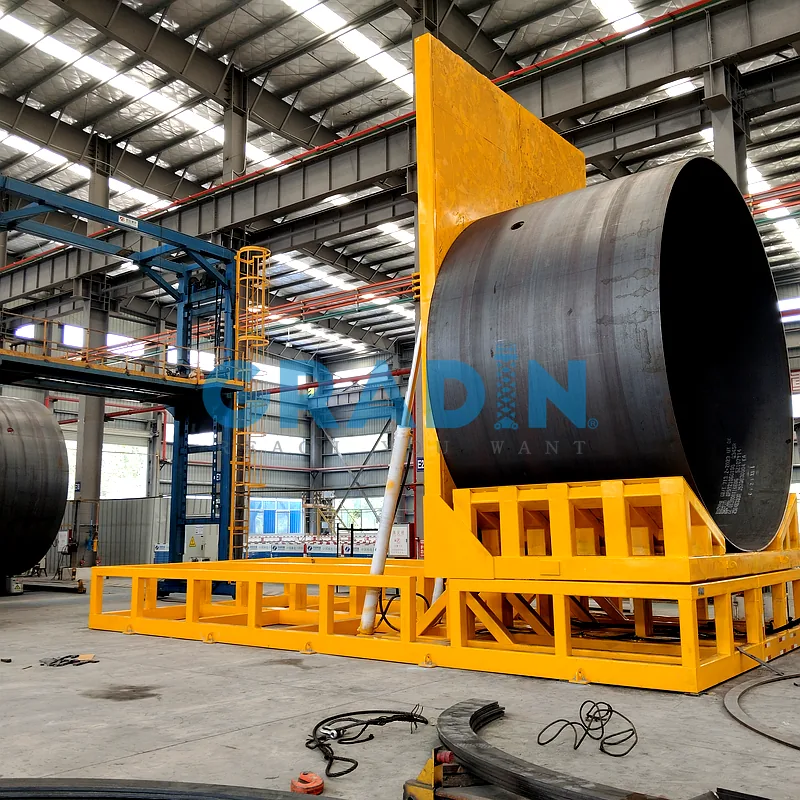
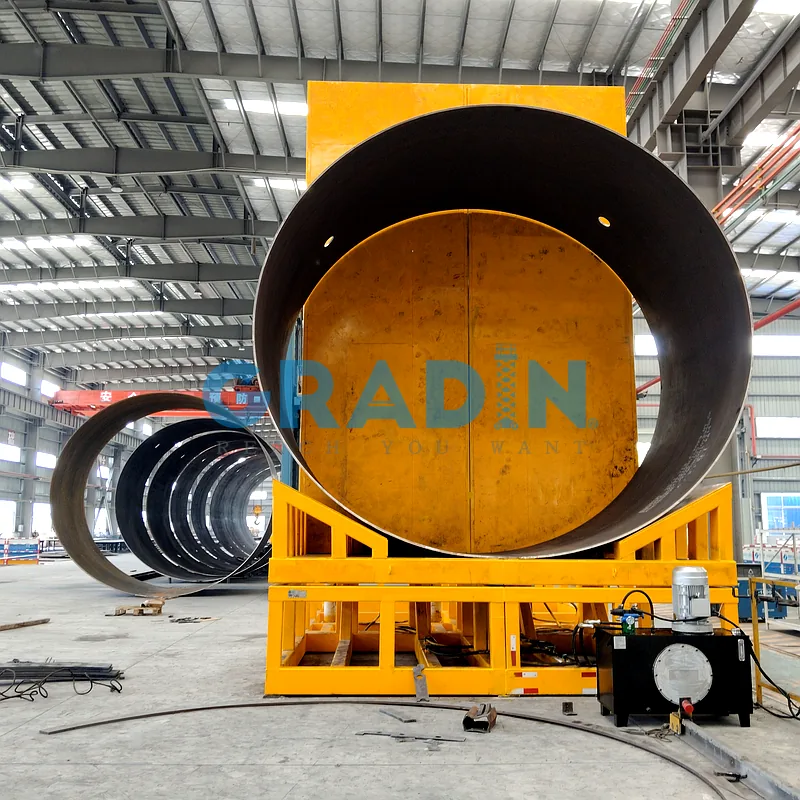
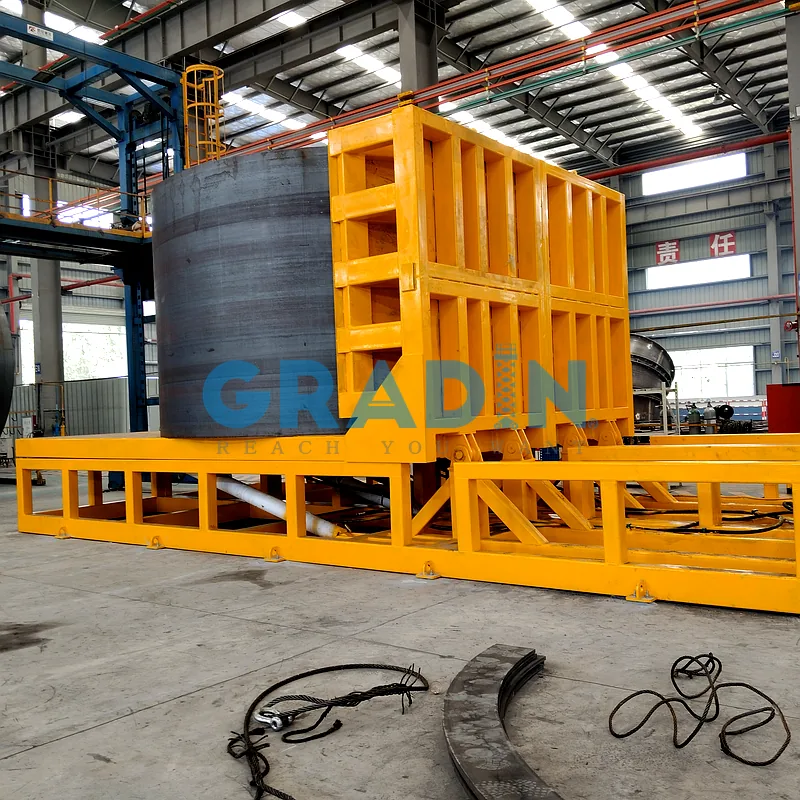
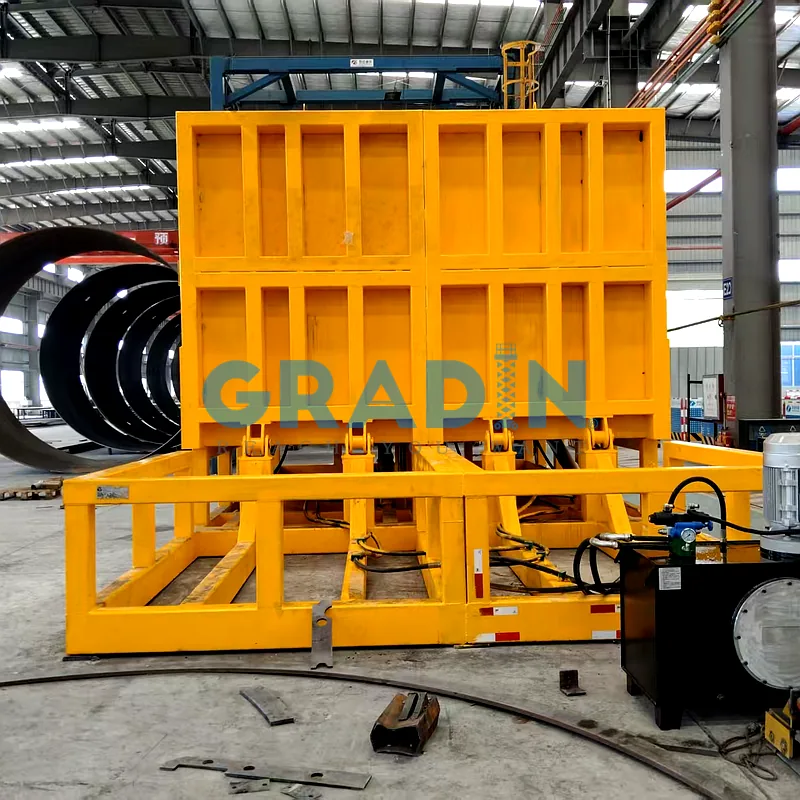
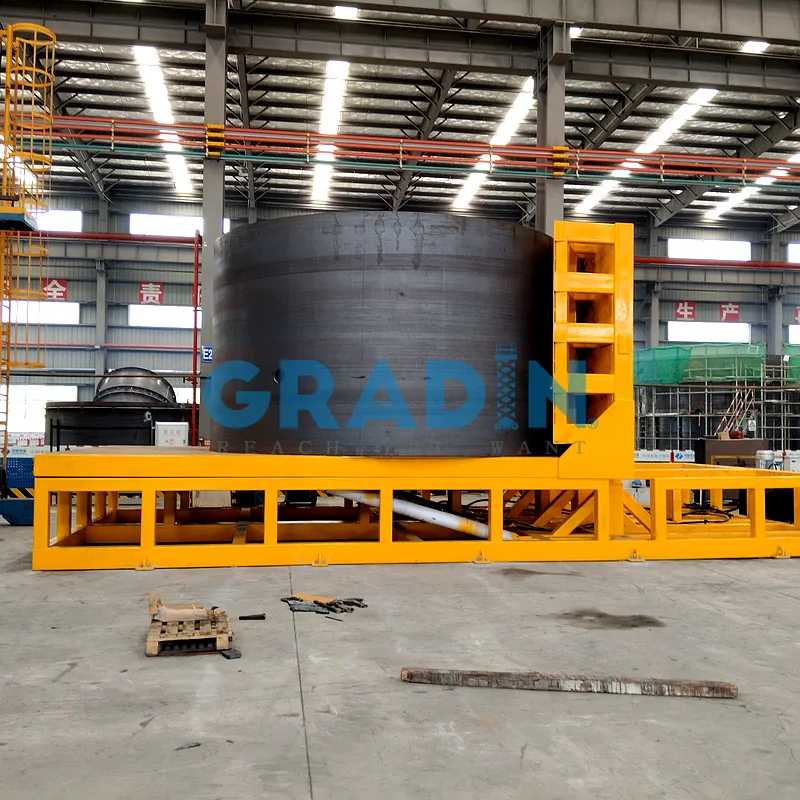
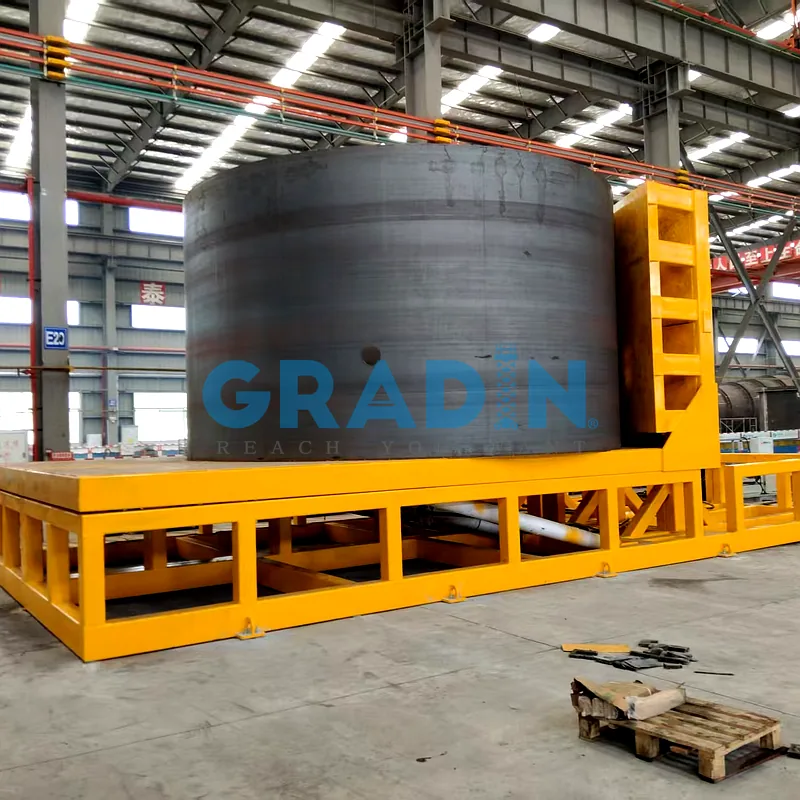
Przemysłowy 20-tonowy podnośnik hydrauliczny do rur ciśnieniowych o dużej średnicy w Duisburgu, Niemcy

Przegląd klientów

This engineering project involved the design, manufacturing, and commissioning of a heavy-duty 20-ton hydraulic upender (tilter) for a Tier-1 energy infrastructure fabrication facility in Duisburg, Germany. The facility specializes in the production of high-pressure conduits and large-scale steel penstocks for hydroelectric power plants and hydrogen storage projects across the European Union.

The primary technical objective was to provide a safe, controlled 90-degree flipping mechanism for massive circular pipes with diameters ranging from 2,500 mm to 7,000 mm. Previously, the facility relied on synchronized overhead cranes for material rotation a high-risk operation that prone to load oscillation and surface damage. This [Internal Link: heavy-duty hydraulic upender] was engineered to transition these 20,000 kg components from a vertical to a horizontal orientation, facilitating high-precision longitudinal welding and ultrasonic testing. The equipment was designed to meet DIN EN ISO 12100 safety standards and carries full CE certification for the German industrial market.

Wyzwanie i rozwiązanie

Wyzwania dla klientów

The manipulation of large-diameter pressure pipes presents extreme mechanical challenges, particularly regarding center-of-gravity (CoG) shifts and structural stability during the 90-degree tilting arc.

  • Rotational Stability of Circular Profiles: Standard flat-platform upenders are unsuitable for circular loads. A 7-meter diameter pipe has a high CoG, which risks rolling or sliding during the tilting process, leading to catastrophic structural failure or personnel injury.

  • Extreme Structural Loading: A 20-ton static load becomes a dynamic force during rotation. The frame required high torsional rigidity to prevent twisting of the platforms under eccentric loading.

  • Surface Integrity Requirements: Pressure pipes for energy infrastructure require pristine surface conditions. Any localized pressure or metal-on-metal friction during tilting could introduce stress concentrators or micro-cracks in the steel.

  • Dimensional Versatility: The equipment had to accommodate a vast range of diameters (2.5m to 7m) while maintaining a consistent loading height for automated welding lines.

  • Precise Motion Control: The flip time needed to be regulated within 10 minutes to ensure hydraulic pressure stability and prevent the “over-center” effect where the load accelerates due to gravity.

Niestandardowe rozwiązanie GRADIN

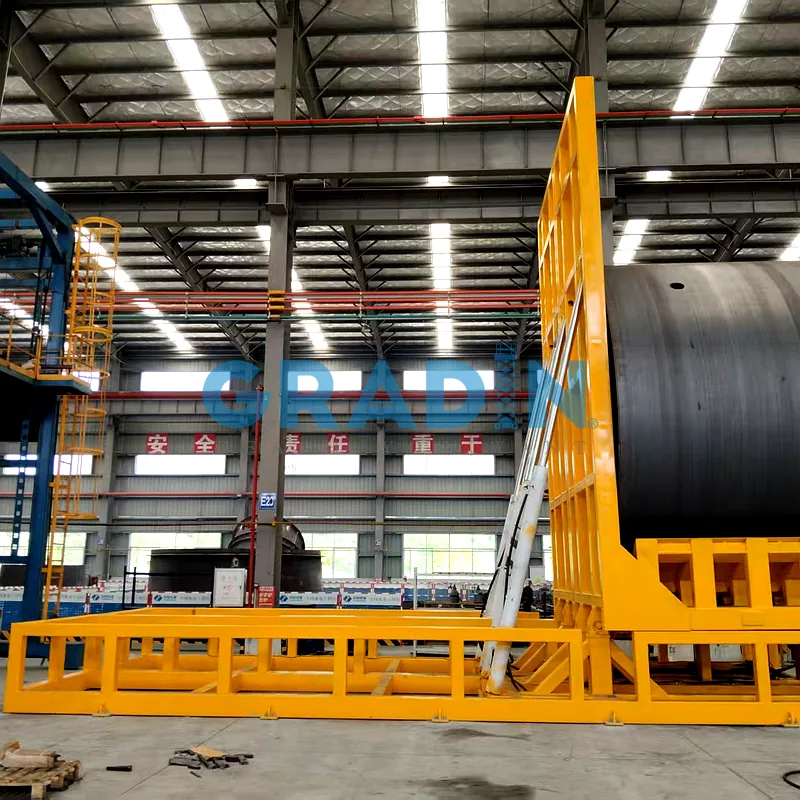
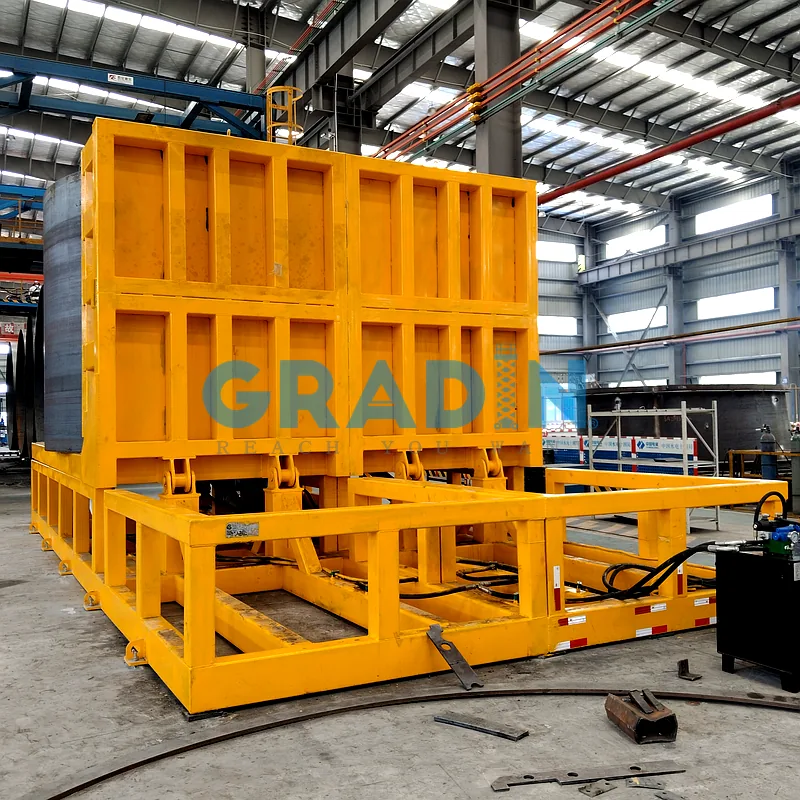
To address these technical requirements, a customized L-shaped hydraulic tilter was engineered with a reinforced structural skeleton and synchronized high-pressure hydraulics.

1. Structural Frame and Platform Engineering
The main chassis is constructed from high-tensile J30020010 rectangular tubing, providing a rigid foundation for the dual-platform system. The primary loading platform (3m x 4.8m) and the secondary receiving platform (4.8m x 7m) were designed to handle the 20,000 kg payload with a safety factor of 2.5:1. To prevent the pipe from rolling, a V-shaped stabilization groove  was integrated into the 3-meter longitudinal section of the platform. This cradle centers the pipe regardless of its diameter (2.5m to 7m), locking the circular profile into the tilt-axis.

2. Synchronized Heavy-Duty Hydraulics
The tilting motion is driven by dual Φ150-105 high-pressure cylinders. These cylinders are managed by an 11KW hydraulic power unit (HPU) configured for the local 400V/50Hz grid. The system employs a proportional flow control valve to ensure that both cylinders move in perfect synchronization, preventing any tilt-axis skewing. To manage safety, the HPU includes hydraulic counterbalance valves that lock the cylinders in position in the event of a hose burst or power failure, preventing an uncontrolled descent.

3. Motion Profiling and Safety Systems
The upender completes a 90-degree flip in under 10 minutes, with the speed fully adjustable via the control interface. To meet [External Link: EU Machinery Directive 2006/42/EC], the system includes:

  • Overload Protection: Electronic pressure sensors that halt operation if the 20-ton threshold is exceeded.

  • Dual-Command Logic: A “dead-man” control switch ensures the tilt only proceeds while the operator is actively engaging the button from a safe distance.

  • Emergency Stop Redundancy: Integrated into both the main PLC cabinet and the remote handheld controller.

4. Surface Protection and Finish
The contact surfaces of the V-groove were lined with high-density polyurethane (HDPE) buffers to prevent metal-on-metal contact with the pressure pipes. The entire frame underwent a multi-layer coating process, utilizing a yellow industrial-grade polyurethane topcoat for high visibility and corrosion resistance in the workshop environment.

Parametry techniczne i marki wspierające

Parametry techniczne

The following table summarizes the core engineering parameters of the 20-ton hydraulic upender deployed in Duisburg.

Parametr Specyfikacja
Udźwig znamionowy 20,000 kg (20 Tons)
Flipping Angle 0 – 90 Degrees
Flipping Time < 10 Minutes (Adjustable)
Platform Dimensions (A) 3,000 mm x 4,800 mm
Platform Dimensions (B) 4,800 mm x 7,000 mm
Applicable Pipe Diameter 2,500 mm – 7,000 mm
Structural Frame J300 * 200 * 10 Rectangular Tube
Hydraulic Cylinder Φ150 – 105 (Dual Cylinder System)
Moc silnika głównego 11 KW
Voltage Supply 400V / 50Hz / 3P (Germany Grid)
Stabilization Hardware Integrated V-Groove for Circular Profiles
Safety Certification CE Certified / DIN EN ISO 12100

Marki wspierające

Nasze maszyny przechylające wykorzystują wysokiej jakości importowane i krajowe komponenty do sterowania elektrycznego, pneumatycznego, hydraulicznego i mechanicznego.
1. Elektryczne elementy sterujące
Wysokiej jakości części zapewniają precyzyjne i stabilne działanie
-SIEMENS: PLC, falownik, części niskonapięciowe
-MITSUBISHI: Serwomotory i systemy napędowe
2. Komponenty pneumatyczne i hydrauliczne
Gwarantuje stabilne obracanie i wysoką nośność
-SMC: Siłowniki i akcesoria pneumatyczne
-REXROTH: Zawory hydrauliczne i stacje pomp
3. Mechaniczne części przekładni
Solidna konstrukcja zapewnia płynną pracę
-HIWIN: Prowadnice liniowe i zespoły śrubowe
-NSK: Łożyska obrotowe o wysokiej precyzji
4. Części dystrybucyjne niskiego napięcia
-CHINT/DELIXI: Wyłączniki i przełączniki
-EATON: Komponenty bezpieczeństwa i dystrybucji

Realizacja i osiągnięcia projektu

Szczegóły implementacji

Wykonanie i osiągnięcia

For a heavy-duty pipeline manufacturing enterprise in Duisburg, Germany, we delivered a customized 20-Ton Industrial Hydraulic Upender, exclusively tailored for flipping and handling large-diameter pressure pipes. Replacing traditional crane-assisted flipping and manual calibration, this professional heavy-load solution solves core industry pain points including unbalanced flipping, easy pipe surface damage and low cyclic handling efficiency, achieving safe, stable and high-efficiency turnover operations for large pressure pipe workpieces.
1. Heavy-Load Customization for Large-Diameter Pressure Pipes
Large-diameter pressure pipes feature super heavy weight, large radial volume and rigid surface precision requirements. Ordinary upenders suffer from insufficient bearing capacity, poor structural stability and unbalanced stress during flipping. This customized 20-ton hydraulic upender adopts thickened heavy-duty steel structure and optimized bearing support design, perfectly fitting the overall stress characteristics of large pressure pipes. It fully adapts to heavy-load industrial working conditions and complies with German mechanical safety standards.
2. Stable Flipping & Improved Processing Efficiency
Traditional crane flipping requires multi-person coordination, repeated positioning and long calibration time, resulting in low workpiece turnover efficiency and restricted production progress. The hydraulic synchronous flipping system realizes one-button automatic 90°/180° stable turnover, avoiding idle waiting and repeated adjustment. It improves overall pipe handling efficiency by over 80%, effectively accelerating pipeline processing, testing and packaging cycles.
3. Zero Surface Damage & Guaranteed Pipeline Quality
Pressure pipes have strict requirements for surface integrity and structural tightness. Traditional hoisting and flipping easily cause extrusion deformation, surface scratches and structural stress damage, leading to product disqualification and rework. The upender features uniform bearing and smooth hydraulic flipping without impact or shaking, achieving zero deformation and zero surface damage for large pressure pipes, ensuring pipeline structural performance and finished product quality.
4. Significant Labor Cost Optimization
The original heavy pipe handling process relies on 3–4 skilled workers to complete hoisting, fixing and flipping coordination. This automated hydraulic upender supports Jednoosobowa niezależna obsługa. It simplifies cumbersome operating procedures, eliminates efficiency fluctuations caused by manual operation differences, and maintains stable high-frequency production output.
5. Reliable Safety & Continuous Industrial Operation
Equipped with professional overload protection, hydraulic self-locking, emergency stop and anti-slip positioning devices, the equipment effectively prevents workpiece sliding and accidental falling during operation. Adopting wear-resistant and fatigue-resistant hydraulic components, it adapts to long-term, high-frequency and heavy-load cyclic operation in pipeline workshops, with low failure rate and simple daily maintenance.
Ogólne korzyści z projektu
After official put into operation, the client’s large-diameter pressure pipe handling efficiency increased by 80%+, with greatly reduced labor costs and zero quality damage accidents. The whole flipping process realized standardized and automated operation, effectively improving production capacity, stabilizing product quality and enhancing enterprise market competitiveness.
Zalecany sprzęt

Niestandardowa pionowa platforma podnosząca do stanowisk montażowych - modułowa platforma o regulowanej wysokości

Podnośnik osobowy do montażu silników lokomotyw - Platforma do konserwacji silników kolejowych

Wielkogabarytowa platforma podnosząca do montażu sprzętu lotniczego - Precyzyjna platforma podnosząca dla przemysłu lotniczego

Podnośnik czterokolumnowy z silnikiem śrubowym - Mechaniczna synchroniczna platforma podnośnikowa z czterema kolumnami