Need a Technical Advice?

Automated 2.5-Ton Reciprocating Vertical Conveyor (VRC) for Multi-Level Industrial Logistics in Ludwigshafen, Germany

Client Overview

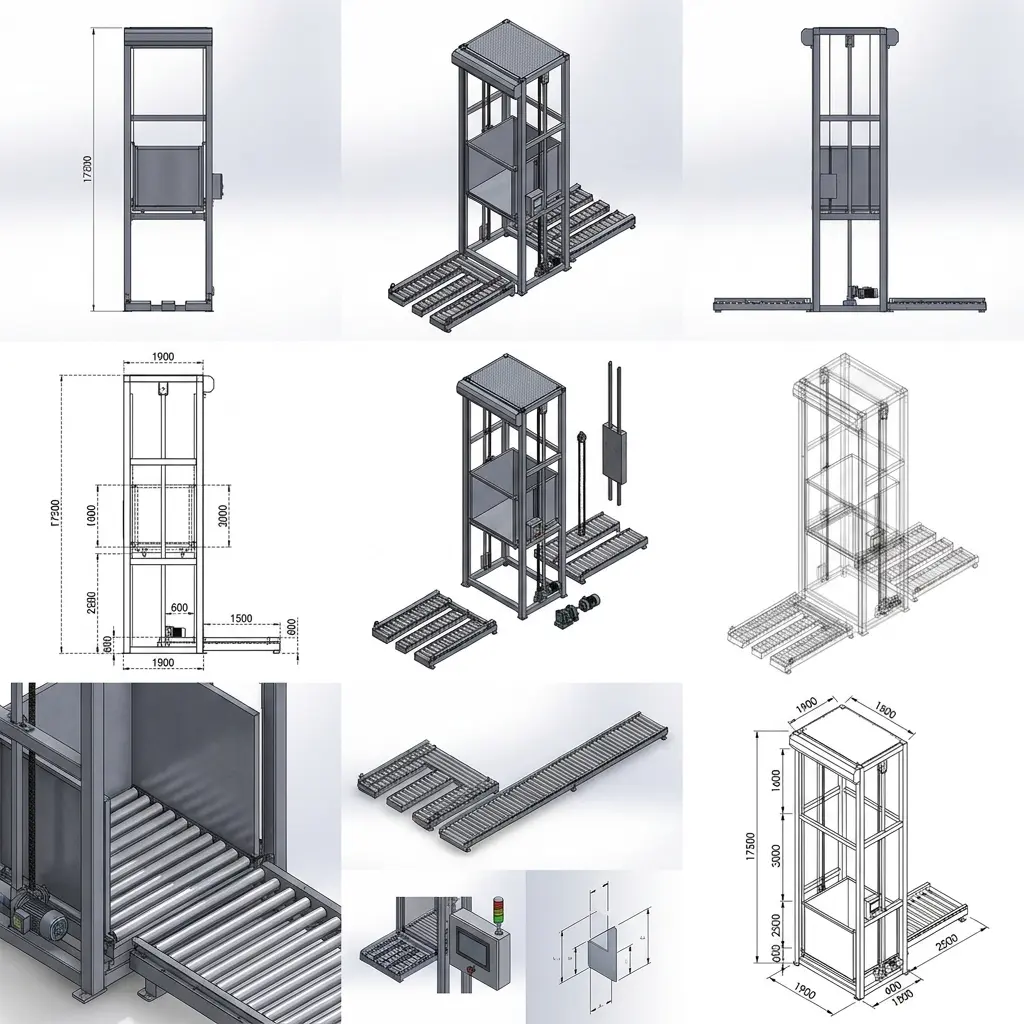
This engineering project involved the design, fabrication, and installation of a high-capacity, automated reciprocating vertical conveyor (VRC) for a large-scale logistics and distribution hub located in Ludwigshafen, Germany. The facility, which operates within the chemical and industrial supply chain, required a robust vertical transport solution to bridge a total elevation gap of 17,500 mm (17.5 meters) across three distinct floor levels.

The system was engineered as an outdoor steel-structure shaft installation, designed to handle heavy palletized loads with a rated capacity of 2,500 kg. Integration with the facility’s automated material flow was a primary requirement, necessitating a synchronized conveyor system both inside the lift cabin and at each landing station. This [Internal Link: automated vertical reciprocating conveyor] serves as the central vertical artery for the plant, enabling the high-speed transfer of 1000mm x 1200mm pallets between production, storage, and dispatch zones. Compliance with the EU Machinery Directive and local German industrial safety protocols was mandatory for the duration of the deployment.

Challenge & Solution

Client Challenges

The project presented significant engineering hurdles, particularly regarding the combination of high payload, significant travel height, and the requirement for seamless automation in an outdoor environment.

  • High-Speed Heavy Load Dynamics: Lifting a 2.5-ton payload at a vertical speed of 30 m/min generates substantial kinetic energy. Ensuring smooth acceleration and deceleration curves to prevent cargo shifting required advanced variable frequency drive (VFD) calibration.

  • Precision Leveling for Manual Interface: Although the system is automated, the “last mile” of cargo handling involves manual pallet jacks. The platform had to achieve a leveling accuracy of ±2mm to allow pallet jacks with 135mm fork widths to enter and exit without obstruction.

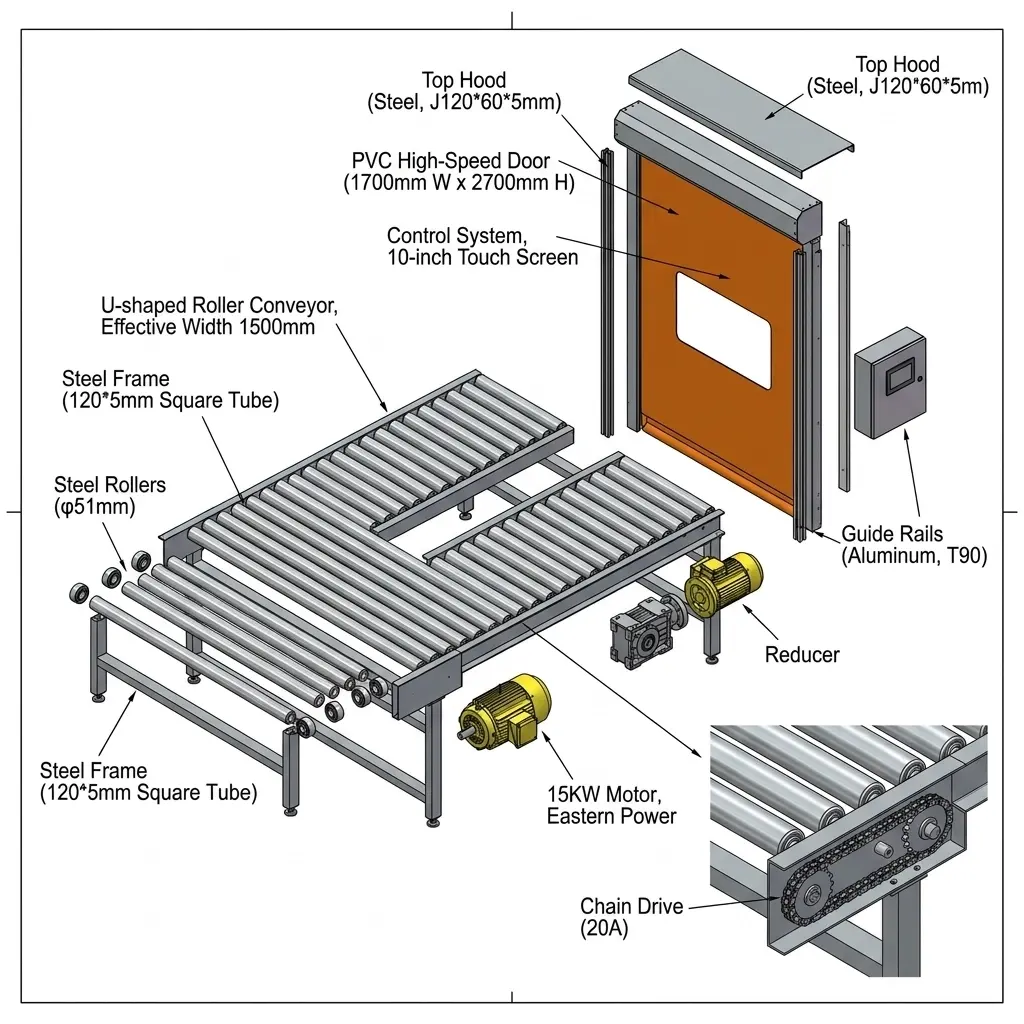
  • Structural Stability over 17.5 Meters: The outdoor vertical shaft is subject to wind loads and thermal expansion. The structure required a frame built from 120mm x 5mm high-tensile square tubing to maintain vertical alignment and prevent rail deflection over the three-story stroke.

  • Multi-Stage Automation Synchronization: The solution required the synchronization of an internal roller conveyor with three external “three-stage” conveyor units. Any lag in communication between the lift PLC and the landing conveyors would result in throughput bottlenecks.

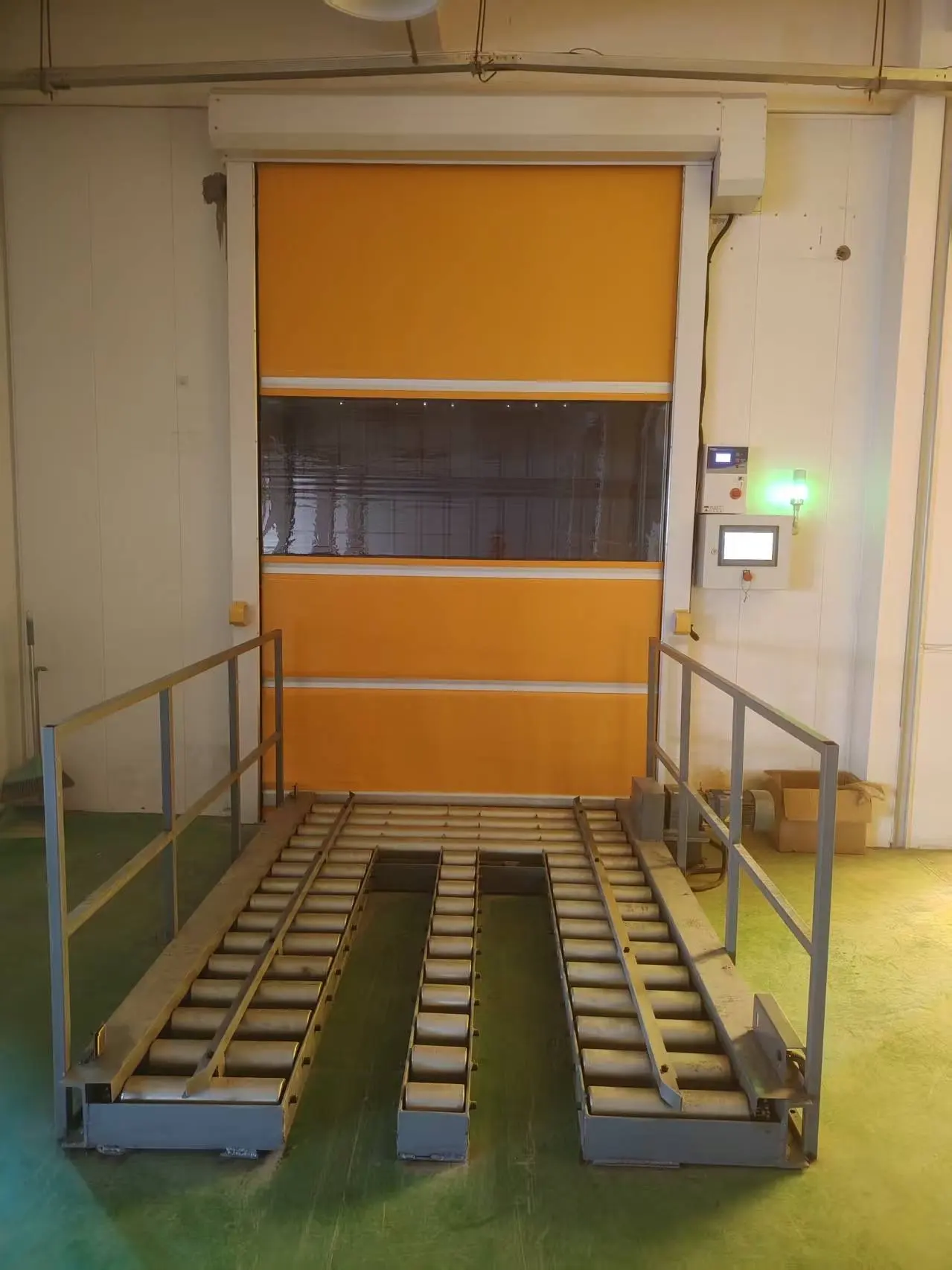
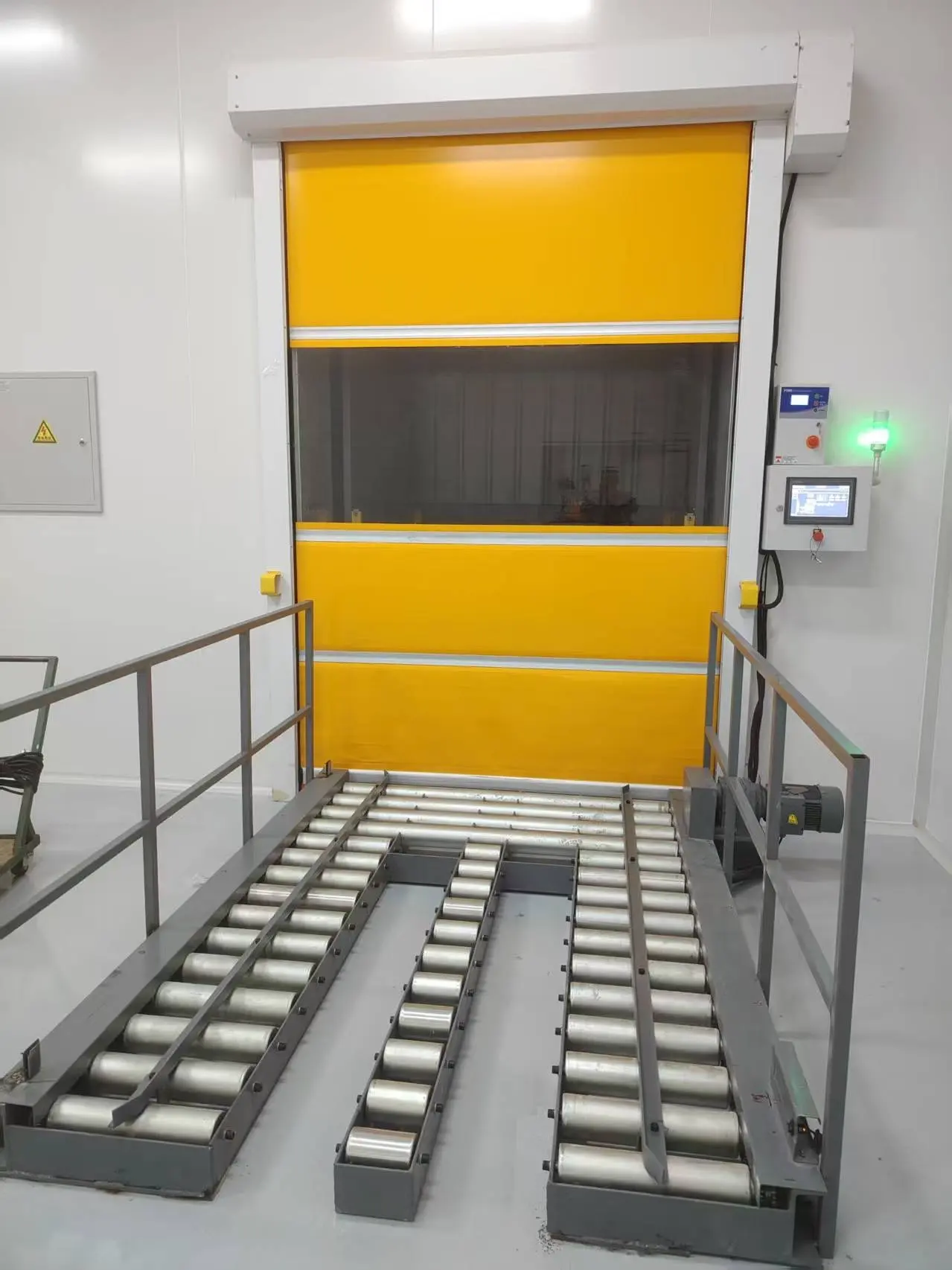
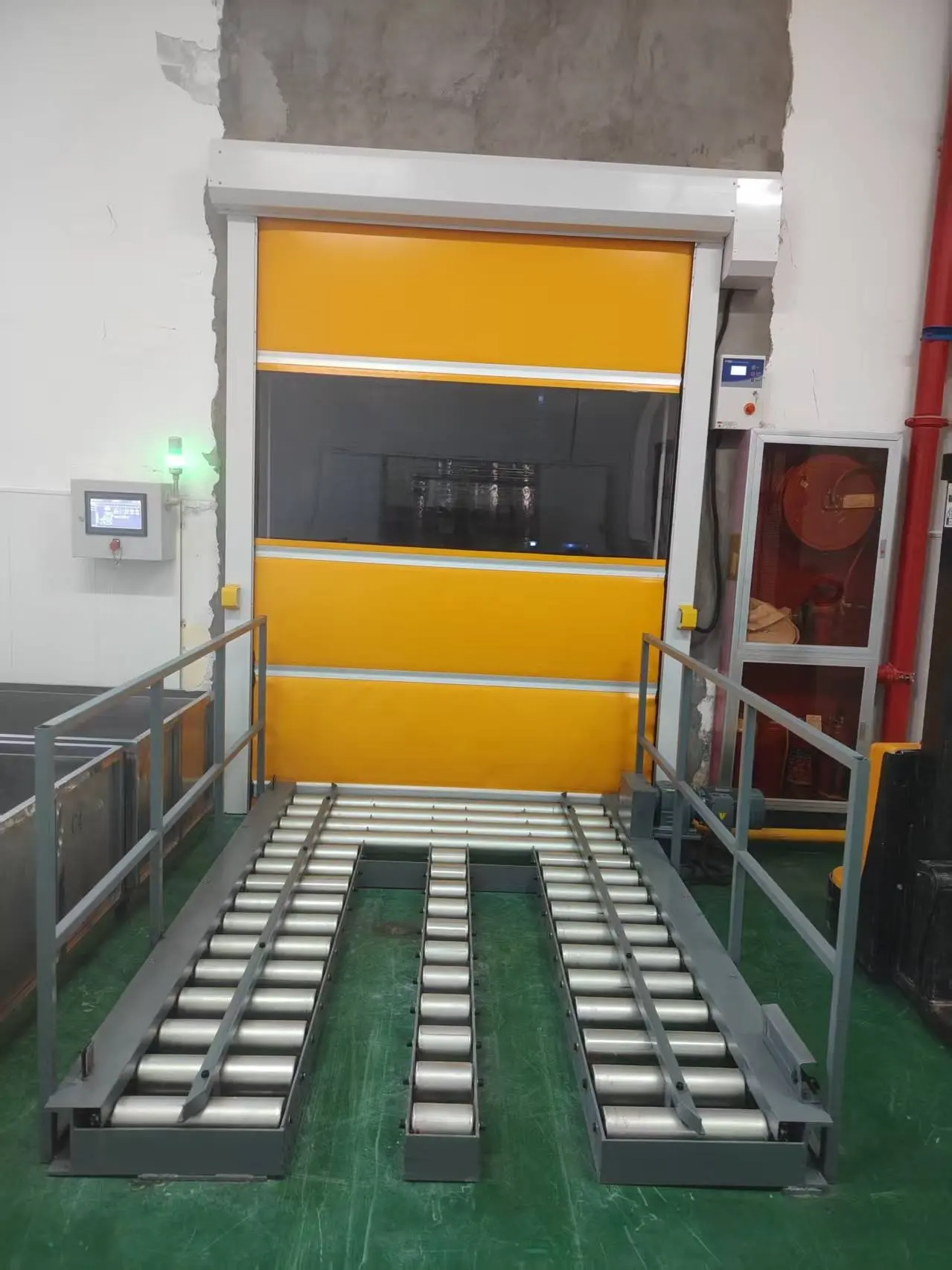
  • Environmental Sealing: Being an outdoor-facing installation, the landing zones required high-speed environmental barriers. The client specified PVC fast-acting doors at all four interfaces to maintain internal climate control and prevent debris entry.

GRADIN Custom Solution

The architectural solution for this project centered on a heavy-duty, chain-driven reciprocating mechanism with an integrated counterweight system to optimize energy efficiency and mechanical longevity.

1. Heavy-Duty Mechanical Architecture
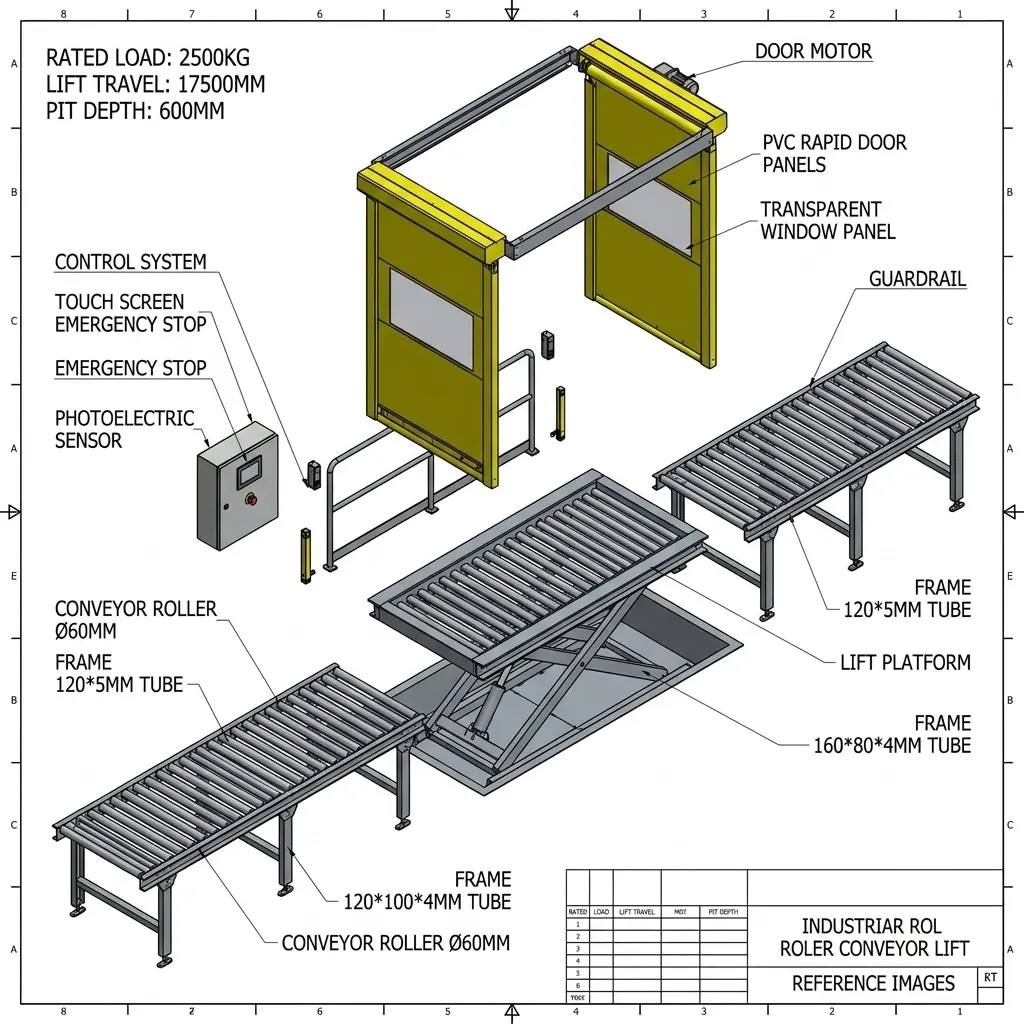
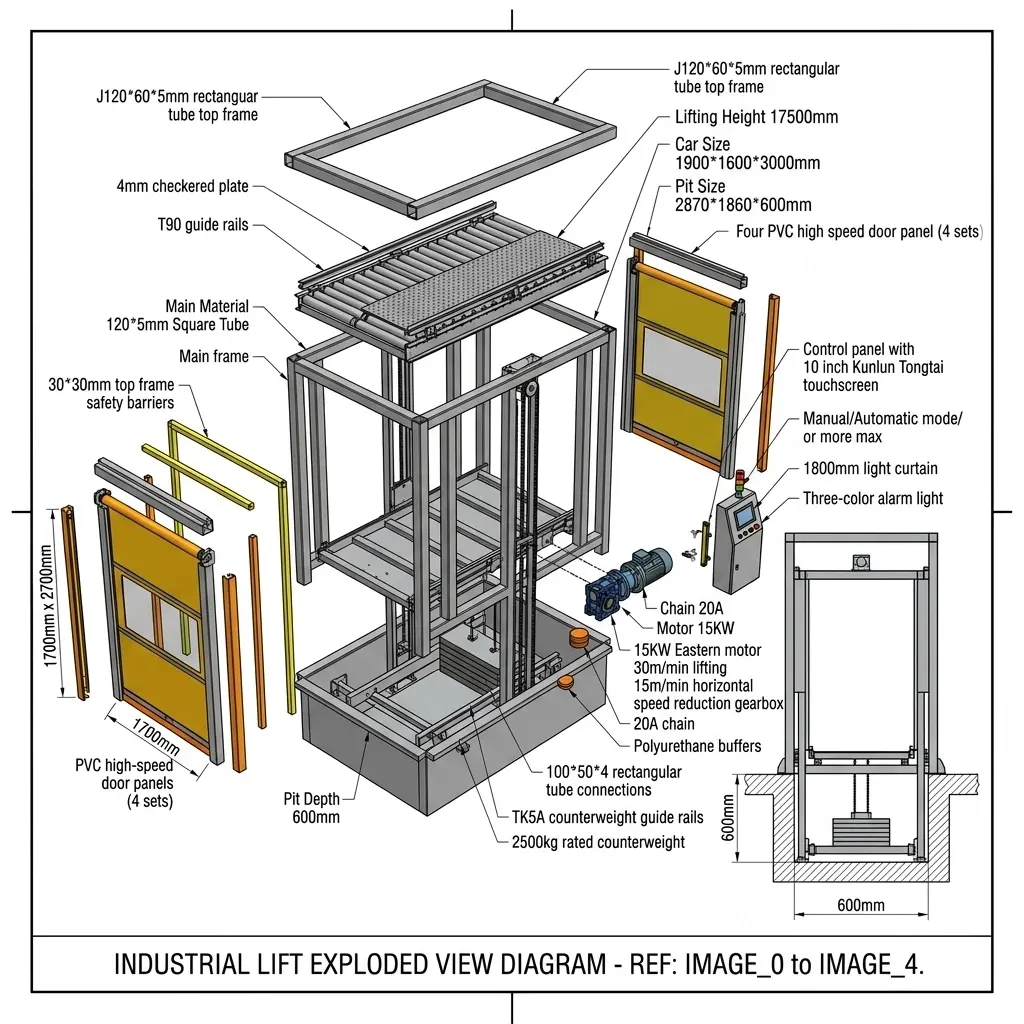
The lift cabin frame was constructed using 160mm x 80mm x 4mm rectangular tubing, providing the rigidity necessary to support 2.5 tons without elastic deformation. For the vertical guidance system, T90 heavy-duty guide rails were selected for the cabin, while TK5A rails were utilized for the counterweight assembly. This dual-rail configuration ensures millimetric tracking and minimizes lateral vibration during high-speed transitions.

2. Synchronized Conveyor Integration
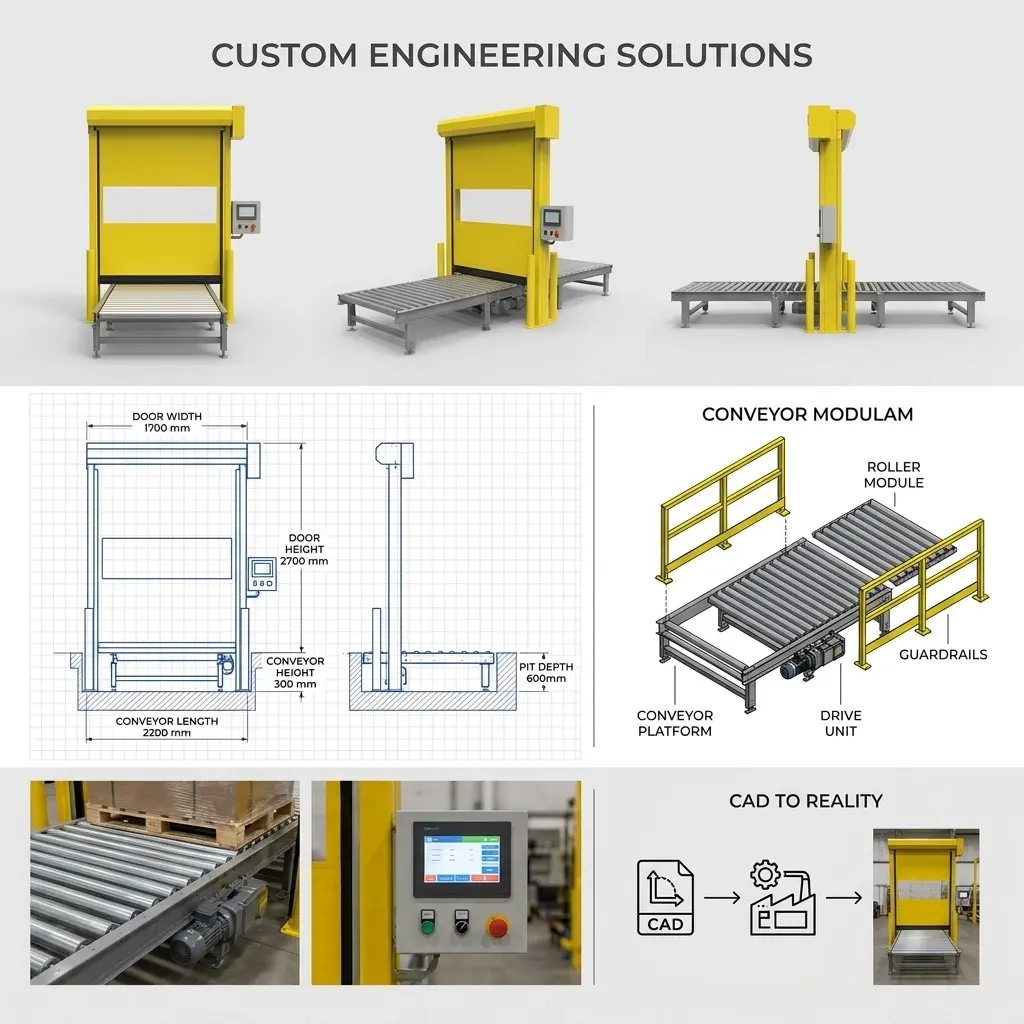
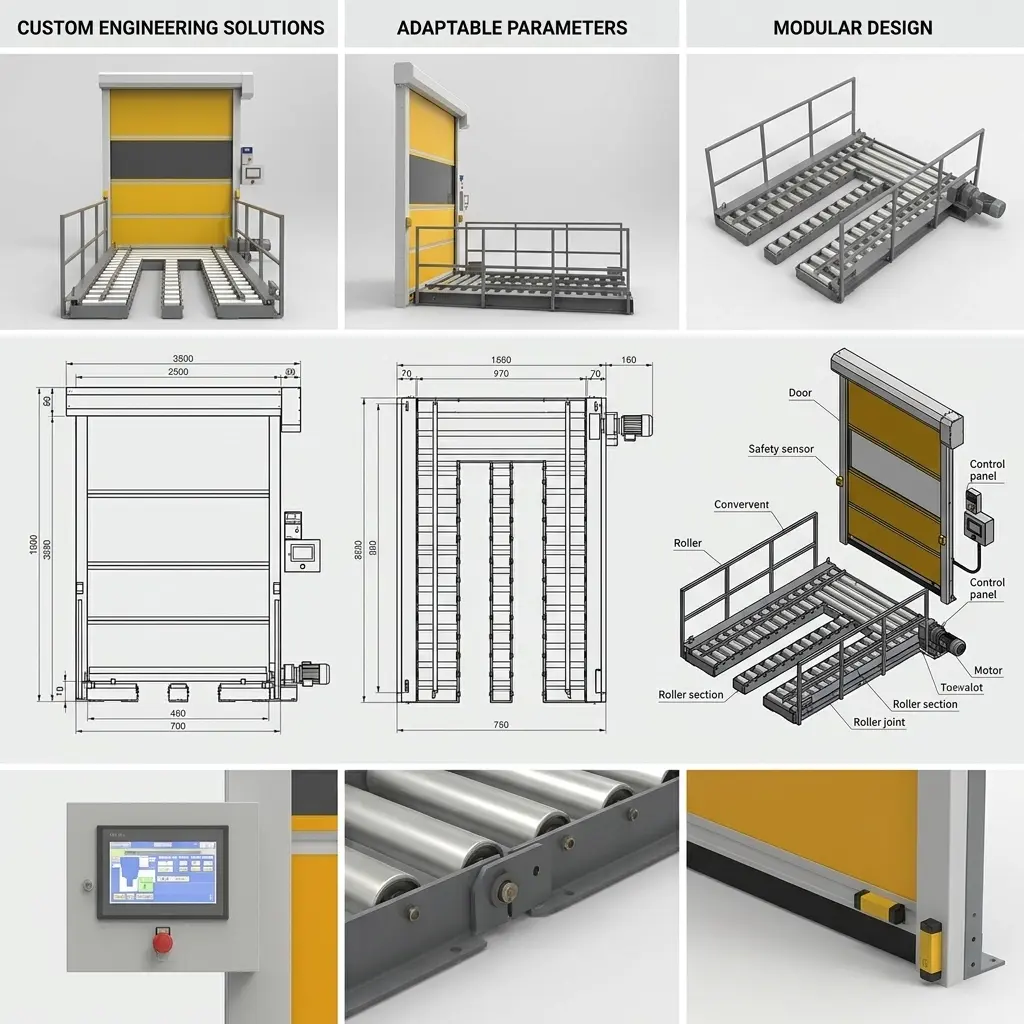
The heart of the automation is a 15KW high-torque motor paired with a precision gearbox. The cabin features an internal roller conveyor (1500mm effective width), while each of the three floors is equipped with a three-stage roller conveyor (2400mm length). These units are controlled by a centralized Siemens PLC architecture (implied for the German market) and monitored via 10-inch industrial HMI touchscreens at each level. This setup allows for “Through-Loading” (1900mm entry/exit) functionality, maximizing logistical flow.

3. Safety and Environmental Protection
To protect personnel and equipment, the system incorporates:

  • 1800mm High Light Curtains: Installed at all entry points to detect obstructions and halt operation immediately.

  • Safety Anti-Fall Gears: Mechanical locks that engage the T90 rails in the event of chain slack or failure.

  • PVC High-Speed Doors: Four sets of 1700mm x 2700mm PVC fast-roll doors are interlocked with the VRC’s position, opening only when the cabin is securely leveled.

  • Polyurethane Buffers: Installed in the 600mm deep pit to provide emergency impact absorption.

4. Control and Diagnostics
The system supports both manual and fully automated modes. A three-color alarm stack light provides immediate visual diagnostics. In the event of an overload, the 10-inch HMI displays real-time fault data, and the system is programmed to lock out until the load is rectified, ensuring compliance with [External Link: CE Certification for Machinery] and DIN EN 81-3 safety standards.

Technical Parameters & Supporting Brands

Technical Parameters

The following table summarizes the core engineering parameters of the automated VRC system deployed in Germany.

Engineering Parameter Thông số kỹ thuật
Tải trọng định mức 2,500 kg
Total Travel Height (Stroke) 17,500 mm (17.5 Meters)
Lifting Speed (Vertical) 30 m/min
Horizontal Conveyor Speed 15 m/min
Main Motor Power 15 KW (High-Torque)
Cabin Internal Dimensions 1,900(W) * 1,600(D) * 3,000(H) mm
Main Structural Material 120 * 5 mm Square Tubing
Drive Chain Type 20A Industrial Chain
Guide Rail Type T90 (Cabin) / TK5A (Counterweight)
Control Interface 10-inch Touchscreen HMI (Kunlun Tongtai)
Safety Devices XJ80 Anti-fall Gear / 1800mm Light Curtains
Landing Doors 4 Sets of PVC Fast-Acting Doors (Yellow)
Pit Depth Requirement 600 mm

By implementing this heavy-duty reciprocating lift the Ludwigshafen facility has achieved a 40% increase in vertical throughput efficiency. The integration of high-speed roller conveyors and PVC environmental barriers ensures that the automated material flow remains consistent regardless of external weather conditions. This project exemplifies the high-precision engineering required to meet European Standards for Vertical Conveyors, blending massive mechanical capacity with fine-tuned digital control.

Supporting Brands

Our tilting machines adopt premium imported and domestic brand components for electric control, pneumatic, hydraulic and mechanical parts.
1. Electric Control Components
Quality parts ensure precise and stable operation
•SIEMENS: PLC, inverter, low-voltage parts
•MITSUBISHI: Servo motors and drive systems
2. Pneumatic & Hydraulic Components
Guarantee steady flipping and high load capacity
•SMC: Cylinders and pneumatic accessories
•REXROTH: Hydraulic valves and pump stations
3. Mechanical Transmission Parts
Solid structure enables smooth running
•HIWIN: Linear guides and screw assemblies
•NSK: High precision rotating bearings
4. Low Voltage Distribution Parts
•CHINT/DELIXI: Circuit breakers and switches
•EATON: Safety and distribution components

Project Execution & Achievements

Implementation Details

Execution & Achievements

For a modern industrial logistics enterprise in Ludwigshafen, Germany, we delivered a customized Automated 2.5-Ton Reciprocating Vertical Conveyor (VRC), specially built for multi-level factory material circulation and vertical logistics docking. Replacing traditional intermittent freight elevators and manual floor-to-floor handling, this automated vertical conveying solution solves the pain points of discontinuous logistics, low throughput and high labor consumption, realizing stable, high-speed and unmanned vertical material transportation for multi-story workshops.
1. Industrial Customization for Multi-Level Logistics Scenarios
Multi-level factory logistics features frequent material turnover, diverse cargo specifications and continuous conveying demands. Traditional cargo lifts have long waiting intervals and cannot match automated assembly line rhythms. This 2.5-ton reciprocating VRC is optimized for multi-floor cyclic conveying, with stable load-bearing capacity and precise floor docking performance. It fully adapts to high-frequency industrial logistics scenarios and complies with German factory operation and safety standards.
2. Automated Reciprocating Operation Boosts Throughput
Conventional vertical transportation relies on single-cage intermittent operation with serious idle waiting time, restricting overall logistics efficiency. The VRC equipment adopts reciprocating cyclic conveying logic, realizing uninterrupted up-and-down material delivery and automatic floor switching. It improves vertical logistics efficiency by over 75%, perfectly matching the continuous production and material supply rhythm of modern factories.
3. Stable Conveying & Zero Cargo Damage
Manual handling and ordinary lifting equipment easily cause cargo shaking, collision and stacking displacement, resulting in material damage and packaging failure. The VRC features rigid frame structure and stable rail-guided operation with zero shaking and zero impact during lifting and docking. It achieves zero cargo damage and zero transportation errors, ensuring intact material delivery and standardized logistics management.
4. Great Labor Saving & Intelligent Optimization
Traditional multi-floor material transportation requires multiple workers for repeated loading, unloading and floor switching. This automated reciprocating vertical conveyor supports single-person monitoring and fully automatic cyclic operation. It eliminates repetitive manual work, cuts labor investment in logistics links, and avoids efficiency instability caused by human factors.
5. High Safety & Low Maintenance Industrial Design
Equipped with overload protection, anti-fall device, emergency stop system and intelligent fault alarm, the equipment ensures safe operation during high-frequency reciprocating circulation. Adopting high-strength industrial steel and wear-resistant transmission components, it adapts to long-term uninterrupted industrial operation, with low failure rate, stable performance and simple daily maintenance.
Overall Project Benefits
After official commissioning and operation, the client’s multi-level industrial logistics efficiency increased by 75%+, with greatly reduced labor costs and zero cargo damage accidents. The entire vertical logistics process realized automation, standardization and continuous operation, effectively improving factory circulation efficiency and overall operational benefits.
Recommended Equipment

Bàn nâng cho trạm lắp ráp dọc tùy chỉnh – Bàn nâng mô-đun có thể điều chỉnh độ cao

Bệ nâng dành cho nhân viên lắp ráp động cơ đầu máy – Bệ bảo dưỡng động cơ đầu máy

Bệ nâng lắp ráp thiết bị hàng không quy mô lớn – Bệ nâng hàng không vũ trụ có độ chính xác cao

Bàn nâng bốn cột kiểu vít động cơ – Bàn nâng bốn cột đồng bộ cơ khí